
By Blessing Bature
The Federal Government has intensified efforts to tackle diet-related non-communicable diseases (NCDs), including hypertension, diabetes, obesity and cardiovascular diseases, through policies targeting excessive consumption of salt, sugar and unhealthy fats.
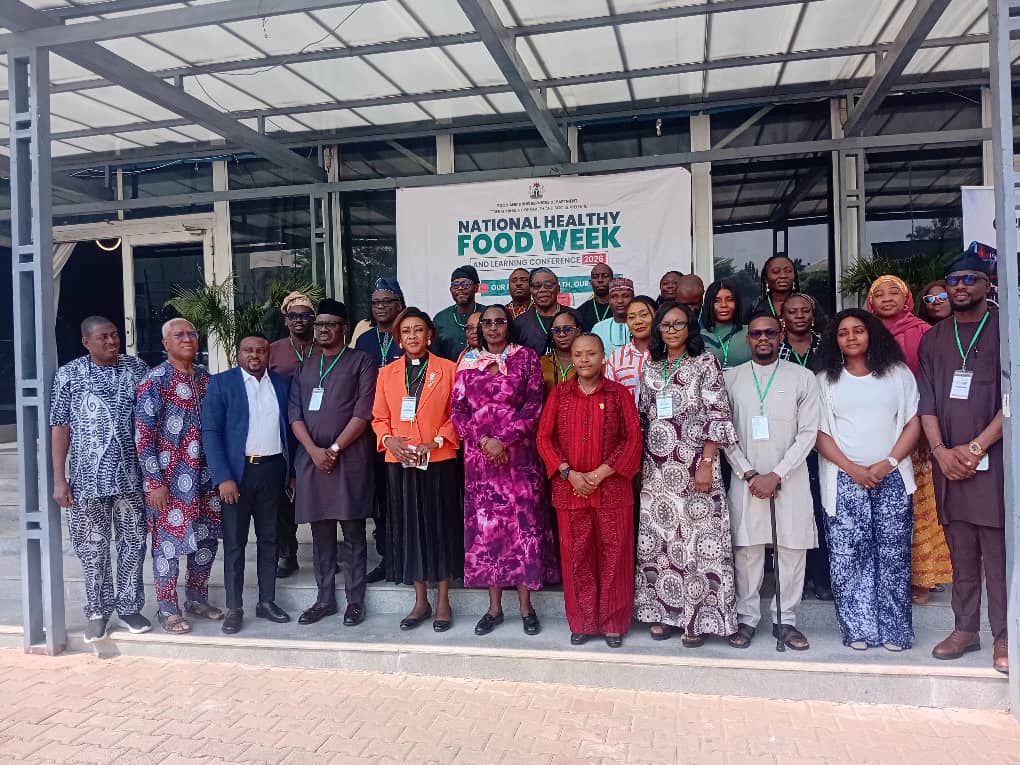
The Minister of State for Health and Social Welfare, Dr Iziaq Adekunle Salako, disclosed this on Monday at the maiden National Healthy Food Week and Learning Conference in Abuja, stressing the need to transform Nigeria’s food systems to protect public health.
Salako who was represented by the Permanent Secretary, Daju Kachollom said Nigeria was facing the double burden of undernutrition and micronutrient deficiencies, alongside a growing prevalence of diet-related diseases, requiring coordinated action across the health, agriculture, food production and regulatory sectors.
He noted that food choices were influenced not only by individual preferences but also by food production systems, affordability, marketing practices, regulatory standards, public procurement policies and access to nutritional information.
According to him, addressing the challenge requires collective efforts involving government agencies, regulators, food manufacturers, health professionals, researchers, development partners, the media and consumers.
The minister said the Federal Ministry of Health and Social Welfare had strengthened the country’s policy framework through the Revised National Policy on Food Safety and Quality and its Implementation Plan (2023).
He explained that the policy provided for an integrated food control system, stronger inter-agency coordination, food safety, food fortification, sodium reduction, elimination of industrially produced trans fats and healthier public food procurement.
Salako emphasised that food safety should go beyond preventing contamination and foodborne illnesses to include nutritional quality and the prevention of long-term health complications.
He also identified excessive sodium consumption as a major contributor to hypertension and cardiovascular diseases, noting that the National Guidelines for Sodium Reduction provided a framework for food reformulation, consumer education, monitoring and regulatory action.
The minister further highlighted the National Agency for Food and Drug Administration and Control’s (NAFDAC) Read the Label Campaign and ongoing development of front-of-pack nutrition labelling as measures to help consumers make informed dietary choices.
Speaking, Executive Director,Network for Health Equity and Development (NHED), Dr Jerome Mafeni, called on the Federal Government to strengthen the implementation and enforcement of healthy food policies, warning that Nigerians cannot make healthy dietary choices when nutritious food is unavailable, unaffordable or poorly regulated.
He said improving the country’s food environment required more than encouraging individuals to eat healthily, stressing the need for stronger government policies, regulatory compliance and access to reliable nutritional information.
He noted that Nigerians’ dietary choices were shaped not only by personal preferences but also by food availability, production standards, affordability and the information made accessible to consumers.
According to him, every Nigerian deserves access to safe, nutritious and affordable food, adding that healthy eating should not be treated solely as an individual’s responsibility.
Nutrition Policy Advisor at Resolve To Save Lives, Dr Jenom Janjuma said unhealthy diets remained major contributors to the growing burden of non-communicable diseases (NCDs), including hypertension, cardiovascular diseases and Type 2 diabetes, which were among the leading causes of premature deaths in the country.
He said the National Healthy Food Week provided an opportunity to align efforts towards addressing these dietary risks through a coordinated national response.
He reaffirmed its commitment to supporting the Federal Government in developing and implementing evidence-based policies that promote healthier diets.

