
By Michael Oche
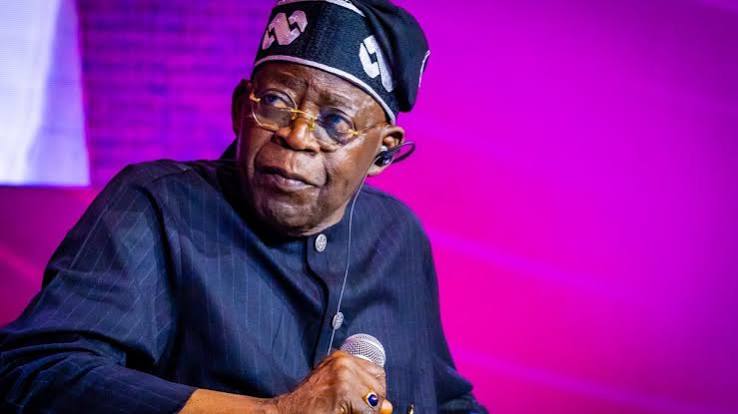
President Bola Ahmed Tinubu and other presidential candidates on Tuesday signed the first National Peace Accord on issue-based campaigns ahead of the 2027 general elections, with former Vice President Atiku Abubakar and the African Democratic Congress (ADC) notably absent.
The accord, facilitated by the National Peace Committee in partnership with The Kukah Centre, commits political parties, presidential candidates and their supporters to peaceful campaigns, respect for electoral institutions and issue-based political engagement.
The signing ceremony was held in Abuja on the eve of the official commencement of campaigns for the 2027 presidential and National Assembly elections.
The National Peace Committee is chaired by former Head of State, General Abdulsalami Abubakar, while Catholic Bishop Matthew Hassan Kukah serves as its convener.
Those present included President Tinubu, represented by the Secretary to the Government of the Federation, Senator George Akume; Labour Party presidential candidate Peter Obi; Social Democratic Party candidate Adewole Adebayo; African Action Congress candidate Omoyele Sowore; and other political leaders and presidential candidates.
The absence of Atiku and the ADC was conspicuous as political parties stepped up preparations for what is expected to be one of Nigeria’s most competitive electoral contests.
Also absent was Oyo State Governor and presidential candidate of the Allied Peoples Movement (APM), Seyi Makinde.
Speaking at the ceremony, the Chairman of the Independent National Electoral Commission (INEC), Prof. Joash Amupitan, said the accord was being signed at a critical stage of the electoral calendar, with campaigns scheduled to officially commence on Wednesday, August 19.
He said the presidential and National Assembly elections would be held on January 16, 2027, while governorship and State House of Assembly elections were scheduled for February 6.
Amupitan said the timing of the accord was deliberate, stressing the need for political actors to establish clear ethical boundaries before campaigns and rallies commence nationwide.
He expressed concern over the resurgence of hate speech, toxic political polarisation, coordinated misinformation and personality-driven campaigns.
According to him, political discourse was increasingly shifting away from policy debates towards character assassination, identity-based provocation and inflammatory rhetoric.
The INEC chairman urged candidates to focus their campaigns on the major challenges confronting Nigerians, including economic growth, insecurity, infrastructure, healthcare, education and social inclusion.
“Electoral contests in a constitutional democracy are not total wars; they are competitive job interviews before the electorate,” he said.
Amupitan urged political parties to transform the 2027 elections into a “marketplace of ideas” where candidates would clearly explain what they intended to accomplish and how they planned to achieve their objectives.
He also warned parties and their supporters against using social media and other digital platforms to circulate false information, fake election results and other content capable of undermining public confidence in the electoral process.
The INEC chairman further urged political actors to see the Peace Accord as more than a ceremonial commitment, but as a covenant to uphold the values and unity of the country.
“See the Peace Accord as a covenant to do what is good and preserve the sanctity of the nation,” he said.
The Inspector-General of Police, Tunji Disu, represented by the Deputy Inspector-General of Police, Umar Shehu, similarly warned political actors against conduct capable of undermining electoral security.
Disu said election security was not created on election day but developed throughout the electoral cycle through the conduct of political parties, candidates and their supporters.
He called for campaigns based on policies and competing visions rather than ethnic mobilisation, religious division, hatred, intimidation and violence.
The police chief warned that inflammatory statements could spread rapidly through television, social media and other communication platforms, with the potential to trigger violence within communities.
He also warned against the use of armed groups, criminal elements and illegal firearms to intimidate political opponents or disrupt campaign activities.
According to him, political parties must take responsibility for the conduct of their supporters and campaign organisations.
“You cannot publicly preach peace while privately encouraging violence,” he said.
The Peace Accord is expected to guide the conduct of political parties, candidates and their supporters as campaigns for the 2027 general elections gather momentum.

