
By Kehinde Ibrahim, Lagos
THE European Investment Bank (EIB) Group’s international development arm, EIB Global, and First City Monument Bank (FCMB) have announced a €85 million financing package to support businesses across Nigeria’s agricultural value chains, with at least 70 per cent of the funding earmarked for the cocoa and dairy sectors.
The financing, announced during the Annual Meetings of the International Monetary Fund (IMF) and the World Bank Group in Bangkok, Thailand, is expected to improve access to long-term capital, expand local processing capacity, strengthen agricultural productivity and promote sustainable business practices.
The announcement was made in the presence of EIB Group President Nadia Calviño; Nigeria’s Minister of Finance and Coordinating Minister of the Economy, Taiwo Oyedele; EIB Vice-President Ambroise Fayolle; European Commissioner for International Partnerships Jozef Síkela; and FCMB Chief Executive Officer, Yemisi Edun.
The partnership is designed to address financing gaps confronting agricultural businesses, particularly farmers, cooperatives, processors and other enterprises operating within the cocoa and dairy value chains.
For the dairy sector, the investment is expected to support increased production and processing capacity, helping businesses respond to rising demand for milk and related products. It also represents EIB Global’s first investment in the dairy sector outside the European Union.
The initiative aligns with Nigeria’s development priorities in sustainable agriculture, economic inclusion and environmental protection. It is also intended to strengthen commercial links between Nigerian agricultural businesses and European companies seeking more reliable supplies of locally produced agricultural inputs.
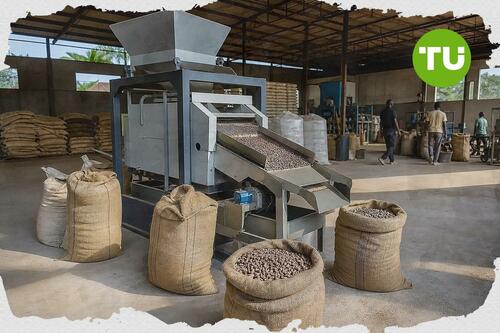
In the cocoa sector, the financing is expected to support the development of industrial processing facilities, improve liquidity for farmers and cooperatives, and strengthen product traceability across the value chain.
Nigeria is a major cocoa-producing and exporting country, but expanding domestic processing remains important for retaining more value within the economy. Increased investment in processing could enable local businesses to move beyond exporting raw cocoa beans towards producing higher-value intermediate and finished products.
The financing is also expected to help cocoa businesses meet the requirements of the European Union Deforestation Regulation (EUDR), which seeks to prevent products associated with deforestation from entering or being traded within the EU market.
Improved traceability and compliance with environmental requirements could strengthen the competitiveness of Nigerian cocoa exporters, particularly as international markets place greater emphasis on sustainable sourcing and responsible agricultural production.
The initiative will also support biodiversity conservation, reduce environmental damage associated with agricultural activities and promote inclusive rural development in line with European environmental standards, the EIB Group’s Climate Roadmap and the European Green Deal.
Beyond providing credit, EIB Global will offer technical assistance to strengthen FCMB’s climate action strategy and improve the capacity of Nigeria’s agricultural sector to identify and manage environmental and social risks.
Speaking on the partnership, EIB Group President Nadia Calviño said investments in agricultural value chains remained important to strengthening food security and stimulating economic growth across Africa.
“The EIB Group invests in agricultural value chains in Africa – main drivers of food security and economic growth,” she said, adding that the projects would also create business opportunities for European companies operating in Nigeria.
According to her, the partnership represents a mutually beneficial arrangement that combines development financing with opportunities for stronger commercial relationships between Nigeria and the European Union.
EIB Vice-President Ambroise Fayolle said the financing would help Nigerian agribusinesses expand their operations while meeting internationally recognised environmental and social standards.
“With this financial partnership with First City Monument Bank, EIB Global concretely supports Nigerian agribusinesses to grow competitively while meeting international environmental and social standards,” Fayolle said.
He noted that investments in agriculture could generate benefits for employment, public health and economic development, particularly through their impact on local communities.
Fayolle added that the initiative illustrated the implementation of the European Union’s Global Gateway strategy, under which the EIB Group works with partners in Africa to mobilise financing for sustainable development.
The Global Gateway initiative seeks to increase investment in strategic sectors, including digital infrastructure, energy, transport, health, education and research, while promoting stronger economic partnerships between the EU and developing economies.
European Commissioner for International Partnerships Jozef Síkela said Nigeria’s agricultural potential could translate into stronger businesses, employment opportunities and broader economic benefits if more value were retained within the country.
“Nigeria has enormous potential in agriculture,” Síkela said.
He explained that the investment would help businesses across the cocoa and dairy value chains access the financing required to expand production and local processing.
According to him, increasing the capacity of Nigerian businesses to process agricultural commodities domestically would strengthen value chains and deepen economic cooperation between Nigeria and the European Union.
He said the partnership would support the development of stronger agricultural businesses while creating opportunities for both Nigerian and European companies.
For FCMB, the financing is expected to strengthen its capacity to support agricultural businesses requiring long-term funding to expand operations, improve productivity and access new markets.
FCMB Chief Executive Officer Yemisi Edun said access to finance remained a critical factor in determining whether farmers and agricultural businesses could expand beyond the sale of raw produce into more profitable processing activities.
“For farmers and agribusinesses, access to finance can make the difference between selling raw produce and building businesses that process more, earn more and create more jobs,” Edun said.
She explained that the partnership would provide businesses operating across Nigeria’s cocoa and dairy value chains with access to the long-term funding required to increase production, expand processing capacity and reach new markets.
Edun added that combining financing with technical support would help improve rural livelihoods, encourage sustainable growth and strengthen the resilience of Nigeria’s agricultural sector.
The emphasis on long-term financing is particularly significant for agricultural enterprises, which often require substantial investment in equipment, storage facilities, processing infrastructure and supply-chain management before generating sufficient returns.
For small and medium-sized businesses, access to suitable financing can also help address constraints associated with working capital, seasonal production cycles and the costs of meeting international market requirements.
However, the extent to which the financing delivers broad-based benefits will depend on how effectively the funds reach eligible businesses, the affordability of the credit and the capacity of borrowers to expand production and create sustainable employment.
The project also aligns with the European Union’s broader geopolitical and development priorities, as well as Nigeria’s efforts to strengthen food systems and improve food security.
It contributes to the Team Europe Initiative on Green Economy, which promotes climate-smart agriculture, inclusive agribusiness, rural connectivity and improved access to agricultural markets.
Through the initiative, the EU and its development partners aim to support agricultural systems that are more productive, environmentally sustainable and better integrated into domestic and international markets.
The financing could also strengthen Nigeria’s agricultural value chains by encouraging closer collaboration among farmers, cooperatives, processors, financial institutions and export-oriented businesses.
For the cocoa industry, improved access to capital could support investments in processing facilities, storage and quality control, while better traceability systems could help exporters demonstrate compliance with international sourcing requirements.
In the dairy sector, financing for production and processing could help businesses address supply constraints and improve the availability of locally sourced milk and dairy products.
Nevertheless, sustained progress will require complementary investments in infrastructure, logistics, agricultural research, extension services and market access. Reliable electricity, efficient transportation and adequate storage facilities will also remain important to reducing production costs and limiting post-harvest losses.
The partnership comes as Nigeria seeks to strengthen domestic production, improve agricultural productivity and reduce vulnerabilities associated with supply disruptions and dependence on imported products.
The EIB Group said it had invested €2.3 billion in Nigeria since beginning operations in the country in 1978.
Its investments have supported projects across several sectors, including sustainable urban transport, climate adaptation, innovation, digitalisation, agricultural logistics and financing for small and medium-sized enterprises and mid-sized companies.
The latest financing expands the institution’s involvement in Nigeria’s agricultural sector, with a particular focus on strengthening the cocoa and dairy value chains through private-sector investment.

