
By Palma Ileye
Federal Government has unveiled the Executive Order on Open Defecation-Free Nigeria by 2030 and Other Related Matters, 2025, in a renewed effort to strengthen the country’s sanitation drive and accelerate the elimination of open defecation.
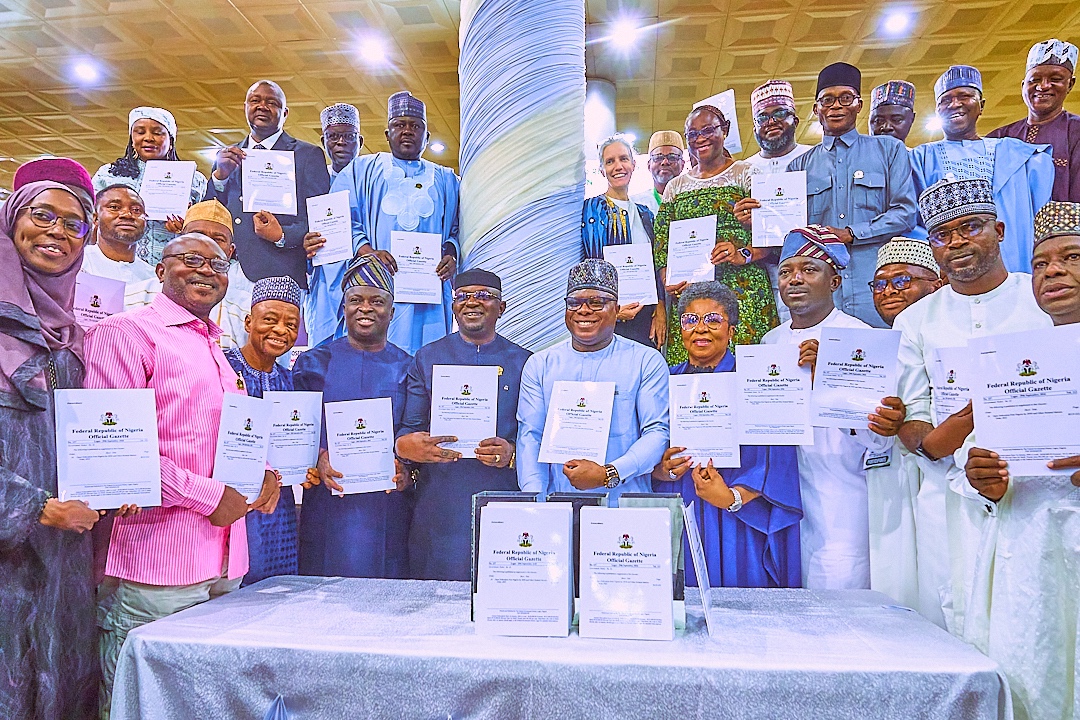
Vice President Kashim Shettima, represented by the Senior Special Assistant to the President on Delivery and Coordination, Office of the Vice President, Mr. Akubo Adegbe, unveiled the instrument on Thursday in Abuja during the commemoration of the 2026 World Toilet Day and the Seventh Anniversary of the Clean Nigeria: Use the Toilet Campaign.
Shettima described the Executive Order as an important milestone in Nigeria’s sanitation journey, saying it represented the Federal Government’s renewed commitment to ending open defecation and strengthening coordination among stakeholders.
According to him, the instrument would help move the country from political commitments to measurable results, fragmented efforts to stronger coordination, and temporary achievements to sustainable national progress.
The Vice President, who Chairs the National Steering Committee of the Clean Nigeria Campaign, reaffirmed the Federal Government’s commitment to working with State and Local governments, development partners and other stakeholders to achieve the 2030 target.
He disclosed that Nigeria had recorded 185 Open Defecation Free (ODF) Local Government Areas out of the country’s 774 LGAs, while Jigawa and Katsina States had attained Statewide ODF status.
Shettima, however, said the achievement represented only about 23 per cent of the country’s Local governments, stressing the need to accelerate implementation and strengthen accountability.
“We must accelerate implementation, strengthen accountability and ensure that communities that have attained ODF status do not slide back,” he said.
He urged States yet to achieve ODF status to establish monthly and quarterly targets and make their progress public, adding that sustained financing, reliable data, stronger institutions and behavioural change were necessary to meet the deadline.
Speaking on this year’s World Toilet Day theme, “Sanitation and Gender Equality,” the Vice President said access to safe sanitation was not merely about infrastructure but also about human dignity, safety, inclusion and equal opportunities.
He noted that women and girls were disproportionately affected by inadequate sanitation, which exposed them to health risks, insecurity, lack of privacy and limited opportunities in education and economic activities.
“We must therefore ensure that our sanitation policies, investments and interventions respond to the needs of women, girls, persons with disabilities and other vulnerable groups. No Nigerian should be left behind,” he said.
Shettima said the Clean Nigeria Campaign, launched in 2019, aligned with President Tinubu’s Renewed Hope Agenda, particularly its commitment to improving citizens’ welfare, protecting human capital and building a healthier and more productive nation.
He called on State governments and Local government authorities to take ownership of the campaign, provide adequate resources and strengthen institutions responsible for sanitation delivery.
Earlier, the Minister of Water Resources and Sanitation, Prof. Joseph Utsev, said political commitment must translate into adequate financing and practical action for Nigeria to achieve ODF status by 2030.
Utsev said the campaign had, over the past seven years, evolved into an important platform for policy coordination, institutional engagement, community mobilisation and performance monitoring.
He identified the revised Clean Nigeria Strategy 2025–2030 and the Clean Nigeria Real-Time Monitoring and Information System as major initiatives aimed at improving implementation, data management, performance tracking and accountability.
The Minister also highlighted four major lessons from the campaign, including the need for adequate financing, preventing communities from relapsing into open defecation, promoting sustained behavioural change and adopting a multisectoral approach to sanitation.
Also speaking, Country Coordinator for Trachoma and WASH-supported programmes at Sightsavers Nigeria, Dr. Teyil Wamyil- Mshelia, called on State and Local governments to intensify efforts towards achieving the 2030 target.
She said sanitation and hygiene were critical to the prevention and elimination of neglected tropical diseases, noting that Sightsavers remained committed to collaborating with the Federal Ministry of Water Resources and Sanitation and other WASH agencies.
Wamyil- Mshelia urged Local governments to take ownership of sanitation programmes by ensuring clean environments and promoting regular handwashing and other healthy hygiene practices.
She expressed confidence that sustained collaboration among government institutions, development partners and communities would enable Nigeria to achieve its ODF target.
The event featured the unveiling of the Executive Order as part of activities marking the seventh anniversary of the Clean Nigeria Campaign.
Shettima commended the Ministry of Water Resources and Sanitation, the Clean Nigeria Campaign Secretariat, State governments, development partners and other stakeholders for their contributions, urging Nigerians to make ending open defecation a collective responsibility.

