
By Aaron Ossai
The Federal Government’s ongoing reforms in the maritime sector are beginning to yield positive results, with Nigerian ports recording significant growth in cargo throughput, vessel traffic, container movements and vehicle traffic in the second quarter of 2026.
The development was contained in the Nigerian Ports Authority (NPA) Operational Performance Report for Q2 2026, which showed an overall improvement in port activities compared with the corresponding period of 2025.
According to the report, cargo throughput rose by 12.3 per cent from 31,825,592 metric tonnes in Q2 2025 to 35,740,362 metric tonnes in Q2 2026.
In terms of trade composition, inward cargo accounted for 56.8 per cent of total throughput, while outward cargo represented 41.9 per cent. Transshipment cargo contributed 488,364 metric tonnes, or about 1.4 per cent of total cargo handled.
The report showed that inward cargo increased by 7.7 per cent, while outward cargo recorded a stronger 22 per cent growth, indicating an improvement in export activities during the period.
Vessel traffic also recorded substantial growth, with the number of ocean-going vessels completed rising from 1,050 in Q2 2025 to 1,201 in Q2 2026, representing a 14.4 per cent increase.
The Gross Registered Tonnage (GRT) of the vessels similarly increased by 22.2 per cent, from 40.87 million tonnes to 49.95 million tonnes.
Service boat operations also expanded during the quarter. The number of completed service boats rose by 22.3 per cent from 3,554 to 4,347, while their combined GRT increased by 62.4 per cent from 1.06 million tonnes to 1.73 million tonnes.
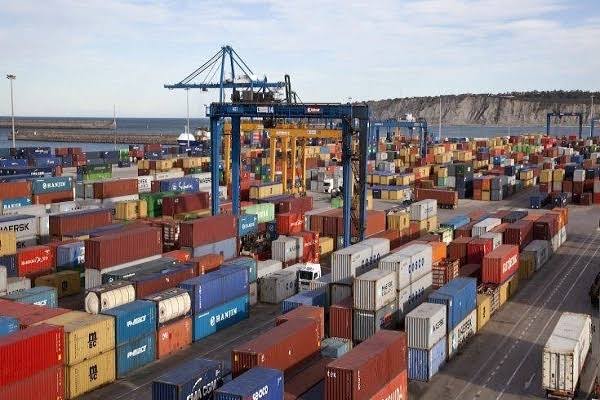
Container traffic grew by 11.3 per cent, increasing from 541,229 twenty-foot equivalent units (TEUs) in Q2 2025 to 602,392 TEUs in the review period.
Inward laden containers rose by 6.3 per cent and accounted for approximately 51.5 per cent of total container traffic. Outward laden containers, however, declined by 3.9 per cent, while empty container traffic increased by 13.9 per cent.
Transshipment container traffic stood at 29,038 TEUs in Q2 2026, compared with no recorded movement in the corresponding period of 2025.
The NPA said the development reflected the growing importance of transshipment operations within the Nigerian port system and Nigeria’s potential to emerge as a regional transshipment hub.
Vehicle traffic also increased significantly, with 44,147 units handled during the quarter compared with 37,306 units in Q2 2025, representing an 18.3 per cent increase.
The authority attributed the rise largely to improved automobile import activities, supported by greater stability in the foreign exchange market.
Commenting on the performance, NPA Managing Director, Dr Abubakar Dantsoho, said the increase in cargo volumes and vessel calls demonstrated the resilience of Nigerian seaports and their growing capacity to facilitate trade.
Dantsoho said the NPA’s major priority for 2026 was a comprehensive infrastructure overhaul, supported by digital reforms and measures to improve operational efficiency.
He said the modernisation of Apapa and Tin Can Island ports remained central to the authority’s infrastructure programme, noting that the facilities had become outdated and required significant upgrades.
According to him, the NPA is also supporting the development of the Lekki and Badagry deep-sea ports to accommodate larger vessels, while efforts are being made to revitalise the Eastern Ports and ease pressure on Lagos facilities.
He added that the authority was prioritising full implementation of the Port Community System (PCS) to streamline port operations, reduce manual bottlenecks and improve efficiency.
The PCS is expected to complement the National Single Window (NSW), which became operational in the first quarter of 2026, in creating a more integrated digital trade environment.
Dantsoho further said the NPA was deploying technology-driven security measures to support 24-hour port operations and strengthening collaboration with customs agents and other stakeholders to address congestion and facilitate faster cargo evacuation.
He said the reforms were aimed at reducing logistics costs, increasing trade volumes, improving export competitiveness and positioning Nigeria as a major trade hub in West Africa.
The NPA report concluded that Q2 2026 recorded encouraging growth across major operational indicators, including ship traffic, cargo throughput, container movements, vehicle traffic and berth utilisation.

