
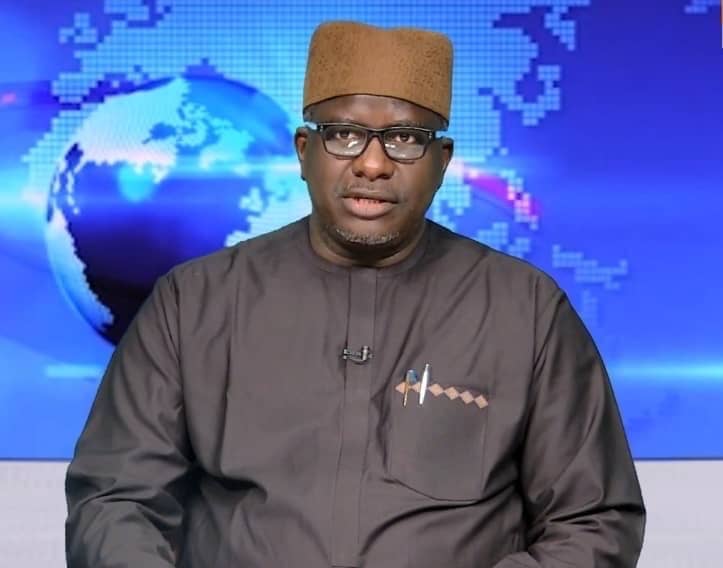
By Olugbenga Salami
The Tinubu Support Group (TSG) has faulted former Vice President Atiku Abubakar over his criticism of the Federal Government’s 30-day petrol relief initiative, saying President Bola Tinubu is prioritising the welfare of Nigerians through measures aimed at cushioning the impact of rising fuel prices and reducing the cost of transportation.
The group said the decision by the Nigerian National Petroleum Company Limited (NNPCL) to temporarily forgo its petrol retail profit margin was a practical response to rising fuel prices and their impact on transportation costs, rather than a return to the fuel subsidy regime abolished in May 2023.
The Director-General of TSG, Dr Umar Tanko Yakasai in a statement on Friday, said it was important to distinguish between the former government-funded petrol subsidy and the current initiative, under which NNPC Retail intends to sell petrol at cost by foregoing its retail profit margin for an initial 30 days.
According to him, the initiative demonstrates the Tinubu administration’s willingness to explore immediate relief measures while sustaining the broader economic reforms.
“President Tinubu understands the pressure that rising petrol prices place on Nigerian households, workers, traders and businesses. The 30-day intervention is one of the measures being explored to cushion the impact of the global oil-price shock on Nigerians.
“It is therefore misleading to portray a temporary commercial discount as a restoration of the former petrol subsidy regime. These are two different arrangements, with different implications for public finances,” Yakasai said.
The TSG chief said the government’s announcement of additional measures, including efforts to stabilise petrol landing costs, expand compressed natural gas (CNG) transportation and increase support for vulnerable households, showed that the administration was pursuing a broader response to the cost-of-living crisis.
He said the planned negotiations to place a ceiling on petrol landing costs, alongside measures to reduce transport and logistics expenses, could help moderate the effects of volatile fuel prices on the prices of goods and services.
“The ultimate objective should be to ensure that relief reaches ordinary Nigerians. If transport operators benefit from lower fuel costs, commuters should also see corresponding reductions in fares. Government must ensure that these measures produce tangible results,” he said.
Reacting to Atiku’s suggestion that the government should adopt a production-based subsidy through preferential crude-oil pricing for domestic refineries, the TSG said any alternative policy must be assessed against its financial implications, transparency and ability to deliver affordable petrol to consumers.
The TSG urged the former vice president to “stop playing politics with the welfare of Nigerians” noting supplying crude oil to domestic refiners at below its market value could entail significant revenue losses, even where the cost did not appear as a direct expenditure in the national budget.
It added that lower crude prices would not automatically translate into cheaper petrol unless mechanisms were established to ensure that the benefits reached consumers.
“Any proposal intended to reduce petrol prices deserves serious consideration, but it must also answer fundamental questions about who bears the cost, how the arrangement will be financed and how Nigerians will benefit.
“The important issue is not merely whether a proposal sounds attractive, but whether it is transparent, sustainable and capable of delivering relief without creating new economic problems,” the group said.
The TSG also argued that acknowledging the hardship associated with economic reforms should not be interpreted as an admission that the reforms were unnecessary.
It said the responsibility before the government was to ensure that the benefits of economic adjustments translated into improved living conditions through measures that address transportation costs, food prices, employment and household incomes.
According to the group, the administration’s approach should be assessed not only by its long-term economic objectives but also by its responsiveness to the immediate difficulties facing Nigerians.
“Economic reforms must ultimately improve the lives of the people. The government recognises that Nigerians are facing difficult conditions, and that is why measures to cushion the effects of rising fuel prices and support vulnerable households are important.
“It is clear that President Tinubu remains focused on finding practical ways to address these challenges without returning the country to a system that could impose unsustainable costs on public finances,” it said.
The group urged the NNPC and relevant government agencies to ensure transparency in the implementation of the 30-day discount, including clear information on participating outlets, applicable prices and the mechanisms for monitoring its impact.
It also called for effective monitoring to ensure that any savings enjoyed by commercial transport operators were reflected in fares paid by commuters.
The TSG maintained that Nigerians deserved both immediate relief and sustainable economic policies, adding that public debate should focus on the effectiveness of proposed solutions rather than mischaracterising government interventions.

