
By Ngozi Nwankwo
With the weight of a single mother’s responsibilities on her shoulders, Victoria Nana turned to the land for a fresh start on December 14, 2013.
Known to peers as “Mama Nana,” she launched a grain business, transforming necessity into a sustainable source of income to feed her family and sponsor her children’s education.
“I had to feed my children and pay their school fees, as their father abandoned us for another woman,” she courageously told Nigerian Pilot.
Driven by the ambition to secure premium education for her children in Abuja, Victoria, a local entrepreneur, launched a farming and storage business financed by high-interest, monthly-repayable loans sourced from a community women’s cooperative.
Unfortunately for the young agri-entrepreneur, a gamble on financial independence has turned into a desperate struggle for survival as her plan to secure her family’s future through grain storage was destroyed in April, 2025 when early, torrential rains submerged her warehouse, leaving her crop ruined and her finances in tatters.
Standing before the mud-caked remains of her inventory—provisions intended to sustain her children until the next harvest, Victoria wept as she surveyed the wreckage of her livelihood.”How will I pay back this debt? I invested huge amount of money here” she lamented, gesturing to the spoiled grains. “Is this how a full year of my investment just disappears?”The loss has plunged Victoria into a cycle of debt and despair, highlighting the devastating impact of unpredictable weather patterns on small-scale agricultural ventures.
Report from Search:2026 Outlook indicates that 14,158 communities in 34 Nigerian states face a high risk of flooding between July and September 2026, with an estimated 4.2 million hectares of cropland at risk. In addition to floods, insecurity, including banditry and insurgency is forcing farmers to abandon farms, resulting in a forecasted 34.7 million Nigerians facing severe food insecurity by mid-2026.
The adverse effect of the twin evils- flooding and insecurity, have no doubt , resulted to serious economic losses as farmers report not only losing crops but also the loans/capital invested, leading to severe indebtedness.
The farmers and agrientreprenurs from North East, North Central, and riparian communities are most vulnerable, with staple crops like rice, maize, and cassava destroyed.
For Isa Ibrahim, a resident of Kpezi community, the transition from a self-sufficient farmer to a man dependent on the charity of neighbors has been a bitter pill to swallow.
A farmer whose livelihood once sustained a family of seven, Ibrahim now watches helplessly as his three youngest children scramble over meager portions of masa (rice cakes). “I don’t have money to buy them enough,” he muttered, leaning against the wall of his hut. “I couldn’t plant enough crops last year because of the rains.”
Ibrahim’s story is a stark illustration of how extreme weather and crumbling infrastructure are dismantling rural economies.
Confidently , Ibrahim told Nigerian Pilot that in a typical year, his diversified operations—farming maize in Kpezi and cultivating onions and sweet potatoes in his home state of Sokoto—yielded 100 to 250 bags of grain and generated millions of naira in revenue.
However, that “income cycle” has been severed. Last year’s torrential rains didn’t just ruin his harvest; they adversely imprisoned his community. “We don’t have good roads,” Ibrahim explained. “When it’s raining, the floods keep us from going out at all.”
Now, the man who once managed a thriving storage and farming business relies on the “good spirits” of neighbors who share what little food they can spare to keep his family from starvation.
Unfortunately, erosion-induced flooding devastates Anambra Communities, threatens food security.
Decades of aggressive soil erosion and intensifying flooding have turned the raining season into a nightmare for residents of Ekwulobia, Nanka, and Oko communities in Anambra State, adversely threatening the agricultural sustenance of the region.The communities, located along the Ekwulobia-Oko border, are witnessing the gradual annihilation of farmlands and residential areas, driven by poor drainage systems and torrential rainfall. Many families now live in fear, with several having abandoned their ancestral homes for safer, temporary shelter during the wet season.
“We no longer sleep when it is raining,” said Emmanuel Okoli, a resident of Ekwulobia. “The erosion has taken over, and the water has nowhere to go but into our homes and farms.”
Smallholder farmer struggles. For many in the area, farming is not just a business; it is the primary means of subsistence. However, the relentless degradation of the land has forced farmers to rely on external aid for food. Mr. Okechwukwu Umeh, a smallholder farmer specializing in yam, cassava, cocoyam, and maize, is one of the many victims. He expressed profound frustration over the destruction of his ancestral farmland, which he has utilized for over 15 years to support his family, including his five daughters.”This is the only land my father left for me,” Umeh told the Nigerian Pilot. “But now, erosion has taken over large parts of it, leaving us with only a tiny, unusable space.”
The destruction extends to local commerce. Umeh’s wife, who operates a local restaurant and supplies fufu (cassava flour) to local businesses, has seen her supply chain severed as the couple can no longer harvest from their land due to erosion
Call for Urgent Government Intervention
Umeh, like many others in the community, is calling on the Anambra State government and relevant federal agencies such as Ministry of Environment , Ecological Agency, Ministry of Agriculture for urgent intervention. The farmers are calling for the construction of comprehensive drainage systems to manage the runoff, as well as the provision of modern farming equipment and improved seedlings.”We are still using old methods, like machetes and hoes, which drain our energy with low output,” Umeh explained. “We need support to build good drainage systems where water can move without destroying our homes and farms.”The situation in Oko, Ekwulobia, and Nanka has long been identified as a critical environmental emergency, with many experts noting that the Nanka erosion site is one of the largest in Nigeria.
Food Security at risk
The destruction of farmland in Anambra is not just a localized issue but a significant contributor to the growing food insecurity in South East Nigeria. As rainy seasons become more intense, the inability to farm threatens the supply of staple foods like cassava and yams in the region, which could lead to further economic hardship and increased food prices.Environmental stakeholders have repeatedly called for more comprehensive, long-term investments in soil conservation and sustainable land management to halt the crisis.
Beyond flooding, insecurity is emerging as a major obstacle to the Federal Government’s target of achieving food security by 2028, with farmers in Plateau State saying they are abandoning farmland and losing livelihoods to attacks and crop destruction.
Agriculture experts warn that without urgent action to curb violence, the government’s goal of boosting food production may remain out of reach.
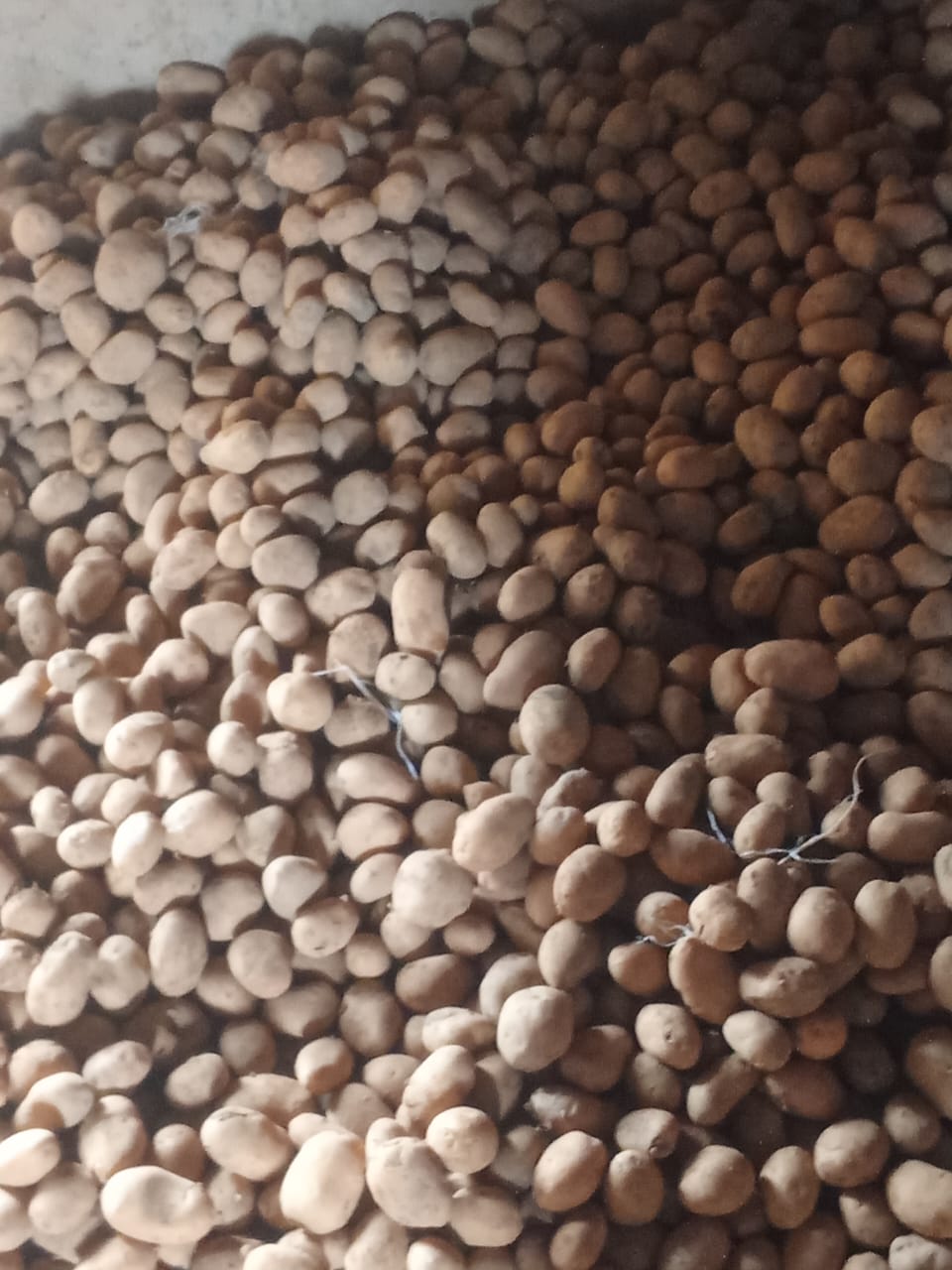
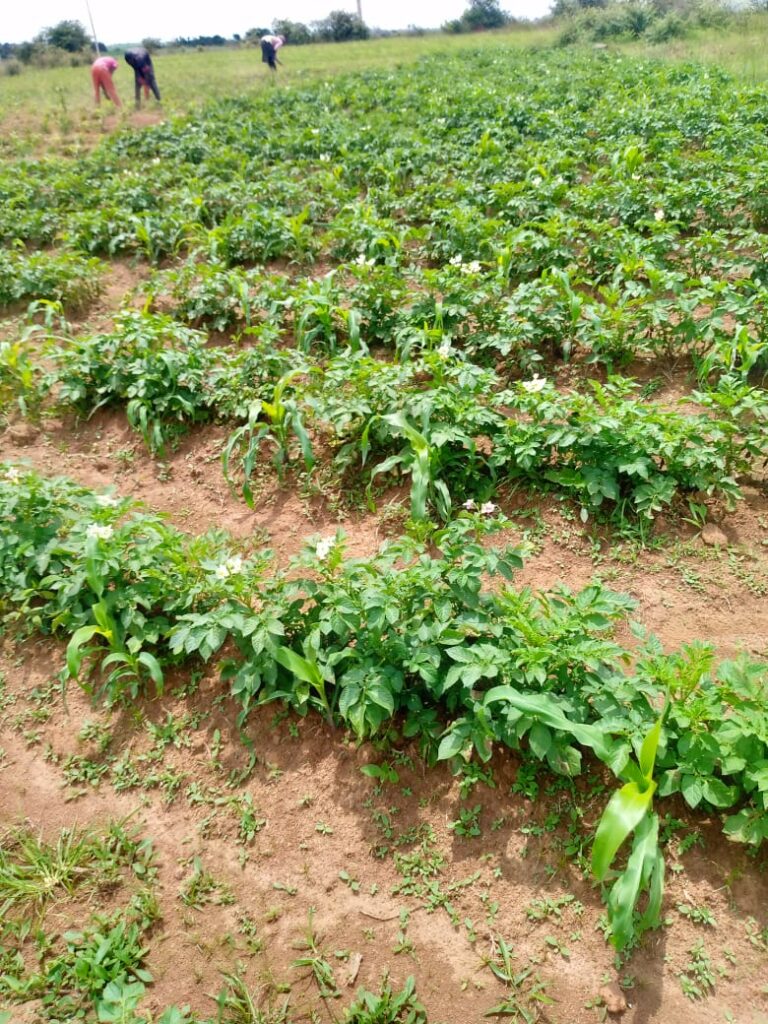
Irish potato farmer Mrs. Josephine Auta said insecurity has crippled the once-lucrative trade in Jos.
“People no longer enter farms to cultivate because of bandits,” she said. “The cost of Irish potatoes is high because of the risk we take to cultivate and harvest them.”
Auta said many farmers in Jos have fled to nearby towns, abandoning homes and farmland. Some, she added, have lost relatives to herders.
“This business used to be very lucrative. It’s a family business that started with my grandmother, passed to my father, and then to me,” she said. “From proceeds of this business, my grandmother became one of the richest women in the village. She bought farmland and hired other farmers to work for her.”
She said Fulani herders, who once coexisted peacefully with indigenous communities, are now responsible for killings and crop destruction that have made farming unsafe.
“The killings in Jos are affecting us seriously. People no longer go to farmland. We forfeit any land far from home or the city to the herders,” she said. “Going to distant farms is challenging. You have to pay security men to escort you, and paying them every planting and harvesting season costs a lot.”
Auta recounted how her brother’s pepper farm, worth nearly N3 million, was destroyed overnight in November 2025 in Maraban Kantoma, Jos.
“They came at night with a knapsack, sprayed chemicals across the farm, and the whole pepper dried up just as he was about to harvest,” she said. “That was his only source of income. Many other farmers were affected. That’s why food is scarce and expensive in the market.”
She alleged that herders deliberately target crops to force farmers off their land for grazing.
“They want to grab our lands for grazing. Even with Irish potatoes, when it’s almost time to harvest, they come at night to attack with chemicals or graze cattle on the farms,” she said.
Auta said the community has no land disputes with the herders, but the attacks are forcing families to abandon ancestral land.
“They’ve sent a lot of villagers out. Many are now living in primary schools that have been turned into IDP camps. Even there, there is no security,” she said.
Like other farmers, Auta called on the government to end the violence to save agriculture in the region.
“If the government tackles insecurity in Jos, it has done 90 percent of the job it needs to do for us and improve food security. We also want government to distribute fertilizer to ease the cost of farming. Imagine 50kg of NPk fertilizer costs N50,000, 50 kg of 20:10 fertilizer costs N50,000 and other once are the same . This has pushed the prices of farm produce high and I believe government can help us ” she said.
Recently, the Troops under Sector 3 of Operation Enduring Peace recovered 34 cattle following a reported case of farm destruction at Zobwo village in Bassa Local Government Area of Plateau State.
Security sources said the troops were mobilised at about 070645A after receiving a report of alleged malicious destruction of an irrigation farm with machetes by suspected herders in the area.
On arrival at the scene, the troops assessed the situation and subsequently conducted a follow-up operation around a nearby settlement identified as Tafi Gana within the same local government area. During the operation, the herders reportedly fled on sighting the troops, abandoning their cattle.
The sources said the troops recovered 34 cattle from the settlement and moved them to a secure location for further necessary action.
They added that calm had since been restored in the affected area, while efforts were ongoing to ensure proper handling of the recovered livestock in line with established procedures.
Interestingly, the Federal Ministry of Agriculture has set a target of increasing food security by 2028, but analysts say persistent insecurity in farming communities across the Middle Belt and North threatens to derail the plan.
However, to tackle the twin evils- flooding and insecurity that are threatening household income, some concerned Nigerians have maintained that the relevant authorities such as Ministries of Agriculture and Environment and key agencies must expedite actions to cushion their adverse effects on farmers and agrientreprenurs.
Meanwhile , the launching of the Nigeria Erosion and Watershed Management Project, NEWMAP, and the Agro-Climatic Resilience in Semi-Arid Landscapes project, ACRESeL in Nigeria has erased the curiosity of many Nigerians’ questions of, what is the federal government doing to cushion the effects of land degradation on farmers?
While NEWMAP primarily focused on tackling severe land degradation, gully erosion and watershed management across several states, ACRESeL builds on those achievements by promoting climate-resilient agriculture, sustainable land management and improved livelihoods in northern Nigeria’s fragile dryland ecosystems.
Implemented with support from the World Bank and the Federal Ministry of Environment, NEWMAP was designed to combat the devastating impact of erosion and flooding that destroyed farmlands, displaced rural populations and reduced agricultural output in many parts of the country. Through interventions such as land restoration, drainage control, afforestation and community-based watershed management, the project helped protect agricultural communities from environmental disasters.
The success and lessons from NEWMAP provided the foundation for ACRESeL, a climate-focused initiative aimed at strengthening resilience in the semi-arid regions of northern Nigeria where desertification, drought and soil degradation continue to threaten food security and rural livelihoods.
ACRESeL expanded the environmental restoration approach by integrating sustainable farming techniques, water resource management and climate adaptation strategies directly into agricultural practices.
The both projects established emphasis on environmental sustainability as a pathway to improving rural livelihoods and agricultural productivity. While NEWMAP concentrated on reversing ecological damage caused by erosion and poor land use, ACRESeL extends the intervention toward long-term climate resilience and sustainable food systems.
For farmers, the impact of the two projects has been significant in several communities. Under NEWMAP, thousands of hectares of degraded land were rehabilitated, helping farmers regain access to fertile land previously lost to erosion and flooding. Improved drainage systems and watershed restoration also reduced the destruction of crops during heavy rainfall, thereby improving harvest stability and income generation.
ACRESeL, under the President Bola Ahmed Tinubu administration has further enhanced these gains by introducing climate-smart agricultural practices such as water harvesting, drought-resistant crops, agroforestry and sustainable grazing methods. Farmers in semi-arid regions now have increased access to training on land conservation and efficient water use, helping them adapt to changing climate conditions.
The projects have also contributed to economic empowerment in rural communities through livelihood support programmes, employment opportunities and community participation in environmental restoration activities.
Women and youth groups in affected areas have particularly benefited from agricultural support initiatives, tree planting programmes and alternative income-generating activities linked to environmental sustainability.
Experts said the transition from NEWMAP to ACRESeL reflects Nigeria’s growing recognition that environmental restoration and agricultural development are closely connected.
As climate change continues to threaten food production, according to the experts, both projects demonstrate how integrated land management and resilience-building measures can protect ecosystems while supporting farmers’ productivity and livelihoods.
Stakeholders have therefore called for sustained funding, stronger community ownership and expanded implementation across vulnerable regions to ensure that the gains recorded under NEWMAP and ACRESeL continue to support Nigeria’s agricultural sector and food security goals.
Similarly, the Federal Ministry of Agriculture and Food Security is moving from disaster response to prevention with a package of early warning systems, infrastructure upgrades and financial support aimed at protecting farmers from flood damage in 2026.
The ministry has mobilised ₦250 billion for wet-season farming support this year, including assistance for farmers in flood-prone areas.
In April, the government released the 2026 Annual Flood Outlook, using an early warning system with 88% accuracy to alert farmers to harvest crops before peak flooding expected in September and October. Officials said the system is designed to give farmers time to reduce losses in vulnerable states.
To improve targeting, the ministry is rolling out a national digital farmers registry that uses National Identification Numbers and geo-tagging. The database will help deliver training, inputs and early warnings directly to registered farmers.
Our correspondent gathered that Infrastructure works are underway through the World Bank-financed Agro-Climatic Resilience in Semi-Arid Landscapes project. The initiative is funding desilting of water bodies, construction of storm water drainages and dams to manage flood risks.
The National Agricultural Development Fund has started emergency distribution of seeds and fertiliser for farmers recovering from previous floods. The government is also expanding dry-season farming with irrigation facilities such as tube wells and pumps to offset losses from rainy-season flooding and improve food security.
A new soil health scheme is setting up testing laboratories to support better soil management and resilience.
Farmers have been given specific advisories for the season. Rice growers in flood-prone areas are urged to harvest before October to avoid total losses. Cassava and yam farmers are warned of root rot from waterlogging and advised to plant on ridges. Livestock and fish farmers are told to reinforce ponds and relocate shelters early.
Officials said the measures reflect a shift toward proactive flood management as climate-related weather events intensify across the country.
In the area of insecurity , the Federal Ministry of Agriculture and Food Security is rolling out a package of security and support measures aimed at restoring farming in Northern Nigeria amid persistent insecurity.
Nigerian Pilot gathered that, as of mid-2026, the ministry is deploying specialised security units, providing input support and introducing digital tracking to secure farmland and encourage farmers to return to their fields.
In partnership with the Nigeria Security and Civil Defence Corps, the ministry has deployed more than 10,000 Agro-Rangers across 19 northern states and the Federal Capital Territory. The agents are tasked with protecting farmlands, mediating farmer-herder conflicts and preventing crop destruction.
The officials who spoke to Nigerian Pilot said the goal is to rebuild confidence in high-risk areas and enable displaced farmers to resume cultivation.
To improve targeting and accountability, the ministry is also mapping and geo-tagging farmers and farmlands under the FG–IFAD Digital Innovation Action Plan.
The registry is designed to track land use, identify areas needing urgent security intervention and ensure aid reaches genuine farmers.
Financial support has been expanded to keep agriculture viable despite the risks. A $500 million Renewed Hope FarmerMoni Loan 2026 programme under the Sustainable Agricultural Value-Chains for Growth initiative is providing about ₦300,000 per smallholder farmer in the North.
It is also gathered that the ministry is also distributing free improved seeds and fertiliser in volatile areas and prioritising high-value crops such as cassava and maize to stabilise food supply.
On the security front, the ministry is working with the Nigerian Air Force to address threats in rural communities. Capacity building is being delivered through the Northern Nigeria Vulnerable Farmers Training Programme run by the NNPC Foundation, which is training farmers in climate-smart techniques to boost resilience.
Officials said the measures are intended to reduce attacks, kidnapping and land disputes that have driven many farmers off their land.
While the initiatives are underway, security conditions remain challenging in parts of the North in early 2026, and authorities acknowledge that sustained efforts will be required to secure farming communities fully.

