
By Kayode Abdulazeez, Ilorin
The governorship candidate of the Nigerian Democratic Congress (NDC) in Kwara, Prof. Abdulmumin Ajia, has promised to pay workers a minimum of N120,000 wage award if elected governor in 2027.
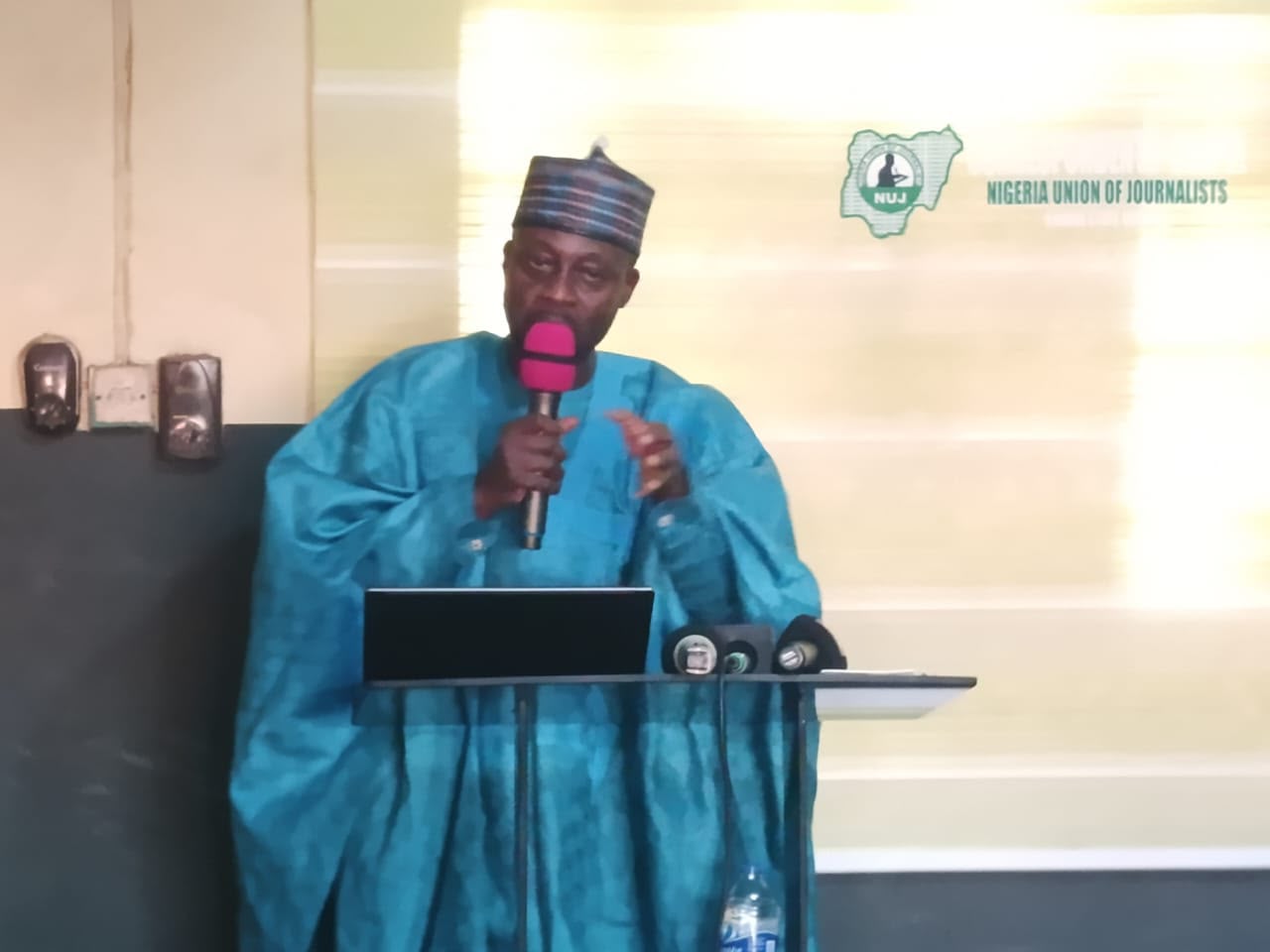
Ajia disclosed this on Wednesday during the News Keg Engagement Series at the Correspond Chapel of the Nigeria Union of Journalists (NUJ), in Ilorin.
The candidate said the proposed payment was part of his Workers and Working Families Compact, designed to improve workers’ welfare, salaries, promotions, working conditions and retirement benefits.
He said the proposed wage arrangement would be supported by payroll verification, costing of salary grades, consultations with organised labour and a credible funding timetable.
The candidate also promised to publish an annual promotion calendar and introduce a digital workers’ entitlement register to enable civil servants to access their records, report errors and track corrections.
On pensioners’ welfare, he pledged to verify outstanding obligations, distinguish inherited arrears from new liabilities and publish funded schedules for settling outstanding gratuities.
He described the delay in paying gratuities, particularly the 2014 entitlements, as unacceptable, stressing that gratuity was an earned right and not a favour from government.
He said a future administration would prioritise the clearance of outstanding gratuities within its first four-year tenure and establish a system to ensure that retiring workers received their entitlements promptly.
The candidate also proposed recreational centres for senior citizens in each of the 16 local government areas to promote healthy ageing and social interaction.
He said retired professionals would be encouraged to participate in a proposed Kwara State Public Service Fellowship, where they could mentor younger civil servants and voluntarily contribute their expertise to public institutions.
On healthcare, he proposed that residents undergo medical check-ups at least once a year, alongside the establishment of a phased regional training hospital network to strengthen medical education and train more doctors.
He said the proposed hospitals would complement the state’s medical sciences university when fully operational.
According to him, the healthcare policy would link access to treatment with household security and economic participation.
On infrastructure, he said his administration would prioritise projects based on their usefulness, affordability and maintenance requirements rather than embarking on expensive projects for political recognition.
He identified waste collection, drainage, water supply, sanitation, feeder roads and reliable electricity for essential facilities as key areas requiring attention.
The candidate expressed concern over poor waste management across the state, promising to establish effective waste collection systems and explore opportunities to convert waste into wealth.
He added that government must take the lead in maintaining a clean environment, adding that environmental sanitation was essential to public health and productivity.
On transportation, he proposed a mass transit scheme covering all local government areas to ease the movement of workers, students, farmers and traders.
He said the programme would involve route planning, modernisation of motor parks and affordable transport passes for workers and students, in collaboration with existing transport operators.
The candidate commended Gov. AbdulRahman AbdulRazaq for introducing similar initiatives but said more needed to be done to address transportation challenges.
He also proposed a light rail system for Ilorin, beginning with a corridor linking the Post Office area to Oja-Oba and the University of Ilorin Teaching Hospital (UITH), with possible extensions to other areas.
He said the project would reduce transportation pressure, move large numbers of commuters daily and create alternative employment opportunities for commercial motorcyclists.
According to him, private investors and existing transport operators could participate in the project through Public-Private Partnership (PPP) arrangements.
On grassroots governance, the candidate promised to restore the importance of elected councillors by providing functional offices across the state’s 193 wards.
He said the offices would serve as accessible centres where residents could seek assistance on education, healthcare and other public services.
He added that councillors would be given clearly defined responsibilities and the necessary resources to perform their duties.
The candidate also proposed a four-day response policy for government offices, under which residents seeking assistance from government agencies would receive feedback within four working days.
He explained that although some issues might require longer periods to resolve, residents deserved timely responses and updates on their complaints.
On community development, he proposed a Citizens Development Partnership and Community Matching Infrastructure scheme to encourage collaboration between government and community associations.
He said government would provide matching funds, technical expertise and other support for community-driven projects.
The candidate further pledged to establish a baseline of government revenue, liabilities, contracts and public assets within his first 100 days in office if elected.
He said the exercise would help determine projects that could begin immediately, those requiring phased funding and others needing further assessment.
He also promised to review government spending, improve revenue administration, reduce financial leakages and explore development financing and partnerships.
The candidate said his administration would introduce a first-term delivery compact containing 25 measurable commitments, with designated officials responsible for implementation and quarterly performance reports.
He explained that the reports would classify performance into green, yellow and red categories to show the level of progress and identify areas requiring urgent intervention.
He said the administration would also distinguish between budget approval, release of funds, expenditure and actual project delivery to ensure that public spending translated into measurable results.
On transparency, the candidate promised to strengthen access to information by publishing government revenue, expenditure and contract details, subject to legitimate security and privacy considerations.
He also pledged to review the state’s implementation of the Freedom of Information (FOI) Act to remove unnecessary barriers to accessing public information.
According to him, a transparent government website and public information dashboard would enable residents and journalists to obtain relevant government information without making repeated formal requests.
He called for cooperation among the legislature, local governments, judiciary, security agencies, organised labour, businesses and communities to achieve the proposed reforms.
The candidate said his ambition was to build a government that would be dependable in addressing residents’ everyday needs, particularly in education, healthcare, business support and pension administration.
He presented the agenda during an engagement with journalists, where he invited members to scrutinise the proposals and ask questions.

