
By Imam Yusuf Mashood Dagbo, PhD
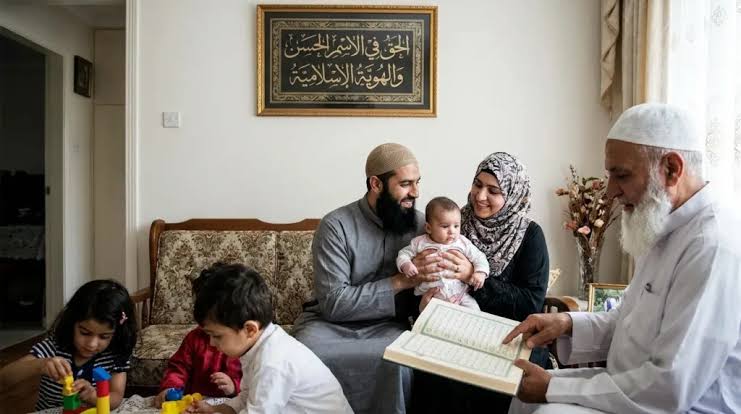
Indeed, an Islamic home is the foundation of the Ummah. It is the first school where belief is nurtured and character is formed. Allah says: “O you who have believed, protect yourselves and your families from a Fire whose fuel is people and stones” [Surah At-Tahrim 66:6]. The Prophet Muhammad (SAW) said: “Each of you is a shepherd and each of you is responsible for his flock” [Sahih al-Bukhari & Sahih Muslim]. Part of that responsibility is honoring the rights Allah has placed upon parents, and fulfilling the duties He has placed upon children.
An ideal Islamic home is built upon remembrance of Allah, justice, and mercy. Allah says: “And Allah has made for you from your home a place of rest” [Surah An-Nahl 16:80]. Imam Ibn al-Qayyim described the prophetic household as one filled with dhikr and good conduct. Imam al-Ghazali stated that the purpose of the home is to preserve religion, cultivate good manners, and raise a generation that worships Allah alone [Ihya Ulum al-Din, Bk 21, p. 42]. That balance is maintained when the rights of parents are respected and the duties of children are observed.
*The Rights of Parents*
In Islam, parents hold a station that comes immediately after the right of Allah.
1. The right to Tawheed-centered upbringing and du’a
Allah commands parents: “And enjoin prayer upon your family and be steadfast therein” [Surah Taha 20:132]. In return, children owe parents the right to be raised upon Tawheed and to continually make du’a for them. Allah teaches us: “My Lord, have mercy upon them as they brought me up when I was small” [Surah Al-Isra 17:24].
2. The right to good treatment, respect, and care
Allah says: “And your Lord has decreed that you do not worship except Him, and to parents, good treatment” [Surah Al-Isra 17:23]. Imam Ibn Kathir explained that kindness to parents is ranked second only to worship of Allah. This right includes speaking gently, lowering the voice, serving them, and not showing annoyance. The Prophet (SAW) was asked: “Who is most deserving of my good companionship?” He replied: “Your mother, then your mother, then your father” [Sahih al-Bukhari & Sahih Muslim]. The mother’s right is emphasized due to her hardship in pregnancy, birth, and nursing.
3. The right to lawful provision and obedience in good
Just as parents must provide halal sustenance, children have a duty to support parents when they are in need, and to obey them in matters that do not involve sin. The Prophet (SAW) said: “It is sufficient sin for a man that he neglects those whom he is obliged to support” [Sunan Abi Dawud]. This applies both ways — parents to children, and grown children to aging parents.
Parents also have the right to a home environment free from what corrupts. The legal maxim is: repelling harm takes precedence over acquiring benefit. They have the right for their home to be protected from disobedience, immorality, and anything that undermines faith.
*The Duties of Children*
Children are accountable within the home, and their primary duties revolve around birr — dutifulness.
1. Duty of obedience with wisdom
Children must obey parents in all that is good and in accordance with Shari’ah. This includes following household rules, assisting in responsibilities, and seeking their counsel. However, obedience has a limit. If parents command disobedience to Allah, the child must refuse politely. Allah says: “But if they endeavor to make you associate with Me that of which you have no knowledge, do not obey them but accompany them in this world with appropriate kindness” [Surah Luqman 31:15].
2. Duty of service and humility
Allah commands: “And lower to them the wing of humility out of mercy” [Surah Al-Isra 17:24]. Dutiful children assist in the home, anticipate parents’ needs, and prioritize their comfort. This is not limited to material help. It includes patience with their old age, visiting them, and speaking to them with softness even when there are disagreements.
3. Duty of preserving the family’s honor and faith
Children must protect the reputation of their parents and the sanctity of the home. This means avoiding behavior that brings shame, maintaining good manners outside, and contributing to an atmosphere of worship. Imam Ibn Taymiyyah stated that the uprightness of the Ummah begins with the uprightness of the household [Majmu’ al-Fatawa, Vol. 28, p. 129].
Conclusion:
An ideal Islamic home is a partnership of rights and duties. Parents are to lead with wisdom and mercy, providing halal provision and tarbiyah. Children are to respond with obedience, respect, and service. Allah says: “And cooperate in righteousness and piety, but do not cooperate in sin and aggression” [Surah Al-Ma’idah 5:2]. The Prophet (SAW) said: “The best of you are those who are best to their families, and I am the best to my family” [Sunan At-Tirmidhi]. When the rights of parents are fulfilled and the duties of children are carried out, the home becomes a fortress against corruption and a source of righteous offspring.
Prayers:
O Allah! As we witness the second Jumu‘ah in the month of Safar, preserve us in faith and health, forgive us, and ease hardship. Guide our leaders, alleviate poverty, and save us from bad governance. Protect Muslims in troubled lands, and restore Nigeria and the world from corruption, hunger, banditry, kidnapping, war, and all social evils. Amin.
Imam Yusuf Mashood Dagbo, PhD is the
Chief Imam, Government Girls Day Secondary School, GGDSS Central Mosque, Okesuna, Ilorin, Kwara State & Director, YUMAD Consults

