
By Patrick Wemambu
Centering on the Hydrocarbon Pollution Remediation Project (HYPREP), the framework for the Niger Delta environmental clean-up established by the Federal Government of Nigeria in 2016 was primarily to execute the recommendations of the 2011 United Nations Environment Programme (UNEP) report on Ogoniland in Rivers State.
As regards its status and scope, HYPREP manages over 130 project sites across Ogoniland’s four local government areas in Rivers State, covering land and shoreline remediation. Others include mangrove restoration, potable water delivery, healthcare expansion (such as an oncology unit), and local skills training.
Alongside HYPREP, a separate clean-up effort operates out of the Bodo Creek settlement following a legal settlement with Shell regarding major 2008–2009 oil spills. In terms of legislation, the House of Representatives Committee on Host Communities has worked on developing new enactments with HYPREP and the Federal Ministry of Environment.
This is to formally extend remediation frameworks from Ogoniland to other oil-impacted communities across the broader Niger Delta. For funding, the initiative is financed primarily by joint-venture oil operators and polluters like the IOCs operating within concerned areas.
Talking about oversight, civil society groups—including the Stakeholder Democracy Network (SDN) and the Centre for Environment, Human Rights and Development (CEHRD) provide some degree of monitoring. International partners—who independently track HYPREP’s progress, publish monitoring reports, and train local community monitors provide additional support.
Which brings us to the issue of the recent call by the Pan Niger Delta Forum, (PANDEF), a socio-political body representing the interests of the Niger Delta region – challenging presidential candidates in the 2027 general election to publish practical, measurable and time-bound plans for cleaning up oil-polluted communities in the Niger Delta.
The forum also demanded an increase in the derivation allocation to oil-producing states from the current minimum of 13 per cent to at least 50 per cent, declaring the completion of the Lagos-Calabar Coastal Highway non-negotiable. PANDEF further advocated the rehabilitation of the East-West Road and other deteriorated roads across the region, warning that infrastructure deficits and environmental degradation continue to undermine economic development.
These demands were contained in a communiqué read by PANDEF National Chairman, Ambassador Godknows Igali after a meeting of the body with its National Executive Committee in Abuja and virtually recently.
The meeting was chaired by the forum’s Board of Trustees chairman and former Akwa Ibom State governor, Obong Victor Attah, with regional leaders, traditional rulers and other stakeholders from the six South-South states in attendance.
On derivation, PANDEF said the 13 per cent allocation provided under Section 162(2) of the 1999 Constitution had remained unchanged for more than two decades, despite the environmental and developmental burdens borne by oil-producing communities.
It urged the Federal Government, the Revenue Mobilisation Allocation and Fiscal Commission and the National Assembly to work towards raising the allocation to at least 50 per cent.
The forum also demanded the abolition of the onshore/offshore dichotomy, insisting that the necessary legislative and constitutional changes should be pursued to address what it described as longstanding concerns over resource allocation.
On environmental remediation, PANDEF said more than 60 years of oil and gas exploration had left extensive pollution across the Niger Delta. It identified Nembe Creek in Bayelsa State, Odidi in Delta State and Kula in Rivers State as areas requiring urgent intervention.
Moreover, the forum called for adequate, sustained and transparent funding for the Ogoni clean-up, alongside a clear framework for extending environmental remediation to other polluted communities.
To the 2027 presidential candidates, they were implored to explain how they intend to address the Niger Delta environmental crisis, with specific targets, timelines and measurable outcomes rather than broad campaign promises.
PANDEF also welcomed the retention of the original broad alignment of the 750-kilometre Lagos-Calabar Coastal Highway as a distinct strategic project.
According to the forum, the highway has the potential to improve connectivity, stimulate trade and investment, strengthen national integration and support the development of the blue and marine economy.
It said it would establish a high-level technical committee to assist the Federal Ministry of Works with professional input, drawing on the experiences of the former Oil Mineral Producing Areas Development Commission (OMPADEC), the Niger Delta Development Commission (NDDC) and regional professionals.
The forum also called for a north-south railway link connecting the South-South to other parts of the country, arguing that improved rail connectivity would strengthen trade and ease the movement of people and goods.
Other matters included maritime infrastructure, which PANDEF welcomed government efforts to modernise the ports in Warri, Port Harcourt and Calabar, as well as proposals for deep-sea ports in Ibom, Bonny and Agge.
It urged the government to develop sustainable financing arrangements for the projects and position the region to benefit from trade with East, Central and Southern Africa, as well as opportunities under the African Continental Free Trade Area.
The forum further urged governments to prioritise gas infrastructure, power generation and gas-based industries, including mini-liquefied natural gas facilities, liquefied petroleum gas and compressed natural gas hubs, and petrochemical plants.
It said the region’s gas resources could support industrialization, improve electricity supply and create employment if backed by consistent investment and sound policies.
PANDEF also advocated stronger support for modular refineries through improved access to financing, streamlined licensing, technical assistance and compliance with environmental standards. It said modular refineries could complement large-scale refining facilities, support local businesses, create jobs and reduce dependence on imported petroleum products.
Reflecting on its first decade of existence, the forum reaffirmed its commitment to engaging the Federal Government, state governments, traditional institutions and the private sector to advance the Niger Delta region’s interests.
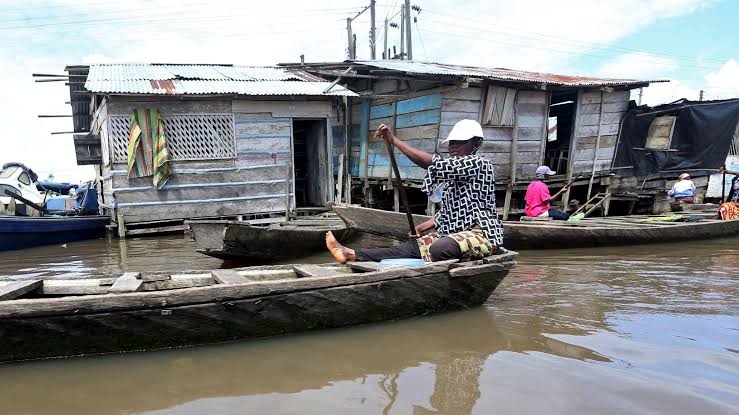
If truth must be told, PANDEF’s call is not only salutary but also necessary. After more than six decades of oil and gas exploration, production, the Niger Delta has given Nigeria its wealth. Yet, its people have been left with pollution, sickness, and poverty.
How is that? As the forum observed, the damage is real and on-going. Communities throughout the Niger Delta at the Nembe Creek in Bayelsa, Odidi in Delta, and Kula, to name a few have continued to bear the consequences of environmental degradation, pollution and damage to their ecosystems and livelihoods.
Needless to say, oil spills pollute drinking water. Gas flaring pollutes the air. Fish die. Crops die. Children drink poisoned water and breathe poisoned air. Therefore, a clean-up plan is not politics. It is a health plan. No candidate should be allowed to promise anything else while the people of the Delta are dying slowly from the oil that makes Nigeria rich.
No empirical formula is required to decipher that livelihoods have been destroyed. The Niger Deltan is a fisherman and a farmer. When the creek is polluted, the fisherman has no fish. When the soil is polluted, the farmer has no crop.
The clean-up is therefore an economic plan. Restoring the land means restoring jobs, food, and dignity without waiting for government handouts.
In conclusion, Ogoni proves that clean-up is possible, but also proves that without sustained funding and transparency, it becomes slow and politicized. Thus, Presidential Candidates of the various political parties would do well to tell Niger Deltans: How much they said Clean Up is to cost? From where are the resources to be sourced? Budget timeline? And who will monitor the exercise?
Talk, they say, is cheap. Vague promises characteristic of past experiences should no longer fly.

