
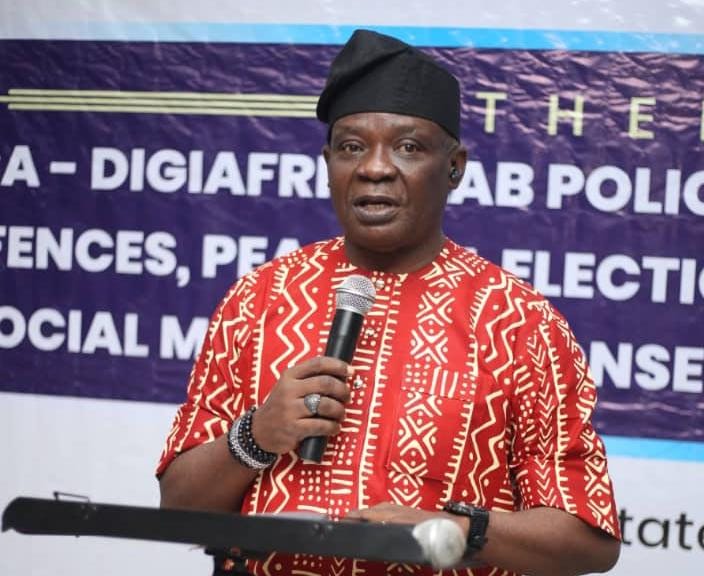
Stakeholders have called for the responsible use of social media and heightened public vigilance against misinformation ahead of the August 15 Osun State governorship election, warning that the spread of false information and hate speech could trigger electoral violence and undermine the credibility of the poll.
The call was made on Thursday at a one-day Policy Dialogue on Electoral Offences, Peaceful Elections, Responsible Use of Social Media and Consequence Management, organised by the Peering Advocacy and Advancement Centre in Africa (PAACA) in collaboration with the Digital Africa Research and Safety Lab (DigiAfricaLab) in Osogbo, Osun State.
The dialogue brought together representatives of the Independent National Electoral Commission (INEC), the Nigeria Police Force, the National Orientation Agency (NOA), civil society organisations, academia, the media, traditional and religious leaders, and digital influencers to examine emerging electoral risks and identify practical measures for ensuring a peaceful, credible and inclusive governorship election.
Speaking at the event, the Osun State Director of the National Orientation Agency (NOA), Mr. Adebiyi Stephen Adefarasin, urged residents to verify information before sharing it on social media and to make the forthcoming governorship election a model of peaceful and credible democratic practice.
He said the agency remained committed to working with stakeholders to build a digitally responsible society while promoting peaceful, free, fair and transparent elections.
According to him, although social media has become a powerful tool for information sharing, civic engagement and democratic participation, it must not be used to spread misinformation, disinformation, hate speech or other harmful content capable of threatening democratic processes.
“As we prepare for the forthcoming off-season governorship election in Osun State and look ahead to the nationwide general elections in 2027, I urge all Nigerians, particularly young people, media practitioners, civil society organisations, political actors and digital content creators, to embrace the principles of fact-checking, responsible communication, tolerance and respect for differing opinions. Peaceful elections are built on the foundation of informed, responsible and patriotic citizens,” Adefarasin said.
In his welcome address, the Executive Director of PAACA, Mr. Ezenwa Nwagwu, stressed the need to deepen public understanding of electoral offences, peaceful elections and responsible social media use.
He lamented that many Nigerians were unaware of the legal consequences of electoral offences, noting that both buying and selling Permanent Voter Cards (PVCs) are criminal acts punishable under the law.
“We need to centralise conversations around electoral offences, peaceful elections, responsible use of social media and consequence management so that different stakeholders can come to terms with what is right. A lot of people don’t know that if you sell your PVC, you can go to jail,” he said.
Nwagwu warned that electoral violence often begins with inflammatory rhetoric and misinformation, urging political actors and citizens alike to exercise restraint.
“We have a responsibility to educate citizens against violence. It is easy to speak truth to power, but we must also speak to ourselves. Osun people, it is your responsibility to make sure that the election is peaceful. Elections will come and go, but Osun will remain,” he said.
He added that democracy should not be measured solely by physical infrastructure but also by the protection of citizens’ freedoms and rights.
Founder and Executive Director of DigiAfricaLab, Rosemary Ajayi, in her remarks said digital threats now extend beyond misinformation to include fake social media accounts, impersonation and coordinated online manipulation capable of eroding public trust in elections.
“Digital threats are any behaviours, activities or content shared in digital spaces that can make people feel fear, anger or lose trust in the electoral system,” she said, urging citizens to verify information before sharing it and to use digital platforms responsibly.
Delivering the keynote address, Professor Adetunji Ogunyemi of the Department of History and International Relations, Obafemi Awolowo University, Ile-Ife, said peaceful elections remain the bedrock of democratic legitimacy, stressing that credible polls require the collective commitment of electoral institutions, security agencies, political actors, the media, civil society organisations and citizens.
The don urged political actors to embrace democratic values by accepting electoral outcomes, pursuing grievances through lawful channels and strengthening institutions rather than seeking to delegitimise the electoral process.
Professor Ogunyemi also warned that threats to electoral integrity now extend beyond physical violence to the digital space, where misinformation, disinformation, hate speech and the premature declaration of election results on social media can inflame tensions and erode public confidence.
He said, “The task before us today is not merely to revisit the already identified challenges that confront our elections before and after polling day. We are also here to identify the emerging threats that could undermine the conduct of free, fair and credible elections. One of the most pressing of these threats is the misuse of social media to compromise the electoral process, including the growing tendency of individuals to announce election results on digital platforms before they are officially declared by the legally constituted authorities. Such actions can mislead citizens, erode public confidence and create conditions that may escalate tension and electoral violence. This dialogue is therefore an opportunity for all stakeholders to confront both the old and the new dangers facing our democracy.”
The Resident Electoral Commissioner (REC) in Osun State, Mrs. Oluwatoyin O. Babalola reaffirmed the Commission’s commitment to conducting a free, fair, transparent and inclusive governorship election, assuring stakeholders that INEC would continue to work closely with security agencies, civil society organisations and other partners to strengthen public confidence in the electoral process.
The REC also emphasised the importance of verified information in maintaining public trust, urging citizens to rely on official channels for election-related updates and avoid circulating unverified reports capable of creating tension.
She said, “As we approach the governorship election, I urge all stakeholders to reject violence, misinformation, disinformation, vote buying, voter intimidation, and every other form of electoral malpractice. Elections should be contests of ideas, policies, and vision—not violence, manipulation, or intimidation.
“The influence of social media on modern elections cannot be overstated. While it is a powerful tool for information sharing and civic engagement, it can also be used to spread misinformation, manipulate public opinion, and erode confidence in electoral institutions.
“There have been instances where false information circulated widely on social media, causing unnecessary fear and discouraging citizens from participating in electoral activities. Many people share unverified information simply to gain attention or increase their online following, without considering the consequences.
“I therefore call on political actors, influencers, bloggers, content creators, and the general public to verify information before sharing it. Let us use our digital platforms to educate, unite, and promote peaceful coexistence rather than divide our communities. Every post, comment, video, and message should contribute to peace rather than conflict.”
In a communiqué issued at the end of the meeting, participants warned that the irresponsible use of social media, including the spread of misinformation, disinformation and hate speech, poses a direct threat to public confidence in elections and could escalate into real-world violence.
They resolved to reject electoral violence, vote-buying, voter intimidation, hate speech and misinformation before, during and after the governorship election, while urging citizens, political parties, media organisations and digital influencers to verify information before sharing it online.
The stakeholders also called for stronger coordination among INEC, security agencies, civil society organisations, traditional and religious leaders and the media to ensure timely dissemination of verified information, counter false narratives and promote peaceful, credible and inclusive elections in Osun State.

