
By Imam Mashood Dagbo, PhD
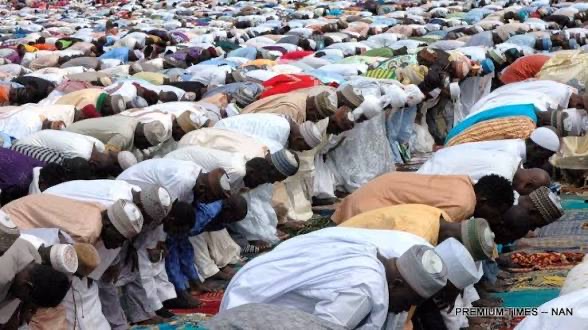
Prostration of gratitude is referred to in Arabic as Sujud al-Shukr. It is a non-compulsory and specific act of worship in Islam where a Muslim falls into prostration to express immediate thankfulness to Allah for a distinct, fresh blessing or for being saved from a calamity. It is not part of salah, but a standalone act of humility and recognition that all good and breakthrough comes from Allah alone. Though, there are many ways to express gratitude to Allah, but the most humble position is prostration, a position that cannot offer any other person or deity except Allah. However, it must be done for the following conditions:
- For new and unexpected blessings only, not for continuous blessings like hearing, sight, or daily health.
- It is to be done immediately when the blessing occurs.
- It doesn’t require wudu (ablution) facing qiblah, or covering awrah (nakedness).
Indeed, Allah didn’t mention prostration of gratitude verbatim in al-Qur’an, but the Prophet Muhammad (SAW) practiced it as a form when Allah said He appreciated those who gave gratitude to Him as Creator. Allah says: “Be grateful to Me and do not deny Me…” (Qur’an 2:152). Also, “If you are grateful, I will surely increase you…” (Qur’an 14:7). Similarly, scholars from
the four madhahib (four Schools of Law) agreed on its legitimacy, with slight differences in conditions. Generally, they considered it sunnah, except for Imam Hanbali who considered it Mustahab (Preferred).
However , it must be when a new, obvious blessing comes and when an obvious adversity is warded off for individuals or the ummah. Also when seeing someone afflicted, to thank Allah you were spared. Not for ongoing blessings. So, while all forms of dhikr are appreciation, while sujud al-shukr is distinguished by its spontaneity, prophetic example, and physical submission. It’s reserved for moments when Allah’s favour is so clear and sudden that words alone feel insufficient.
As it’s my tradition to link my weekly piece to an authentic Hadith of the Prophet Muhammad (SAW), it’s evident that the Prophet Muhammad (SAW) used to do it as related by Abu Bakr (RA) who reported him saying:
Whenever something pleasing happened to the Prophet (SAW), he would prostrate in gratitude to Allah (Sunan Abi Dawud, 2774). This Hadith is further elaborated by highlighting its lessons and jurisprudential implications for in-depth understanding and application as follows:
- The Hadith shows that gratitude is an immediate act of worship, which must not be delayed when a good thing happens to a believer or hears good news
- Hadith specifies that one of the ways of showing gratitude is by prostration as shown by the Prophet Muhammad (SAW). Indeed, it is distinct from ritual prayer, it is offered without Adhan, Iqamah, specific time and not necessarily facing Qiblah. It’s really a spontaneous response to an event
- Hadith shows that gratitude is beyond just verbal, but physical as demonstrated by the Prophet Muhammad (SAW) through which his prostration involves his heart, tongue and limbs. It is agreed to say the same prayer (du’ā’) in the prostration of prayer (salat) in it.
- Hadith establishes that showing gratitude increases blessings as Allah loves those who appreciate and He would in turn increase His favours and bounties on them
- Hadith specifies that gratitude nurtures constant awareness of Allah showing that turning to Him at moments of joy prevents arrogance and heedlessness
- Hadith is inferred by the scholars that prostration of gratitude should be for a new thing or happening, it’s not done for continuous and ongoing blessings like hearing or sight, because then a person would prostrate all days
- Hadith is further explained that other forms of showing gratitude are; saying AlhamduliLlaah, making du‘ā’, acknowledging blessings of Allah openly and praising Allah after everyday actions and major accomplishments as I did when I accomplished the journey of my PhD programme in Islamic Studies Education.
Prayer:
Please, O Allah! As we witnessed the fifth Jumu’a’h in the month of Shawwal, 1447 AH, may Allah accept our fasting, prayers and other Ibadah in this month and beyond in good faith and health.
O Allah! We confessed our sins before You, forgive us and cushion the effect of the hardship by Your Mighty and guide our leaders right and alleviate our abject poverty, save us from bad governance, protect Muslims from all worrying lands, and restore the world and Nigeria in particular, back to normal from pandemic, insecurity, hunger, banditry, kidnapping, war and other social evils rampaging the world with the blessings you accorded this month. Amin.
@ Imam Yusuf Mashood Dagbo, PhD; is the Chief Imam of Government Girls Day Secondary School, GGDSS Central Mosque, Okesuna, Ilorin, Kwara State & Director, YUMAD Consults, specializes in educational consultancy, cultural orientation, marriage counselling, event organization, public presentation, columnist, etc.

