
By Aaron Ossai
The House of Representatives Committee on Finance has directed the Nigeria Customs Service (NCS) to submit a comprehensive breakdown of the approximately ₦34 trillion worth of import duty waivers granted in 2025, including the beneficiaries, the legal basis for the concessions, and the purposes for which they were approved.
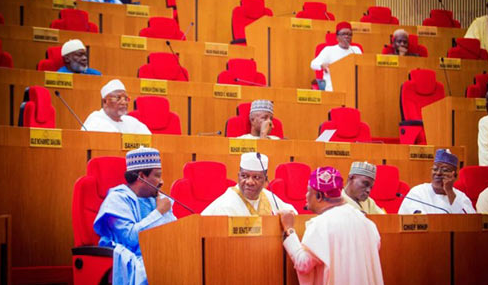
The directive was issued on Tuesday by the Chairman of the Committee, Hon. James Abiodun Faleke, during the appearance of the management of the Nigeria Customs Service before the panel as part of the National Assembly’s ongoing revenue monitoring and oversight exercise.
Faleke stressed that while the Committee was not opposed to the government’s waiver policy, lawmakers had a constitutional responsibility to ensure that such concessions were granted transparently and served the national interest.
According to him, the Committee wants to know the identities of the beneficiaries and whether the waivers achieved the objectives for which they were approved.
“Waiver is good. It is not a bad thing to grant waiver. But we want to know those who benefited from the waiver and the purpose for such waiver. It is okay if you grant waiver on medical and agricultural products.
“If you grant waiver, it is aimed at helping the economy to grow. For example, if you grant waiver on agricultural products, it is aimed at reducing the cost of food. So, we are not against waiver. But we want to know the beneficiaries of this ₦34 trillion waiver,” Faleke said.
The Committee also questioned the Nigeria Customs Service over what it described as inconsistencies in its revenue reporting, despite the agency surpassing its annual revenue targets.
Faleke noted that although Customs recorded impressive revenue collections, the financial records presented to the Committee failed to adequately explain the sources of the excess revenue generated beyond the approved targets.
He maintained that proper accountability required a detailed month-by-month explanation of revenue performance.
“We are not going to applaud your efforts now because your account books are not balanced. We know that you want to be transparent, but you have not told us how the excess money you are reporting came about.
“I can see that in some months, you under-declare your revenue collection and in other months, you overshoot the collection. We want to know what is responsible for this. You have to provide these little details that will help us properly assess your performance.”
Deputy Chairman of the Committee, Hon. Saidu Mohammed Abdullahi, argued that the Federal Government should raise the revenue targets assigned to its agencies, particularly revenue-generating institutions such as the Nigeria Customs Service.
According to him, the agency has consistently exceeded its annual targets, indicating that its revenue potential remains significantly higher.
“I personally believe that they can do more than the target we give to them.
“I think we are not pushing them enough. That is why they will always come up with excesses. In 2024, you were given a target of ₦5 trillion and you generated ₦6.1 trillion. In 2025, you were given a target of about ₦6 trillion and you generated ₦7.2 trillion. I believe that if we push you enough, you can do better.”
Responding to lawmakers’ concerns, the Comptroller-General of Customs, Bashir Adeniyi, represented by the Deputy Comptroller-General in charge of Finance, Administration and Technical Services, Kikelomo Adeola, clarified that the Nigeria Customs Service does not approve import duty waivers.
She explained that the Service merely implements approvals granted by the Federal Ministry of Finance in accordance with existing laws and government policy.
On trade facilitation, Adeola advocated the establishment of inland dry ports across the country, describing them as critical infrastructure that would reduce congestion at the nation’s seaports and improve cargo clearance.
She urged state governments to invest in such facilities to support economic activities.
“I will encourage all state governments to invest in inland dry ports. That will have a lot of impact on our operations. Any cargo that is marked for such inland port will not be delayed at the main port.
“The container will be transported directly to the inland port where it will be examined. That will reduce the pressure at the nation’s ports and increase trade facilitation in the states.”
Addressing concerns over delays in cargo clearance, Adeola informed the Committee that Customs scanners were largely functional, except for a few units currently undergoing repairs.
However, a member of the Committee, Hon. Ifeanyi Uzokwe, called on the Customs management to sanction officers responsible for operating the scanners whenever negligence contributes to equipment failure or operational delays.
Meanwhile, the Committee also turned its attention to the Corporate Affairs Commission (CAC), directing the agency to submit comprehensive records of all companies and businesses registered in Nigeria, including the registration fees paid by each entity.
Lawmakers further queried the Commission over its failure to submit its audited financial statements to the Fiscal Responsibility Commission (FRC) as required by law since 2019.
The Committee consequently directed the CAC to immediately reconcile its records with the Fiscal Responsibility Commission.
A representative of the Fiscal Responsibility Commission informed lawmakers that the Corporate Affairs Commission owed the Federal Government ₦13.9 billion in unremitted operating surplus accumulated over several years.
Responding, the Registrar-General of the Corporate Affairs Commission disclosed that the agency had already commenced reconciliation with the Fiscal Responsibility Commission and had reached an agreement to liquidate the outstanding liability through quarterly payments of ₦500 million.

