
By Olugbenga Salami
A leading food security expert, Professor Demo Kalla, has urged the Federal Government to shift from food security to food sovereignty, saying reliable access to affordable, quality food is a matter of national stability, not just development.
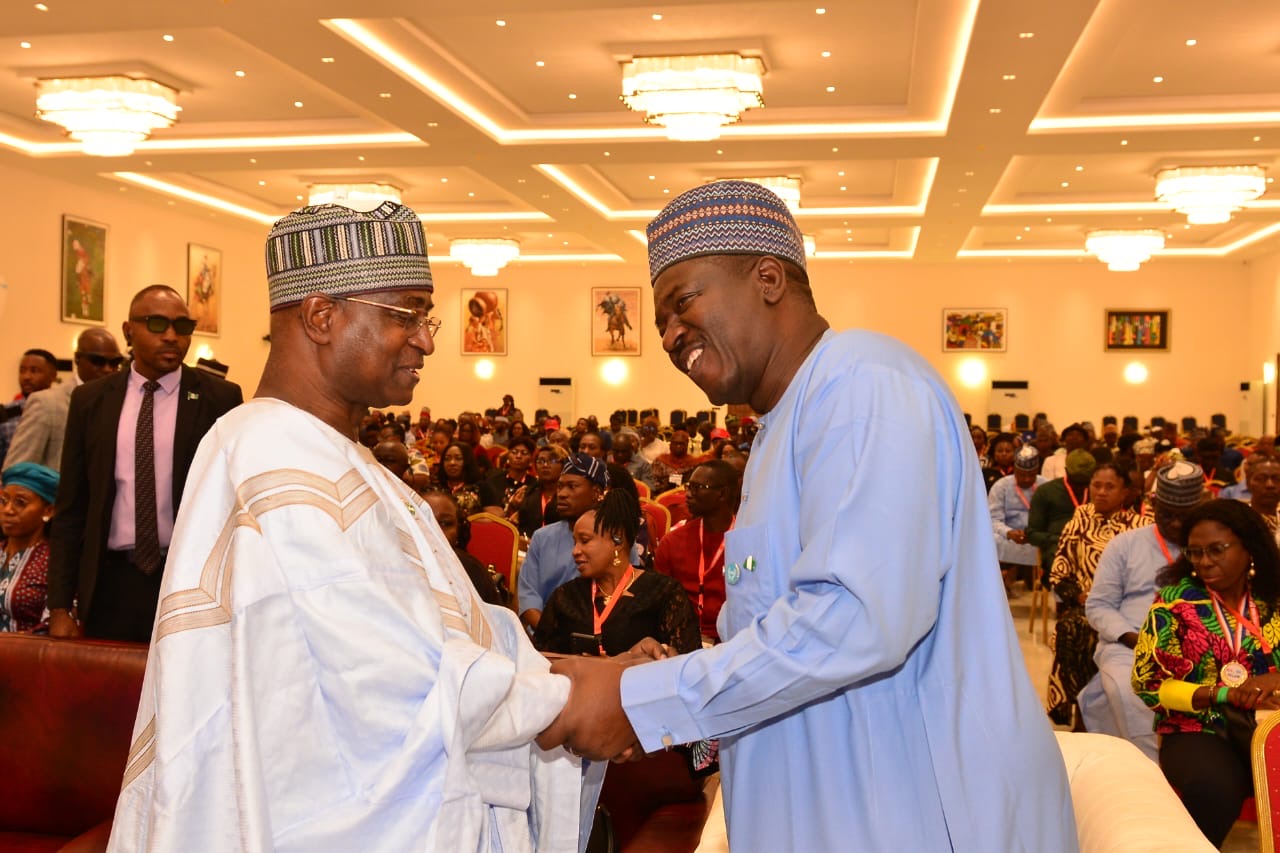
Kalla, Director of the TETFund Centre of Excellence on Food Security at Abubakar Tafawa Balewa University, Bauchi, spoke on “Politics of Food Security” at the Nigerian Institute of Public Relations, NIPR Week 2026 in Kaduna where policymakers, communication experts, and industry leaders examined the nexus of food security, policy, and agricultural branding.
Framing food security as a core test of governance, he said: “At its essence, food security is a test of governance—of whether leadership can translate vision into nourishment for all… where we fall short, hunger persists not by fate, but by design.”
“The true measure of leadership lies in its ability to ensure that no citizen is left behind at the table of national prosperity,” he added.
He called for curriculum reforms and the integration of innovation and data‑driven practices into agriculture, stressing that sustainable growth depends on research and technology adoption.
Kalla argued that Africa’s dominant narrative of food insecurity, climate change, poverty, and conflict must be re‑examined.
“Food and nutritional insecurities, climate change, entrenched poverty, weak governance, political instability, and violent conflict… are not isolated realities; they are symptoms of complex political and economic systems that shape who has access to food, how it is produced, and whose voices are heard,” he said.
He restated the Food and Agriculture Organization, FAO’s four pillars of food security: availability, access, utilization, and stability, saying “In simple terms, it means reliable access to adequate, nutritious food at all times.”
The politics of food security, he added, must be driven by vision, accountability, and collective action, not rhetoric.
Addressing communication professionals, Kalla said PR practitioners are “not bystanders, but custodians of narrative and catalysts of national resolve.”
“For in shaping what a nation talks about, they ultimately help shape what a nation chooses to do,” he noted, calling for deliberate communication strategies to counter negative narratives, boost citizen engagement, and turn policy into results.
Citing disruptions from COVID‑19, the Russia‑Ukraine conflict, and Middle East tensions, Kalla warned that Nigeria can no longer rely on food imports, lamenting that these crises have suspended supply chains, raised energy and fertilizer costs, and deepened vulnerabilities even in remote communities.
“Nigeria cannot depend on food imports even in areas where we have global competitive advantage,” he said.
While noting the President Bola Tinubu administration’s pledge to reposition agriculture as an economic driver, Kalla said implementation remains the key challenge.
He referenced the African Union’s Comprehensive Africa Agriculture Development Programme, which recommends allocating at least 10% of national budgets to agriculture—an obligation Nigeria has yet to meet.
Kalla linked rising insecurity to deepening rural poverty and economic exclusion, warning that neglecting agriculture carries severe social costs.
Also speaking, the Minister of Livestock Development, Idi Mukhtar Maiha said the government has intensified efforts to unlock livestock’s economic potential and improve nutrition outcomes.
Maiha said the new Federal Ministry of Livestock Development marks a structural shift to integrate the sector into the formal economy after decades of underutilisation, disclosing that government is targeting a multi‑billion‑dollar opportunity in the sector, focusing on value across the production chain.
Current reforms, he explained, aim to boost productivity through better animal health systems, feeding practices, market access, and value addition.
The broader goal, he said, is to address Nigeria’s low consumption of animal‑source protein and improve access to balanced nutrition.
Maiha challenged perceptions of agriculture, describing livestock farming as a viable, profitable enterprise with continuous returns across dairy, meat, eggs, and leather.
Earlier, NIPR President, Ike Neliaku said the institute would deepen the national food security conversation beyond the conference and announced plans to establish an Agriculture and Food Security Hub, with Kalla and other experts as consultants.
The hub, he said, would strengthen communication strategies, stakeholder engagement, and knowledge exchange to support Nigeria’s agricultural and food security agenda.

