
By Palma Ileye
Sightsavers Nigeria has called on journalists across the country to intensify advocacy for disability rights, promote inclusive development and hold governments accountable for implementing policies designed to protect persons with disabilities.
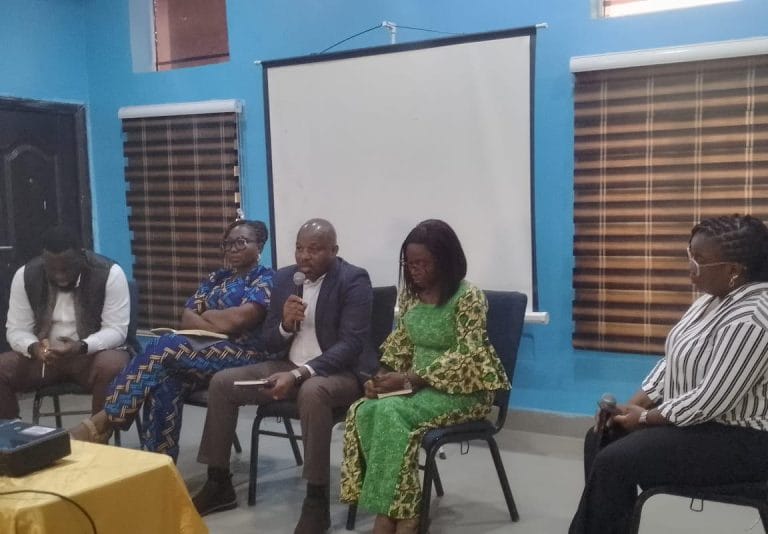
The Country Director of Sightsavers Nigeria, Professor Joy Shuaibu, made the call during a two-day Media Partners Meeting in Keffi, Nasarawa State, themed, “Strengthening Media Partnerships for Inclusive and Impactful Storytelling.”
Shuaibu, who was represented at the meeting by the organisation’s Country Advocacy Coordinator, Mrs. Esther Bature, said the media had a critical responsibility to amplify the voices of marginalised communities, challenge discrimination and ensure that the concerns of persons with disabilities received adequate attention in public discourse.
She urged journalists to go beyond conventional reporting by exposing barriers to inclusion, promoting equal opportunities and using their platforms to influence public attitudes and policy decisions.
According to her, effective media advocacy would strengthen demands for government accountability and ensure that development programmes produce meaningful and sustainable improvements in the lives of persons with disabilities.
She also stressed the need for stronger collaboration between development organisations and media practitioners to sustain public attention on disability-related issues.
Speaking at the meeting, Sightsavers’ Senior Finance Officer, Mr. Fabian Tukman, said Nigeria’s major challenge in disability inclusion was not the absence of policies and legislation but the failure to implement existing provisions.
He noted that several policies, including the National Policy on Inclusive Education, renewed in 2022, remained largely on paper, with only a few states adopting the policy and updating their educational curricula accordingly.
Tukman also expressed concern over the continued inaccessibility of public buildings, including airports, schools and hospitals, despite the existence of the Discrimination Against Persons with Disabilities (Prohibition) Act.
He said public infrastructure and services were still largely not designed to accommodate people with hearing, visual and intellectual impairments, leaving many dependent on manual assistance rather than accessible facilities.
He called for the effective dissemination of disability-related policies to state and local government levels, stressing that the media must help raise awareness, monitor implementation and tell stories that expose the everyday challenges faced by persons with disabilities.
On economic empowerment, Tukman disclosed that Sightsavers provides revolving funds to persons with disabilities to enable them to establish and expand businesses.
He also highlighted the organisation’s Inclusion Works initiative, which connects persons with disabilities to employment opportunities in companies, including MTN, based on their skills and qualifications.
He said the organisation was also implementing the Digital Futures project, supported by the Mastercard Foundation, in Kano, Kaduna, Lagos and Abuja.
According to him, the initiative provides nine months of training, mentorship on job applications and interviews, career and job fairs, as well as support for entrepreneurship.
He further highlighted the IT Bridge Academy, which equips young persons with disabilities with professional and technical skills, mentorship and opportunities for employment.
Tukman disclosed that two beneficiaries of the programme had recently secured permanent employment with MTN Nigeria after completing their internship, while five others were retained as contract staff by Sterling Bank.
On education, he said Sightsavers had collaborated with the National Teachers Institute to develop policy documents and train more than 1,000 teachers in inclusive teaching methods to ensure that children with and without disabilities could learn together.
He added that more than 1,500 health workers had also received training in disability-inclusive family planning, while some health facilities had benefited from accessibility improvements.
Earlier, Bature called for sustained media collaboration in promoting disability inclusion, noting that journalists played an important role in strengthening accountability and showcasing the impact of development interventions.
She expressed appreciation to media partners for their continued support, saying their reports had helped sustain public attention on Sightsavers’ activities and demonstrated the results of investments in its programmes.
On eye health, the organisation’s Eye Health Officer, Dr. Joshua Ibenu, disclosed that Sightsavers had screened more than 4.6 million Nigerians for eye conditions and supported over 14,000 cataract surgeries between 2013 and 2026.
Ibenu said the organisation had also trained more than 27,000 teachers and primary eye health workers in basic eye care over the past 13 years.
He disclosed that approximately 4.2 million Nigerians aged 40 and above were living with blindness or visual impairment, while more than one million adults were blind.
According to him, about 84 per cent of blindness cases in Nigeria are avoidable, with cataract accounting for 43 per cent of blindness.
He explained that cataract could be effectively treated through surgery but lamented that access to eye health services remained limited, with only about 4.4 per cent of Nigerians having access to such services.
Ibenu said poor vision also had serious economic consequences, resulting in lost productivity, reduced income and increased dependence on family members.
He stressed that investments in cataract surgery, spectacles, school eye health programmes and primary eye care would generate significant social and economic benefits.
The Eye Health Officer added that more than 60,000 Nigerians had benefited from refractive error correction services through Sightsavers’ programmes over the past decade.
He said the organisation’s interventions were currently being implemented in seven States and the Federal Capital Territory, adding that it had contributed to the development of major national eye health policies and guidelines.
These include the National Eye Health Policy, National Eye Health Strategy and Nigerian Glaucoma Guideline.
Giving an overview of the organisation’s global impact, Ibenu said Sightsavers had supported 9.7 million cataract operations and conducted 235.8 million eye examinations worldwide.
Also speaking, Sightsavers’ Technical Manager for Surgery, Antibiotics, Facial Cleanliness and Environmental Sanitation (SAFE), Grace Ajege, emphasised the importance of improved environmental sanitation and hygiene in tackling Neglected Tropical Diseases.
She said sustained hygiene and sanitation practices were necessary to protect communities and maintain the gains achieved through disease prevention interventions.
The organisation also highlighted its Girls Inclusion Partnership Project, implemented in Kano and Edo States, which provides young women with disabilities with vocational and entrepreneurial skills to improve their economic independence.
However, Sightsavers identified inadequate funding as a major challenge affecting the expansion of its interventions, particularly in underserved communities and states in southern Nigeria.
The organisation called for stronger collaboration among government institutions, development partners and the media to improve access to eye care, strengthen disability-inclusive policies and create opportunities for persons with disabilities to participate fully in society.
The two-day meeting brought together 34 selected journalists from Kogi, Kwara, Benue, Nasarawa and Plateau States, as well as the Federal Capital Territory, to strengthen media understanding and reporting of disability inclusion and eye health issues.

