
By Kehinde Ibrahim, Lagos
For decades, Nigeria’s fiscal fortunes have risen and fallen with the global oil market. While crude oil exports have remained a major source of government revenue, repeated price shocks, production disruptions and fluctuating global demand have highlighted the vulnerability of relying heavily on petroleum income. The challenge has become even more pressing as government expenditure continues to rise, driven by the need to finance infrastructure, improve healthcare and education, strengthen security and expand social investment programmes.
Against this backdrop, Nigeria is increasingly looking beyond its borders for innovative solutions to one of its biggest economic challenges—mobilising sufficient domestic revenue. The Federal Government is now throwing its weight behind a regional initiative aimed at modernising tax administration across West Africa, strengthening cooperation among tax authorities and creating a more coordinated framework for revenue collection.
The initiative represents a shift from viewing taxation solely as a domestic policy issue to recognising that many of today’s tax challenges transcend national boundaries. As businesses expand across multiple jurisdictions, digital commerce grows rapidly and regional trade deepens under the African Continental Free Trade Area ,AfCFTA, governments are under increasing pressure to cooperate in tackling tax avoidance, illicit financial flows and compliance gaps.
Officials believe that harmonising tax reforms across the region could significantly improve revenue collection, promote transparency and provide governments with the financial resources needed to drive long-term economic development.
At a high-level meeting on regional tax cooperation, government representatives stressed that closer collaboration among African tax authorities would improve compliance, strengthen institutional capacity and reduce opportunities for tax evasion.
According to officials, the regional framework seeks to modernise tax administration through digital technologies, enhanced information sharing and common regulatory standards that make tax systems more efficient and transparent.
The government maintains that Nigeria’s participation aligns with its broader economic reform agenda, which places significant emphasis on increasing non-oil revenue, broadening the tax base and improving fiscal sustainability.
For policymakers, stronger domestic revenue has become increasingly important as Nigeria seeks to finance development without excessive dependence on borrowing.
The country’s growing population and expanding infrastructure deficit require substantial public investment. Roads, railways, power infrastructure, schools, hospitals and security operations all demand consistent funding.
Yet revenue generation has struggled to keep pace.
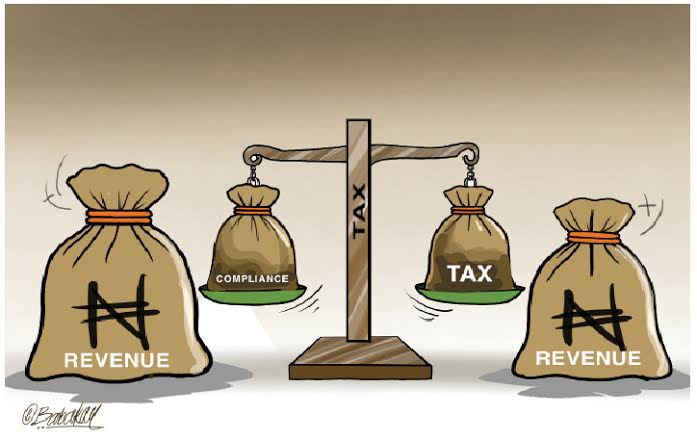
Although Nigeria remains Africa’s largest economy by GDP, its tax-to-GDP ratio remains relatively low compared to many emerging and developed economies. Economists have long argued that the country’s revenue challenge stems less from low tax rates than from weak compliance, widespread informality, tax leakages, multiple taxation and administrative inefficiencies.
Successive administrations have introduced reforms aimed at improving tax collection, digitising tax administration and expanding the number of registered taxpayers. Progress has been recorded in several areas, particularly through increased automation and improved taxpayer databases, but significant challenges remain.
The latest regional initiative seeks to complement the domestic reforms by addressing problems that individual countries cannot solve alone.
One of the biggest concerns is cross-border tax avoidance.
As multinational companies expand across Africa, differences in national tax systems can create opportunities for profit shifting and aggressive tax planning.
Companies may legally structure operations in ways that reduce taxable profits in higher-tax jurisdictions while transferring earnings to countries with more favourable tax regimes.
Although such practices often comply with existing laws, they can substantially reduce government revenues.
Regional cooperation could help close these gaps.
By harmonising tax rules and improving information exchange, governments would be better positioned to identify inconsistencies, investigate suspicious transactions and ensure businesses pay appropriate taxes where economic activities actually occur.
Experts also believed stronger regional coordination would improve the fight against illicit financial flows.
Africa loses billions of dollars annually through illegal capital transfers, trade mispricing and financial crimes that weaken public finances and reduce governments’ ability to invest in development.
Enhanced cooperation among tax authorities could significantly improve monitoring, investigations and enforcement.
The initiative also reflects changing realities in the global economy.
The rapid growth of digital services has complicated taxation worldwide.
Technology companies increasingly generate substantial revenues in countries where they maintain limited physical operations.
Traditional tax systems often struggle to capture these new business models.
Regional cooperation offers opportunities to develop common approaches to taxing the digital economy while reducing regulatory uncertainty for businesses.
Another important objective is improving the overall investment climate.
Investors generally prefer transparent, predictable and efficient tax systems.
When neighbouring countries adopt significantly different tax regulations, businesses operating across borders face higher compliance costs, increased administrative burdens and greater uncertainty.
A harmonised regional framework could simplify compliance requirements while encouraging greater investment across West Africa.
For Nigeria, attracting both domestic and foreign investment remains central to achieving sustained economic growth.
Tax certainty can play an important role in influencing investment decisions.
Businesses are more likely to commit long-term capital when fiscal policies are stable and regulatory frameworks remain consistent.
Regional tax cooperation may therefore deliver benefits extending beyond revenue mobilisation.
It could also strengthen economic integration by supporting the objectives of the African Continental Free Trade Area.
AfCFTA aims to create a single African market by reducing trade barriers, increasing intra-African commerce and encouraging industrial development.
However, expanding regional trade also requires stronger institutional cooperation.
Without coordinated tax administration, increased cross-border transactions could create additional opportunities for tax avoidance and compliance disputes.
Nigeria’s support for regional reform recognises that trade liberalisation and tax administration must evolve together.
Efficient revenue systems ensure governments benefit from expanding commerce while maintaining a fair and competitive business environment.
The initiative further aligns with Nigeria’s ongoing efforts to modernise tax administration through technology.
Digital platforms now allow taxpayers to register online, file returns electronically and make payments through secure channels.
Automation has improved efficiency, reduced processing times and minimised opportunities for human interference.
Regional collaboration could accelerate the adoption of similar technologies across neighbouring countries, facilitating smoother exchange of information and strengthening tax enforcement. Knowledge sharing represents another significant advantage. African tax authorities face many common challenges.
Countries implementing successful reforms can provide valuable lessons for others seeking to modernise their institutions.
Training programmes, technical cooperation and joint capacity-building initiatives could significantly improve administrative performance across the region.
However, achieving meaningful regional tax reform will require sustained political commitment.
Harmonising policies among multiple countries with different legal systems, economic priorities and administrative capacities will inevitably present challenges.
Governments must agree on common standards while preserving sufficient flexibility to address national circumstances.
Building secure systems for exchanging taxpayer information will also require substantial investments in technology and cybersecurity.
Protecting taxpayer confidentiality while promoting transparency remains an important consideration.
The private sector will equally play a critical role.
Businesses operating across borders are among the primary stakeholders affected by tax reforms.
Continuous engagement between governments, taxpayers, professional bodies and industry groups will help ensure reforms improve compliance without unnecessarily increasing the cost of doing business.
Analysts argued that expanding the tax base should remain a higher priority than increasing tax rates.
Improving compliance among existing taxpayers, formalising informal businesses and reducing revenue leakages can generate substantial fiscal gains without placing excessive burdens on compliant companies.
This approach supports economic growth while strengthening public finances.
Nigeria’s broader fiscal reform agenda increasingly reflects these principles.
Authorities have emphasised improving tax administration, reducing inefficiencies and simplifying compliance procedures rather than relying solely on higher taxation.
The regional initiative reinforces these objectives by promoting coordinated solutions to common challenges.
For governments across West Africa, stronger domestic revenue has become increasingly important amid tightening global financial conditions.
Higher borrowing costs, volatile commodity prices and growing development needs have heightened the urgency of building more resilient public finances.
Reliable tax revenues provide governments with greater flexibility to respond to economic shocks while financing essential public services.
Education, healthcare, transportation, security and climate resilience all depend on sustainable fiscal resources.
If successfully implemented, the regional tax reform framework could significantly enhance Nigeria’s revenue mobilisation efforts.
Beyond generating additional government income, it has the potential to strengthen institutional governance, improve investor confidence and deepen economic integration across West Africa.
More importantly, it reflects a broader recognition that effective taxation in today’s interconnected economy requires cooperation rather than isolation
As Africa continues advancing regional integration through AfCFTA and other initiatives, tax administration will increasingly become a shared responsibility among neighbouring countries.
For Nigeria, the pursuit of regional tax reform is therefore more than a fiscal policy adjustment. It is part of a wider economic transformation strategy aimed at building a stronger, more diversified and more resilient economy.
Success will ultimately depend on implementation. Agreements reached at regional meetings must translate into practical reforms, stronger institutions, improved technology and sustained collaboration among participating countries.
If these objectives are realised, Nigeria could substantially strengthen its domestic revenue base, reduce dependence on oil earnings and create a more sustainable foundation for long-term economic development. In an era where economic activities increasingly transcend national borders, regional tax cooperation may prove to be one of the country’s most important tools for achieving lasting fiscal stability and inclusive growth.

