
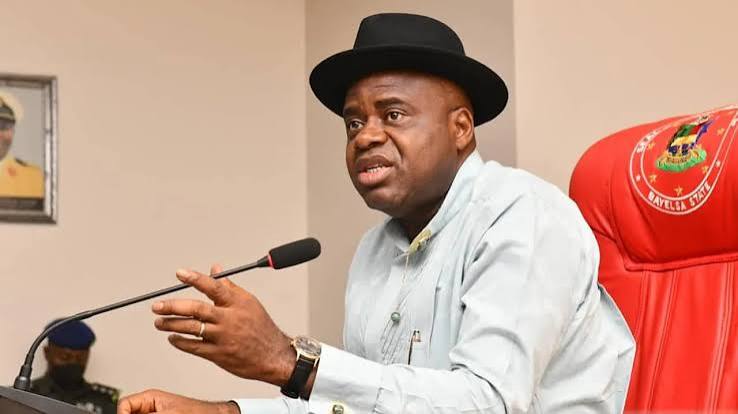
*Obasanjo, Diri demand higher oil derivation paid to oil-producing states
*Insist Niger Delta deserves fairer share of wealth generated from its natural resources
*13% derivation should be starting point rather than final settlement – Obasanjo
*Urges oil producing states to sustain their demand for better deal
By Eunice Nnachi, Yenagoa
Former President Olusegun Obasanjo and Bayelsa State Governor Douye Diri have called for an increase in the 13 per cent derivation paid to oil-producing states, insisting that the Niger Delta deserves a fairer share of the wealth generated from its natural resources.
They spoke on Monday at the inauguration of Refinery project at Obunagha, Yenagoa Local Government Area of Bayelsa State.
Obasanjo described the existing 13 per cent derivation as a starting point rather than a final settlement, urging oil-producing states to sustain their demand for a better deal.
Obasanjo recalled that when he visited the site eight years ago, there was little evidence of the development now taking shape, expressing satisfaction with the progress made.
He said the refinery could potentially double its capacity after completion, provided the necessary support was sustained.
“I have explained that I will be officially 90 years by next March. The project has to be completed before I exit,” he said.
On the demand for increased derivation, Obasanjo agreed that oil-producing states and communities had not received a fair deal, adding that the 13 per cent allocation should not prevent them from seeking a higher share.
He also praised Diri for using Bayelsa’s available resources to execute projects across the state.
Governor Diri, in his remarks, said the refinery represented a major step towards addressing the historical marginalisation of oil-producing communities, arguing that communities whose resources sustain the national economy should have a greater role in the industry.
The Governor criticised the Land Use Act and the current derivation formula, maintaining that the region deserved a more equitable share of the benefits from its natural resources.
He said the region’s agitation was driven by the desire to participate meaningfully in the exploitation and processing of its resources, rather than allowing other parts of the country to reap most of the benefits.
“As people of the Ijaw ethnic nationality, we have protested and fought because we feel that God gave us something in our land, but we are not benefiting from it. Others are benefiting and see us as second-class citizens,” he said.
Diri argued that the current arrangement, under which states have control over surface resources while the Federal Government controls resources beneath the ground, was unjust.
“We do not want to take everything to ourselves. We just want to be co-players in determining how it is done. Thirteen per cent is not enough for the states,” he added.
The Governor described the refinery as an opportunity for Bayelsa people to become more involved in the petroleum industry and urged young people in the state to acquire the skills needed to benefit from the investment.
He also stressed the importance of processing Africa’s natural resources within the continent, saying local value addition was essential for economic development.
Diri called on oil companies operating in the Gbarain/Obunagha area to support the state government’s efforts by rehabilitating the road leading to the refinery.
The project is expected to expand domestic refining capacity and create opportunities for greater local participation in an industry central to the region’s economy.

