
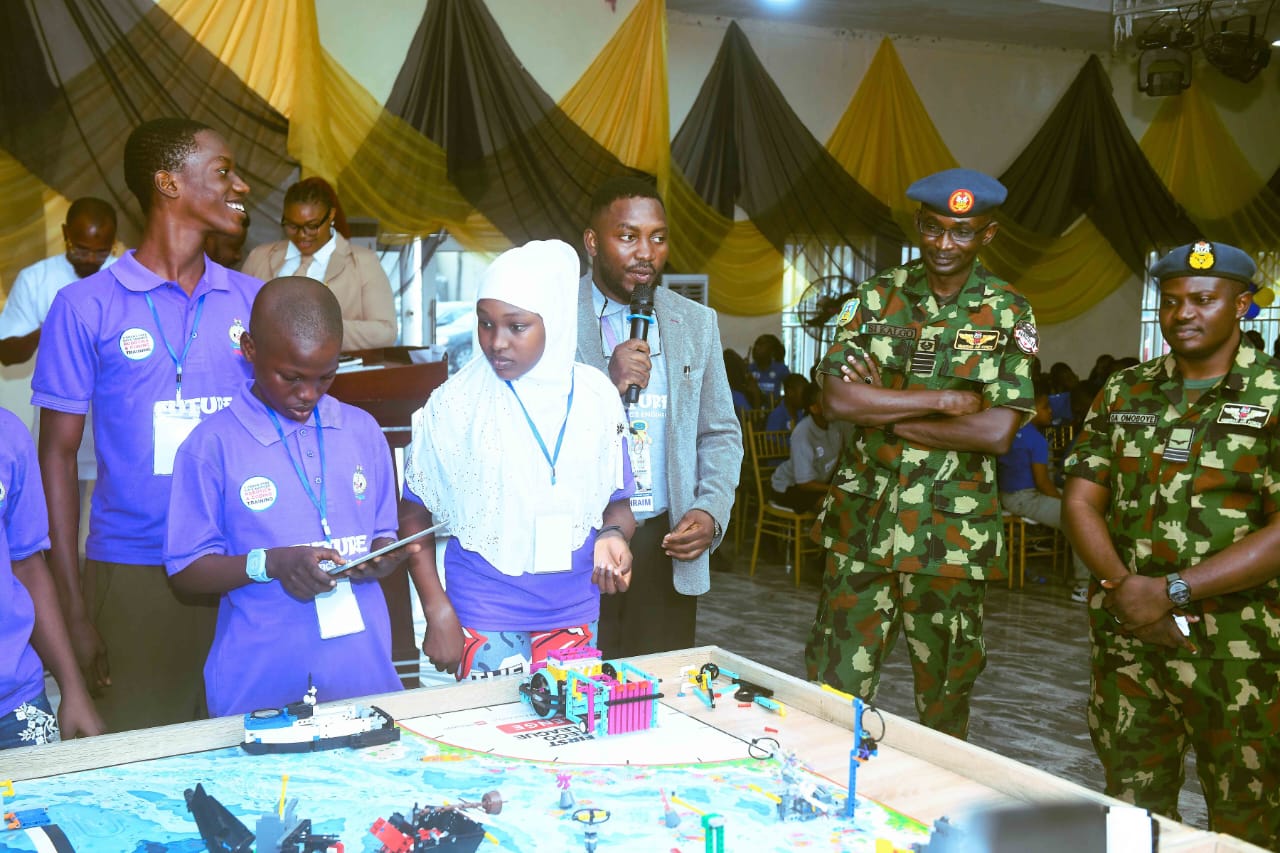
The Founder of EK EdTech Africa, Mr Nyigba Ephraim Korshima, has said the decision by the 301 HAG Cooperative Multipurpose Society (301 HAG CMS) to train more than 100 children in coding, robotics skills is aimed at preparing them for the future of work.
Ephraim noted the third edition of the Summer Coding and Robotics Camp organised by the 301 HAG Cooperative Multipurpose Society (301 HAG CMS) in partnership with EK EdTech Africa.
The programme is designed to expose children of cooperative members to practical technology and STEM education while developing their creativity, problem-solving abilities, teamwork and critical-thinking skills.
Ephraim said the continued growth of the initiative into its third edition demonstrated the organisers’ commitment to equipping children with skills needed to thrive in an increasingly digital world.
“We are determined to empower young innovators with skills that matter in today’s digital world,” he said.
Participants at the camp are receiving hands-on training through practical projects using LEGO Spike Prime and mBot kits, giving them opportunities to experiment with coding, robotics and other emerging technologies in an engaging learning environment.
According to the organisers, more than 100 children are participating in this year’s edition, making it the largest cohort since the initiative began.
Ephraim, an electrical and electronics engineer with experience in STEM education, youth empowerment and robotics facilitation, said early exposure to science, technology, engineering and mathematics was central to the camp’s mission.
He explained that the initiative was established to equip children with digital and problem-solving skills through practical learning, coding, robotics and teamwork.
“Our objective is to inspire creativity, innovation, and resilience in young minds, ensuring they are not just consumers of technology but creators and innovators who can thrive in a fast-changing world,” he said.
He described the camp as a demonstration of 301 HAG CMS’s belief that children from different backgrounds should have access to quality STEM education.
“This camp is not just about building robots; it’s about building confidence, collaboration, and critical thinking,” he said.
“It represents a platform where children learn by doing, where mistakes become lessons, and where young Nigerians begin to see themselves as global problem-solvers.”
Ephraim further maintained that Nigerian children could compete favourably with their counterparts in the United States, Europe and Asia if given the right exposure, training and opportunities from an early age.
He therefore called for stronger collaboration between the public and private sectors to expand the initiative through increased funding, policy support, provision of STEM laboratories in schools and sponsorship of innovation challenges.
He also urged aspiring young innovators to remain curious, consistent and committed to continuous learning.
“Stay curious, be consistent, and never stop learning,” he advised, stressing that innovation is built through small steps, persistence and collaboration.
Now in its third edition, the 301 HAG CMS Summer Coding and Robotics Camp is positioning itself as a platform for nurturing the next generation of Nigerian innovators by providing children with practical exposure to emerging technologies and equipping them with skills required to thrive in the digital economy.

