By Michael Oche
A coalition of civil society organisations, labour representatives and anti-corruption advocates have called for stronger collaboration in the fight against corruption and illicit financial flows, following the release of a new investigation linking current and former Nigerian public officials and their associates to hundreds of properties in the United States.
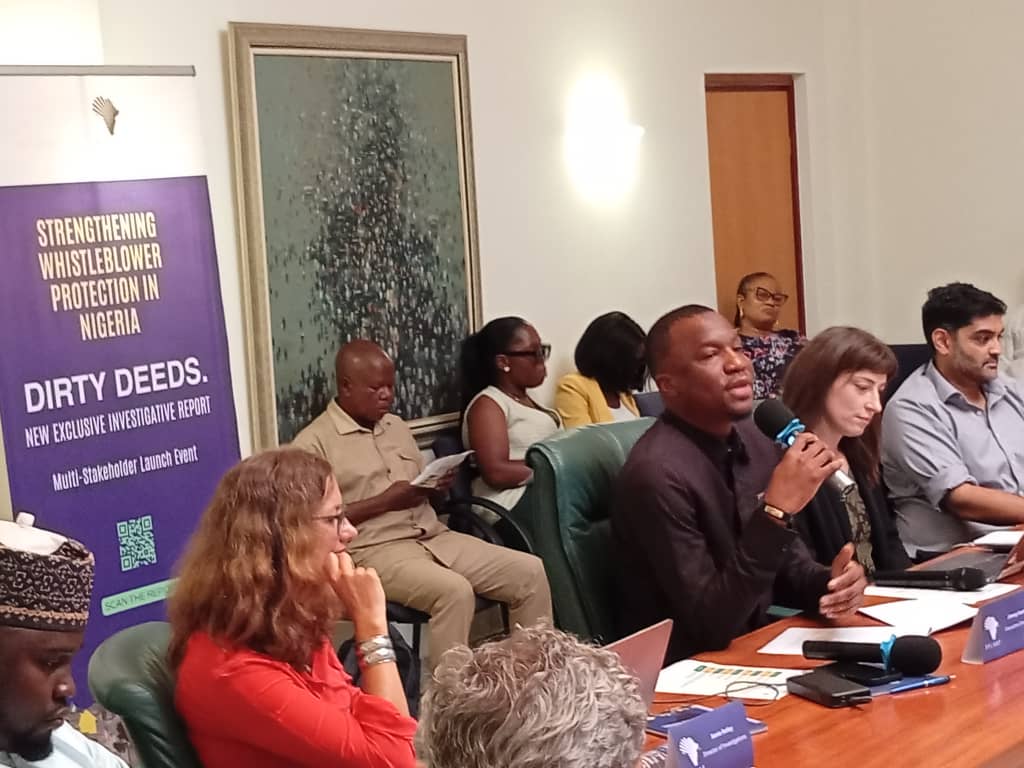
The report, titled “Nigeria: Dirty Deeds — How Top Nigerian Officials Bought a Piece of America,” was launched at the Yar’Adua Centre in Abuja by the Platform to Protect Whistleblowers in Africa (PPLAAF) in partnership with the Anti-Corruption Data Collective (ACDC).
The event brought together representatives of The Solidarity Centre, Transparency International, the Civil Society Legislative Advocacy Centre (CISLAC), labour organisations and other civil society groups, who stressed the need for a coordinated campaign against corruption and stronger legal protection for whistleblowers in Nigeria.
According to the investigation, 284 properties in the United States, collectively valued at nearly $271 million, have been linked to 61 current and former high-level Nigerian officials, their families, associates and affiliated companies. The properties were acquired from 1991 onwards, while 152 properties valued at approximately $177 million were acquired while the officials concerned were still in office.
The report examined property records and corporate information to trace links between Nigerian politically exposed persons and real estate holdings in the United States.
Investigators said they identified a number of transactions with characteristics that warranted further scrutiny, including purchases made during periods of public service, acquisitions without apparent financing and the use of companies or intermediaries that could obscure ownership.
PPLAAF said 230 of the 284 properties, representing about 81 per cent, were purchased without apparent financing, with a combined value of approximately $232 million.
The organisation said the findings should prompt further examination by relevant Nigerian and US authorities.
The report also states that 39 of the 61 individuals examined had previously been publicly accused, indicted or sentenced in corruption-related cases.
The investigators, however, stressed that the property links themselves should not be treated as proof that the assets were purchased with stolen public funds and that further investigation and due process are required.
Speaking on the findings, PPLAAF Executive Director Jimmy Kande said the investigation highlighted the need for Nigerian and US authorities to work together to establish the sources of funds used in the transactions and, where wrongdoing is proven through due process, pursue the recovery of public assets.
The organisations at the Abuja launch also used the occasion to renew calls for the enactment of a comprehensive whistleblower protection law in Nigeria.
They argued that whistleblowers and investigative actors play an important role in exposing corruption, financial misconduct and abuse of public resources, but require stronger institutional and legal safeguards to perform that role effectively.
The civil society and labour groups said the findings of the Dirty Deeds investigation would provide additional material for their continuing advocacy, public campaigns and anti-kleptocracy efforts, particularly around tracing illicit wealth across borders and strengthening accountability mechanisms.
They called for closer cooperation among civil society organisations, labour, investigative journalists and relevant government institutions to ensure that information about suspected illicit assets is properly investigated rather than left without follow-up.
The groups further urged policymakers to prioritise legislation capable of protecting people who disclose information in the public interest, while ensuring that allegations against public officials are subjected to independent investigation and judicial processes.
For the campaigners, the Dirty Deeds report goes beyond the identification of overseas property holdings and raises broader questions about how illicit wealth can move across international borders and how financial and property systems can be used to conceal beneficial ownership.
PPLAAF has called on Nigerian and US authorities to investigate the assets and transactions identified in the report, examine their sources of funding, strengthen cross-border cooperation and establish mechanisms for the recovery and repatriation of assets proven through legal processes to have been acquired with stolen public funds.
The Abuja launch is therefore expected to serve as a platform for renewed civil society and labour advocacy for greater transparency, stronger whistleblower protection and enhanced international cooperation in Nigeria’s efforts to combat corruption and illicit financial flows.

