
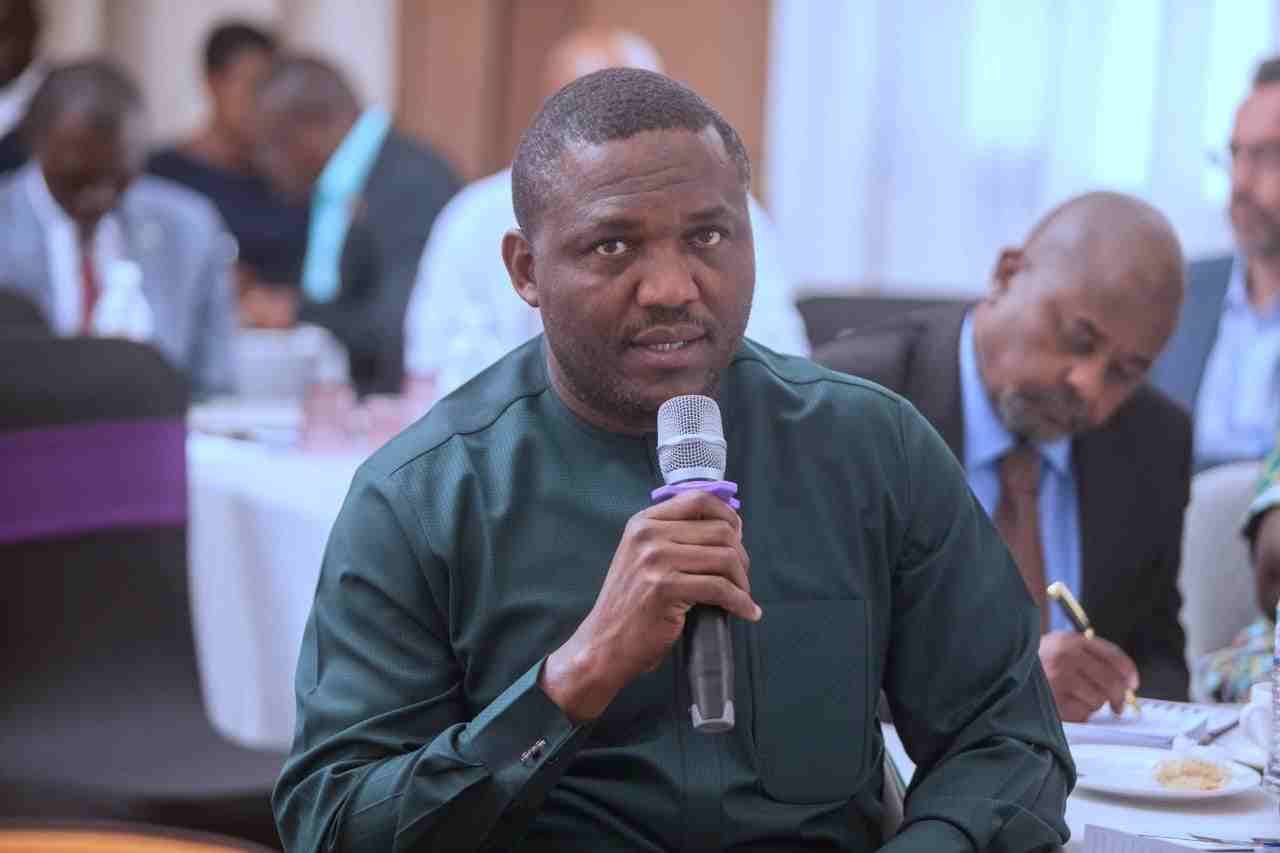
By Michael Oche
The African Regional Organisation of the International Trade Union Confederation (ITUC-Africa) has declared that affordable, accessible and reliable energy is indispensable to Africa’s industrialisation and the fight against poverty, warning that the continent cannot achieve inclusive economic transformation while millions remain without electricity.
The organisation made the declaration on Wednesday at the opening of a three-day meeting of the African Trade Union Network on Energy, where trade union leaders, climate negotiators, government representatives and development partners are developing a common African labour position ahead of the 31st United Nations Climate Change Conference (COP31).
The meeting, themed “African Trade Unions’ Contributions to Combating Energy Injustice and Inequality,” is examining how organised labour can shape Africa’s energy transition to promote green industrialisation, create decent jobs and ensure that no worker or community is left behind.
Opening the meeting, ITUC-Africa General Secretary, Comrade Akhator Joel Odigie, said industrialisation remains central to Africa’s economic liberation but cannot be realised without universal access to affordable energy.
“For us as a continent, industrialisation is central to our liberation struggle. It is part of our aspiration to define our own identity and move towards shared prosperity on the back of an industrialised Africa. Unfortunately, that has not happened,” Odigie said.
He noted that despite Africa’s abundant energy resources, more than 600 million people across the continent still lack access to electricity, leaving millions trapped in poverty and limiting industrial growth.
According to him, organised labour is moving beyond identifying challenges to proposing practical solutions that combine industrial development with climate action.
“We have all realised that simply lamenting the situation is not useful. What is helpful is asking: What next? What solutions can we pursue?” he said.
Odigie described energy justice as ensuring that every African has access to affordable and reliable electricity capable of improving livelihoods and supporting economic productivity.
“Energy justice means energy that is accessible, affordable and capable of making life meaningful for everyone,” he said.
“What is the meaning of prosperity if ordinary people cannot enjoy a decent quality of life? A worker who returns home after a day’s work should be able to switch on a fan when the weather is hot, watch television, listen to the news and spend meaningful time with family because electricity is available and affordable.”
He stressed that industrialisation would have little value if it failed to improve living standards.
“An industrialised Africa is meaningless if it does not improve the lives of our people. We want an Africa where prosperity is shared,” he said, warning that women, children and the elderly often suffer the most from economic hardship and austerity measures.
Odigie said achieving sustainable industrialisation would require investment in infrastructure, technology transfer, skills development, affordable finance and stronger partnerships, adding that climate action should complement rather than hinder Africa’s development aspirations.
As preparations for COP31 gather pace, he announced plans to institutionalise collaboration between organised labour and the African Group of Negotiators (AGN) to ensure workers’ voices are reflected in Africa’s climate negotiating position.
“We want to institutionalise this collaboration between organised labour and the AGN. We believe we have ideas to share, and when you speak at the negotiation table, you should know that organised labour across Africa will stand firmly behind your positions,” he said.
Representing the Chair of the African Group of Negotiators, Senior Adviser, Dr George Manful, said Africa’s energy transition must support industrialisation while addressing climate change.
He observed that although Africa contributes only about four per cent of global greenhouse gas emissions, the continent must pursue cleaner industrialisation pathways to remain competitive in the global economy.
“The energy transition must support Africa’s development rather than reinforce existing patterns of dependency, raw material extraction and inequality,” Manful said.
He argued that Africa’s vast reserves of critical minerals should drive local manufacturing, technology transfer and value addition instead of continued export of raw materials.
According to him, a just energy transition should not only be judged by increased electricity generation or lower emissions, but by affordable energy, quality jobs, stronger local industries, protection of workers and greater opportunities for women and young people.
“It must also be measured by the quality of jobs we create, the affordability of energy, the protection of workers, the participation of women and young people, the growth of local industries, and the ability of African countries to retain greater value from their natural resources,” he said.
Manful welcomed ITUC-Africa’s initiative to develop a common African trade union position ahead of COP31, saying workers’ experiences should help shape both Africa’s negotiating agenda and the implementation of climate commitments.

