
By Patrick Wemambu
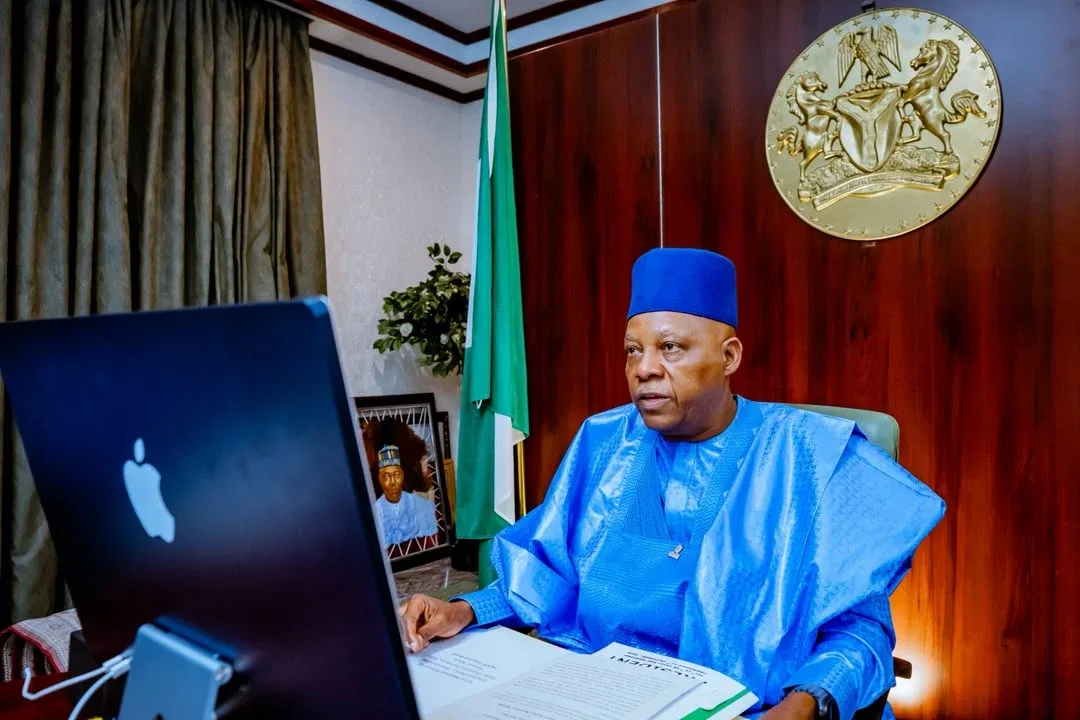
National Economic Council (NEC) – the highest economic policy coordinating body of the government chaired by Vice President, Kashim Shettima, recently held its 161st meeting virtually in Abuja.
One of the major recommendations of the think tank comprising members of the federal government’s economic team and state governors was the unfolding of a 90-day emergency action plan to ease cost of living crisis in Nigeria.
The emergency measures include making food more affordable, accelerating the delivery of projects that will directly improve Nigerians’ welfare, and establishing a joint financing framework between the federal and state governments. This is geared towards supporting the nationwide deployment of compressed natural gas (CNG) and electric vehicles.
NEC likewise approved a national dashboard to monitor projects across the federation and ensure transparency and accountability in the utilisation of proceeds from the removal of petrol subsidy.
According to a statement by the Senior Special Assistant to the President on Media and Communications, Office of the Vice President, Stanley Nkwocha, the 90-day action plan identifies five priority areas.
These are food affordability, tax harmonization, completion of high-impact projects, removal of investment bottlenecks and regulated household support.
The measures are intended to consolidate the gains of economic reforms while ensuring that improvements in macroeconomic indicators translate into tangible relief for households and businesses.
Speaking at the meeting, the VP who presided over deliberations challenged governors to ensure that the benefits of the administration’s economic reforms were reflected in affordable transportation, improved healthcare, employment opportunities and greater financial security for Nigerians.
He advised that economic reforms would ultimately be judged not by official pronouncements or statistical improvements alone, but by their impact on the everyday lives of citizens.
According to Shettima, deliberations on transportation, healthcare, police reform and livestock development were fundamentally about improving Nigerians’ quality of life and making government institutions more responsive to their needs.
“Our separate jurisdictions must serve a common public interest,” he said, urging governors to strengthen cooperation with the Federal Government in implementing policies that directly affect citizens.
On affordable transportation, the Vice President warned against measuring the success of the National CNG Bus Initiative merely by the number of vehicles deployed, insisting that reduced transport fares and accessibility must remain the primary considerations.
“The cost of reaching a livelihood should never consume the livelihood itself. The passenger’s experience must guide our ambition, because the value of public transport resides in the journeys it makes possible. We should assess success through affordability and access, rather than fleet size alone,” he stated.
Shettima further disclosed that Tinubu’s economic reforms were designed to lay the foundation for broader national prosperity, but stressed that governments at all levels must demonstrate the capacity to translate policy objectives into improvements in living standards.
The Vice President urged governors to bring their understanding of local economic and social realities into national policy decisions, noting that effective implementation required clearly defined responsibilities among the three tiers of government.
Suffice it to say, the cost of living crisis in Nigeria which is in addition global is real. The 2026 Global Multidimensional Poverty Index (MPI) released by the United Nations Development Programme (UNDP) recently highlighted that Nigeria’s multidimensional poverty rate rose to 38.7% from a previous baseline of 33.0%.
This shift means an additional 17.9 million Nigerians slipped into poverty within that measured window. Unconfirmed estimates again have it that about 80% of Nigerians are vulnerable to falling back into abject squalor.
Moreover, the World Bank has reported that in spite of Nigerian ruling government’s reforms which have helped to restore investor confidence in the economy – the benefits have not translated into improvements in living conditions of most citizens, at least in 2026.
Notwithstanding its laudable nature, pundits have criticized what they described as an unrealistic proposition. According to them, the 90-day action plan serves as a mere campaign strategy that does not reflect Nigeria’s current economic reality – less than 80 days to the 2027 polls.
Rueing that despite several interventionist measures previously rolled out with few translating to tangible relief for citizens – critics enjoin the administration to invite acclaimed experts even outside government with workable ideas to help fix the economy.
Interventions listed as allegedly having failed since their roll-out in 2023 include N75 billion for the manufacturing sector; N75 billion for MSMEs; N50 billion conditional grants and N200 billion for cultivation of 500 hectares of land. Others are N100 billion for CNG and infrastructure funds.
Commenting on the stimulus package, the Nigerian Labour Congress (NLC) has viewed the intervention as a “confession, not a solution,” arguing that temporary palliatives cannot replace concrete measures to tackle rising living costs, declining purchasing power and widespread impoverishment.
NLC Assistant General Secretary, Chris Onyeka, was quoted in an interview with a national publication as saying recently:
“Our response to the federal government’s so-called 90-day plan to ease the cost of living is unambiguous. This plan is not a remedy; it is a confession. It is the government’s tacit admission, finally dragged out of it by the sheer weight of popular suffering, that its policies of the past nearly four years have afflicted the Nigerian people rather than improved their lives.
“Have we not been here before? Just a few weeks ago, the federal government came up with a 30-day selected fuel discount that was clearly a panic measure that amounted to nothing. It did not work in any way to assuage the sufferings of the people as it was tokenism dressed up as policy…
“This top-down, elitist approach; the politics of imposition; is precisely why the policies fail. The people are treated as objects of policy rather than subjects of their own liberation. The 90 days are questionable days, designed once again to hoodwink Nigerian workers and masses for political gains.
“Specifically, where is the wage award to keep Nigerian workers and masses surviving until the next national minimum wage is implemented?
Where is the reduction in the prices of petroleum products that would ease the cost of transportation around the country, thus reducing food inflation and the prices of other basic commodities? These are not radical demands; they are the minimum conditions for survival. The plan does not in any way meet our expectations as workers and as a people…
“It does not speak to the demands of Joint Health Workers Union of Nigeria, JOHESU and Joint Public Service Negotiating Council, JPSNC. It does not speak to tax relief for Nigerian workers and masses, which would help put more money in the pockets of Nigerian workers. The government is therefore fishing and not seriously interested in solving the problems raised by the NLC.”
If additional suggestions to curtail the cost of living crisis in Nigeria were required, it has been advocated that any proposed dashboard with chances of workability must incorporate the LIN System (Labour Direct Information Network) for real-time monitoring.
The framework is said to be capable of directly monitoring projects, employment, production, evaluation, feedstock, outputs, tax and revenues from a single application for transparency.
Need one say more? Guess not. Yet, one critical question that the government must answer regarding its nascent economic package remains: After the 90-day emergency plan, what’s next?

