
By Tajudeen Suleiman
On July 21, 2026, Nigeria’s upstream petroleum regulator, the Nigerian National Upstream Petroleum Regulatory Commission (NUPRC), unveiled the 31 companies that emerged as winners of 37 oil and gas blocks after what observers described as a rigorous evaluation process ultimately determined through a computer-based bid evaluation system designed to eliminate human interference.
Yet, questions about transparency are inevitable in any licensing exercise involving strategic national assets. The true measure of transparency is not the absence of scrutiny, but the presence of clear rules, public disclosure, and a process that can withstand independent examination.
The journey began in 2025 when President Bola Ahmed Tinubu, who also serves as Nigeria’s Minister of Petroleum Resources, approved the 2025 Licensing Round. At a high-profile event in London attended by international oil companies (IOCs) and indigenous operators, the Commission officially announced the exercise on November 11, 2025, and launched the registration portal, which opened on December 1.
Beyond the announcement, the regulator took additional steps to comply with statutory requirements by publishing notices in national newspapers, including The Punch, as well as in a foreign newspaper, in line with the Petroleum Industry Act (PIA) 2021 and the 2025 Licensing Round Guidelines.
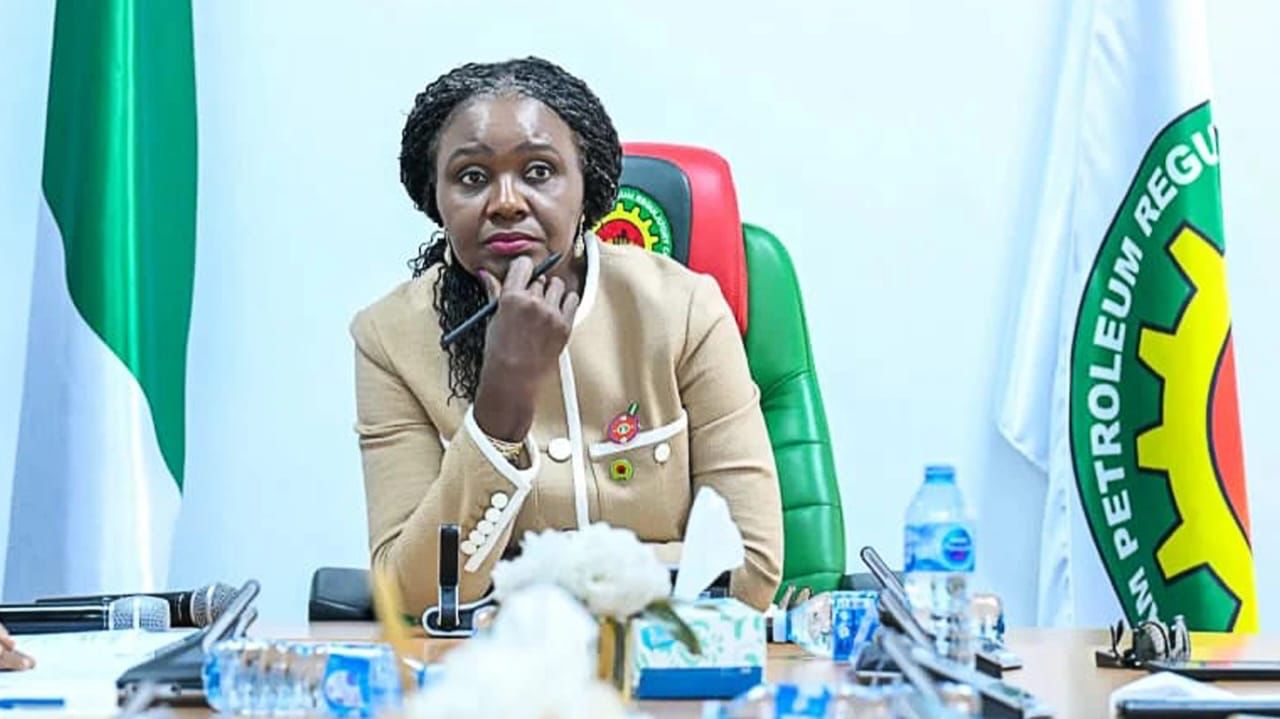
These preliminary actions reflected an effort to adhere strictly to the rulebook, consistent with the NUPRC’s stated objective under the leadership of Chief Executive Oritsemeyiwa Eyesan, of entrenching transparency, competitiveness, and predictability in Nigeria’s upstream petroleum sector.
Why the Licensing Round Matters
It is beyond dispute that Nigeria’s hydrocarbon resources require sustained exploration and accelerated development to unlock their full economic potential while expanding opportunities for gas utilisation. New investments in upstream exploration are critical not only to replacing product reserves but also to strengthening the country’s long-term energy security and export capacity.
At the time the 2025 Licensing Round was launched, Nigeria’s proven crude oil and condensate reserves stood at 37.01 billion barrels, while proven natural gas reserves were estimated at 215.19 trillion cubic feet (tcf). Against this backdrop, the Commission boss, Mrs. Eyesan, stated that the 50 assets offered in the 2025 Licensing Round have the potential to add about 500 million barrels to the nation’s reserves if successfully explored and developed.
The significance of this projection cannot be overstated. At a time when the Federal Government is seeking to expand revenue sources to meet growing budgetary commitments, attracting credible investors to develop untapped oil and gas assets has become both an economic and fiscal imperative.
This time, blocks were drawn from diverse terrains including the Niger Delta Onshore (16), Niger Delta Shallow Water (18), Niger Delta Deep Offshore (1), Benin Basin Onshore (3), Anambra Basin Onshore (4), Chad Basin Onshore (4) and Benue Trough (4).
Why the Rigorous Process Is Inevitable
The first test of transparency is strict adherence to established guidelines, openness, and compliance with prescribed timelines.
For the Commission, these principles were embedded in every stage of the Nigeria 2025 Licensing Round. The Guidelines clearly defined the participation requirements, technical and commercial criteria, and evaluation process, while the Licensing Round Portal, Pre-Bid Conference, webinars, and dedicated enquiry channels ensured equal access to information and timely clarification for all applicants.
This transparent, rules-based approach delivered unprecedented participation. For the first time in Nigeria’s oil block licensing history, nearly 300 companies expressed interest in the 50 available assets. Following prequalification, 196 applicants qualified for the bidding stage, and by the submission deadline, 143 companies had submitted 200 technical and commercial bids across 37 assets.
How Winners Emerged
For Eyesan, the Commercial Bid Conference represented the defining test of the Commission’s commitment to transparency under her leadership. On that Tuesday at Transcorp Hilton Abuja, the commercial bids of qualified applicants were publicly opened and combined with their technical scores before more than 600 participants, including bidders, observers, industry stakeholders, and over 40 journalists. The exercise was also broadcast live, reinforcing the openness of the process.
The process lasted for 8 hours and 34 minutes.
To ensure seamless participation, the Commission provided standby laptops, power banks, and technical support for bidders throughout the exercise.
In line with the Guidelines, commercial evaluation was based on the signature bonus, work programme commitment, and work programme performance security.
As Eyesan explained, “the winning bidder for each asset will be the bidder with the highest weighted aggregate score and the bid that delivers the best overall long-term value to Government, not simply the highest immediate payment.”
The Commission also put in place clear procedures to address the possibility of tied bids. Where two or more bidders recorded the same weighted aggregate score after the technical and commercial evaluations, they would be invited to submit an additional signature bonus to determine the winner.
“We have the responsibility to break that tie by inviting the affected parties, and they will then have the opportunity to bid an additional signature bonus. The bid is limited only to the additional signature bonus, and it will show on the portal,” the Commission’s Board Secretary and Legal Adviser, Ms. Olayemi Adeboyejo, explained to the bidders.
To preserve the integrity of the process, consortium discussions were not permitted at this stage. Bidders decrypted their commercial bids, which were automatically validated against the prescribed template, while invalid submissions were excluded. Every stage of the exercise and the results were displayed in real time, underscoring the transparency of the process.
After the rigorous, automated evaluation, the successful bidders for the various assets emerged, including: SSonic Petroleum Limited (PPL 2A29), CFP Pipeline and Flowlines (2A30), Dutchford E&P Limited (2A32), Attabanson Global Company Limited (2A33 and PPL 901), Rosem Energy Limited (2A38), Pivot-GIS Limited (2A39), Network E&P (2A40), Asharami (2A41), LexOil (2A42), BVOF (2A43), Gupsco Energy Limited (2A44 and 2A51), Saratoga (2A45), Volante (2A46), Concept-Reel Petroleum Services Limited (2A47 and 2A55), Clinton Oil Field (2A48 and 2A62) and Nuway Oaklane Limited (2A49).
Others are Ramec (2A50), Italia (2A53), Blueridge E&P (2A54), Up Energies Limited (2A56), AYM Shafa (2A57), Blackrock Holdings Limited (2A58), Funtay Integrated Business Limited (2A59), Riparian Development and Production Limited (2A60), Nikstallis (2A61 and PPL 900), Stardeep Petroleum (PPL 2010), Dakoda & U Limited (PPL308 and PPL 800), Southborne Oil and Gas Limited (PPL 902), Lanaka Petroleum (PPL 903) Highban Resources Limited (PPL 700), and Eyre Energy Limited (PPL 801).
In line with the PIA, the Commercial Bid Conference was closely monitored by representatives of the Nigerian Extractive Industries Transparency Initiative (NEITI), the Federal Ministry of Finance, and the Federal Ministry of Petroleum Resources, providing an additional layer of oversight and reinforcing the credibility of the process.
Stakeholders Validate Transparency of the 2025 Licensing Round
Industry stakeholders also endorsed the transparency of the Nigeria 2025 Licensing Round.
The Executive Director of TotalEnergies Nigeria, Abiodun Afolabi, described the exercise under the leadership of the Commission Chief Executive, Mrs. Oritsemeyiwa Eyesan, as a significant improvement on previous bid rounds.
“I must admit it was a step-up from last year. What I saw here today was a very transparent and open process. Nigeria is truly on its way to putting itself on the map. For us in the industry, seeing prolific basins being offered in this manner is encouraging. It was a worthwhile experience, and I congratulate the NUPRC.”
Afolabi added that the Commission’s deliberate adherence to the rules and the public display of every stage of the process further strengthened confidence in the outcome.
“NEITI was there, and the Commission was deliberate in reaffirming the rules of the game and in showing everyone exactly how the process unfolded.”
Similarly, the Country Manager of SLB (formerly Schlumberger), Dr. Nosa Omorodion, said the process sent a strong signal to investors.
“The high point for me was not just the transparency but the openness. It reinforces the message that Nigeria is back. I don’t know of any investor or participant who would question what we witnessed here.”
Another bidder, the Managing Director of AYA Shafa, Abba Abdu Misau, also commended the process, describing it as “excellent.”
According to him, the 2025 Licensing Round was conducted transparently and reflected significant improvements over previous bid rounds.
“The process was excellent. It was very transparent, and there were lots of improvements in the 2025 Licensing Round bidding process,” he declared.
Tajudeen Suleiman, a communication expert, writes from Abuja.

