
By Kehinde Ibrahim, Lagos
NIGERIA’S investment landscape is undergoing a significant transformation as investors increasingly prioritise capital preservation, liquidity and stable returns over higher-risk investment opportunities. While the equities market continues to attract investors with a greater appetite for risk, the country’s money market fund segment has quietly emerged as the dominant force within Nigeria’s collective investment scheme industry, reflecting changing investor preferences amid a challenging macroeconomic environment.
Latest data released by the Securities and Exchange Commission, SEC, showed that the Net Asset Value, NAV, of Nigeria’s money market funds rose to N5.97 trillion as of June 26, 2026, representing a 2.26 per cent increase from N5.84 trillion recorded in May. The growth, though moderate on a month-on-month basis, reinforces the remarkable expansion recorded by the segment over the past two years as individuals, businesses and institutional investors continue to seek investment vehicles capable of delivering attractive returns while preserving capital.
Money market funds remain the largest category within Nigeria’s mutual fund industry, accounting for 65.52 per cent of total mutual fund assets. The industry currently comprises 47 registered money market funds, highlighting the increasing depth and competitiveness of Nigeria’s asset management sector.
Equally noteworthy is the steady growth in investor participation. The number of unitholders climbed to 800,050, representing an increase of 28,785 investors, or 3.73 per cent, compared with the previous month. The rising investor base underscores growing confidence in professionally managed investment products and suggests that more Nigerians are embracing formal investment channels rather than relying solely on traditional savings accounts.
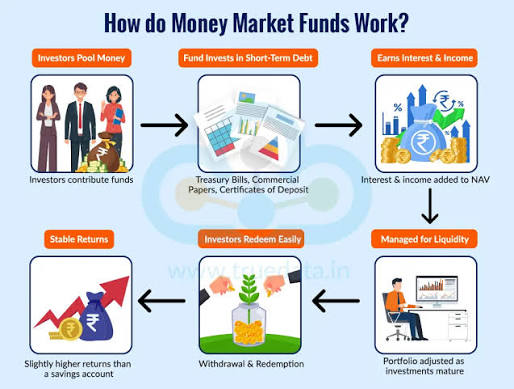
The impressive growth of the industry is taking place against the backdrop of an economy still adjusting to elevated inflation, high interest rates and evolving monetary policy. The conditions have encouraged investors to shift funds toward relatively safer assets capable of preserving purchasing power while providing competitive income. In this environment, money market funds have become one of the most attractive investment options because they invest primarily in short-term, high-quality fixed-income instruments such as Treasury Bills, commercial papers, bankers’ acceptances, certificates of deposit and other low-risk securities.
Unlike equities, whose prices can fluctuate significantly within short periods, money market funds are designed to provide relatively stable returns while maintaining liquidity. Investors can typically access their funds with minimal delays, making the products particularly attractive for individuals and organisations seeking flexibility without sacrificing returns.
The sustained rise in interest rates across Nigeria’s fixed-income market has also strengthened the appeal of the investment vehicles. As yields on government securities and other money market instruments remain elevated, fund managers have been able to generate competitive returns for investors while maintaining conservative investment strategies.
Beyond the favourable interest rate environment, improved financial literacy and rapid digitalisation have played critical roles in expanding participation. Asset management companies have increasingly deployed technology to simplify account opening, subscriptions and redemptions through mobile applications and online platforms. This has significantly lowered the barriers to entry for retail investors, allowing individuals to invest with relatively modest amounts while enjoying professional portfolio management.
Institutional investors have also continued to increase allocations to money market funds as an efficient way of managing surplus liquidity. Corporations, pension administrators, charitable organisations and other institutions increasingly rely on these funds to optimise cash management without exposing their capital to excessive risk.
Despite the industry’s enormous size, one striking feature is the broad distribution of assets among numerous fund managers. Data from the SEC indicates that the top 10 performing money market funds collectively manage only N188.64 billion, representing 3.16 per cent of the total assets within the money market fund category and 2.07 per cent of Nigeria’s overall mutual fund industry. This demonstrates that investors are spreading their investments across multiple fund managers rather than concentrating assets within a few dominant players.
Competition among asset managers has therefore become increasingly intense, with firms seeking to differentiate themselves through stronger investment performance, enhanced customer service, digital innovation and efficient portfolio management.
The June rankings produced a notable change at the top of the industry. The Coronation Money Market Fund, managed by Coronation Asset Management Limited, emerged as the highest-performing money market fund based on year-to-date yield. The fund recorded a 20.54 per cent return as of June 26, climbing from second position in May to displace the RT Briscoe Savings & Investment Fund, which had previously occupied the top spot.
Coronation’s emergence reflected the increasingly competitive nature of Nigeria’s asset management industry, where portfolio performance can change from one month to another depending on prevailing market conditions and investment decisions. Beyond its leading yield, the fund also stands out because of its size. It manages N77.84 billion in assets across 18,582 unitholders, making it the largest fund among the top-performing money market funds by assets under management.
An investor who committed N5 million to the Coronation Money Market Fund at the beginning of the year would have earned approximately N1.027 million in returns by June 26, bringing the investment value to about N6.03 million.
Although it slipped to second position, the RT Briscoe Savings & Investment Fund, managed by DLM Asset Management Limited, remained one of the industry’s strongest performers. The fund generated a 20.30 per cent year-to-date yield while managing N454.84 million in assets for 41 unitholders. A N5 million investment made at the beginning of the year would have appreciated by approximately N1.015 million, increasing its value to about N6.02 million.
The First Ally Money Market Fund secured third place after returning to the rankings with a 20.01 per cent year-to-date yield. Managed by First Ally Asset Management Limited, the fund oversees N8.64 billion in assets on behalf of 2,514 investors. Its return to the top three after dropping out of the rankings in May demonstrates how competitive the sector has become, with relatively small differences in yields often determining movements in monthly rankings.
The STL Money Market Fund, managed by STL Asset Management Limited, retained fourth position after posting a 19.70 per cent year-to-date yield. The fund manages N16.24 billion across 1,790 unitholders.
In fifth place was the DLM Money Market Fund, which recorded a 19.68 per cent year-to-date return despite dropping two positions from May. The fund manages N1.85 billion in assets for 191 investors.
The Trustbanc Money Market Fund ranked sixth with a 19.40 per cent yield after improving one position from the previous month. Managed by Trustbanc Asset Management Limited, it oversees N18.16 billion in assets for 978 unitholders.
The Page Money Market Fund occupied seventh position after delivering a 19.00 per cent year-to-date return. The fund, managed by Page Asset Management Limited, manages N2.12 billion on behalf of 291 investors.
The Greenwich Plus Money Market Fund, managed by Greenwich Asset Management Limited, maintained eighth position with an 18.81 per cent year-to-date yield while overseeing N13.55 billion in assets.
The Zedcrest Money Market Fund, managed by Zedcrest Investment Managers Limited, entered the top 10 rankings in June after recording an 18.68 per cent year-to-date return. The fund manages N19.23 billion across 8,473 unitholders, reflecting growing investor confidence in its performance.
Completing the ranking was the CardinalStone Money Market Fund, managed by CardinalStone Asset Management Limited, which posted an 18.25 per cent year-to-date yield. The fund manages N30.55 billion in assets for 2,059 investors.
The movement in the June rankings illustrated the dynamic nature of Nigeria’s money market fund industry. While several funds retained their positions, others recorded significant improvements or declines, reflecting changing portfolio strategies and evolving conditions in the fixed-income market. Small variations in portfolio yields can significantly influence monthly rankings because the difference between the highest and lowest-performing funds among the top 10 remains relatively narrow.
Analysts believe the industry’s continued expansion reflects more than temporary investor behaviour. Instead, it signals the gradual maturation of Nigeria’s investment culture. Increasing awareness of collective investment schemes, improved financial literacy and easier access to investment platforms have encouraged more Nigerians to move beyond conventional savings accounts in search of inflation-beating returns.
Digital innovation has further accelerated the transition. Many asset management companies now offer seamless online onboarding processes, instant portfolio monitoring and quick redemption services, making money market funds considerably more accessible than they were only a few years ago. This technological transformation has been particularly important in attracting younger investors, who increasingly prefer digital financial services.
The favourable regulatory environment has also contributed to sustained investor confidence. The Securities and Exchange Commission continues to strengthen oversight of collective investment schemes through enhanced disclosure requirements, governance standards and investor protection measures. These regulatory safeguards have helped improve transparency and reinforce public trust in professionally managed funds.
Nevertheless, industry experts caution that while money market funds are generally regarded as low-risk investments, they are not entirely free from risk. Returns are influenced by prevailing interest rates and broader economic conditions. Should monetary policy become more accommodative and yields on Treasury Bills and other money market instruments decline, returns on money market funds may also moderate over time. However, the underlying advantages of liquidity, professional management and capital preservation are expected to sustain investor interest regardless of future movements in yields.
The industry’s outlook remains positive. Continued growth in financial inclusion, expanding digital investment platforms and sustained demand for low-risk investment products are expected to support further expansion in assets under management. Asset managers are also likely to introduce innovative products tailored to the evolving needs of retail and institutional investors while enhancing customer experience through technology-driven solutions.
As Nigeria’s financial markets continue to develop, money market funds are expected to play an even more prominent role in mobilising domestic savings, supporting financial inclusion and deepening the country’s capital market. Their ability to provide competitive returns while preserving liquidity has positioned them as a preferred investment destination for hundreds of thousands of Nigerians seeking stability in an uncertain economic environment.
The latest figures confirm that Nigeria’s money market fund industry has evolved far beyond being merely a repository for conservative investors. With assets approaching N6 trillion, more than 800,000 investors, and increasingly intense competition among asset managers, the sector has become one of the most important pillars of the country’s investment ecosystem. Whether interest rates remain elevated or gradually decline in the coming months, the steady migration of investors toward professionally managed collective investment schemes suggests that money market funds will remain central to Nigeria’s savings and investment landscape for years to come.

