
By Palma Ileye
Nigeria and the African Development Bank (AfDB) have called for stronger African ownership and control of the continent’s mineral resources, stressing the need for local value addition, regional cooperation and strategic financing to unlock greater economic benefits.
The call was made at the Ministerial Forum on Critical Minerals, Value Chain and Beneficiation: Pathways for African Transformation held under the auspices of the AfDB in Abidjan, Côte d’Ivoire.
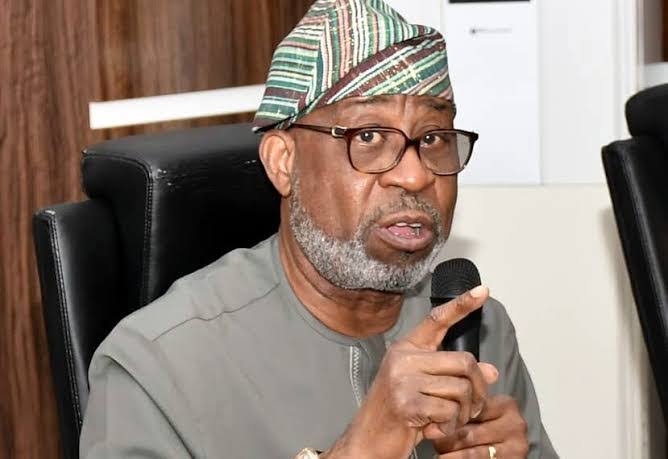
Speaking at the forum, Nigeria’s Minister of Solid Minerals Development, Dr. Dele Alake, urged African mineral-producing countries to embrace collaboration and develop strategies that would enable the continent to move beyond the export of raw minerals.
Alake said Africa’s mineral wealth could contribute more significantly to economic growth if countries worked together to develop processing capacity, strengthen value chains and take ownership of their resources.
“While the mantra of value addition has ushered in an era of economic independence for mineral-producing nations, we need concrete actionable strategies to take charge and be in full control of our natural assets to ensure total economic freedom,” he said.
The Minister, who chairs the Africa Mineral Strategy Group (AMSG), also advocated for African control of mineral data and technical systems used in assessing the continent’s resources.
He described reliance on the Australia-based Joint Ore Reserves Committee (JORC) reporting standard as outdated, calling for the adoption of the Pan African Resource Reporting Code (PARC), developed by the Africa Minerals Development Centre (AMDC).
According to him, PARC would promote transparency, consistency and ethical standards in reporting Africa’s mineral and energy resources while reflecting the continent’s unique geological conditions.
President of the AfDB, Dr. Sidi Ould Tah, highlighted the gap between Africa’s vast mineral wealth and the limited economic benefits derived from it, noting that the continent must address challenges including inadequate financing and low foreign investment.
The forum also considered the establishment of a West African minerals processing corridor modelled after the Lobito Corridor, with Alake proposing a Lagos-to-Dakar route that would allow countries to specialise in mineral processing based on their comparative advantages.
He said such collaboration would reduce costs, attract investment and enable countries to share the benefits and risks of mineral development.
The Minister further raised concerns over Africa’s low level of intra-continental trade, noting that it stands at about 16 per cent compared to higher levels recorded in Asia and Europe.
The meeting, according to a press release signed by Lara Owoeye-Wise, Special Assistant on Media to the Minister of Solid Minerals Development, culminated in the adoption of the Abidjan Declaration, where the AfDB pledged financial support, technical expertise and investment mobilisation to help African countries develop competitive and sustainable mineral value chains.

