
By Michael Oche
The Nigeria Labour Congress (NLC), in collaboration with the Friedrich-Ebert-Stiftung (FES) and the International Trade Union Confederation (ITUC), have called for stronger mechanisms to enable workers to document and report violations of their rights in workplaces across Nigeria.
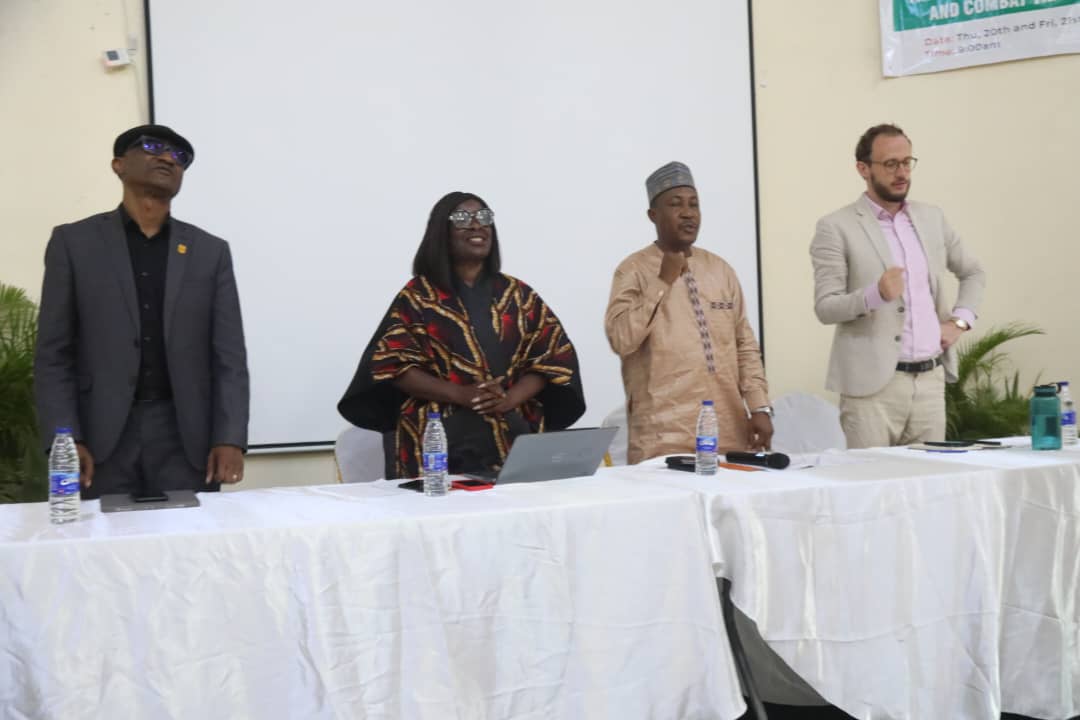
The call was made on Thursday in Abuja at a opening of a two-day capacity-building workshop on human and trade union rights organised by the NLC with the support of FES and the International Trade Union Confederation (ITUC).
The workshop, themed “From Violations to Justice: Strengthening the Nigeria Labour Congress to Document, Resist and Combat Trade Union Rights Abuses in Nigeria,” is focused on equipping workers with the knowledge and tools to identify, document and report violations of their rights.
As part of the initiative, the NLC is developing a digital application that will enable workers across the country to report workplace rights abuses, with the platform expected to strengthen the documentation of violations and support efforts to seek redress.
Speaking at the opening of the workshop, NLC President, Comrade Joe Ajaero, said the initiative was necessary against the backdrop of persistent attacks on workers’ rights and trade union freedoms in Nigeria.
Nigerian Pilot reports that Nigeria was ranked among the 10 worst countries in the world for workers’ rights in the 2025 ITUC Global Rights Index, reflecting the persistent challenges confronting workers and trade unions in the country.
Ajaero, who was represented at the event by Deputy NLC president, and President of the Medical and Health Workers Union of Nigeria (MHWUN) Dr Kabiru Ado Sani Minjibir said workers needed to move from merely experiencing violations to systematically documenting and reporting them in order to improve the prospects of securing justice.
He identified the rights to fair and equal pay, safe working conditions, freedom from discrimination and harassment, collective bargaining and unionisation as fundamental rights that must be protected.
He said, “We must evolve new strategies, sharpen our tools of analysis, and strengthen our weapons of struggle. This is why this workshop is critical. It is designed to bridge the gaps in our capacity; to teach us how to systematically document violations using standardized tools.”
According to him, the new application would be presented during the workshop and made available as a mechanism through which workers could report rights abuses across Nigeria.
“We must teach others how to recognise, document and report rights abuses in our workplaces,” he said.
The NLC president also expressed concern over what he described as arbitrary arrests and imprisonment of labour leaders, violent crackdowns on protests, interference in trade union affairs and other violations of workers’ rights.
He noted that the NLC had recently taken some of its concerns to the International Labour Organisation (ILO) in Geneva, particularly over alleged violations of ILO Conventions 87 and 98, which deal with freedom of association and the right to organise and collective bargaining.
Ajaero urged participants to use the knowledge acquired at the workshop to engage relevant institutions, including governments, lawmakers and the judiciary, while strengthening collaboration with civil society and the media.
In his goodwill message, the Director of Standards, Federal Ministry of Labour and Employment, Emmanuel Igbinosun, said stronger collaboration among the social partners was essential to making tripartism work and protecting workers’ rights.
Igbinosun said the government could not effectively monitor every workplace through labour inspectors alone, stressing the need to rely on workers and trade unions to provide timely information on violations.
He said, “In tripartism, we cannot do without one another. We need each other to make tripartism work.”
According to him, building the capacity of workers to understand what constitutes a violation of their rights would complement the efforts of government labour inspectors.
“I can rely on your presence in that organisation to inform me of what is going on there, so I can take action,” he said, adding that this was why the capacity-building workshop was important.
Also speaking, Inviolata Chinyangarara, Senior Specialist for Workers’ Activities (ACTRAV) at the International Labour Organization (ILO) Country Office in Abuja, Nigeria. She works close, said the workshop would help deepen participants’ understanding and practical application of international labour standards.
She said the adoption or ratification of an international labour convention was not an end in itself, stressing that the real impact would be seen when such standards were reflected in national laws and translated into improvements in workers’ wages, working conditions and occupational safety and health.
According to her, workers’ organisations have an important role to play as watchdogs by ensuring that violations are exposed, reported and addressed.
Chinyangarara also urged participants drawn from different unions and states to become ambassadors for international labour standards by cascading the knowledge acquired during the workshop to workers in their respective sectors.
In his remarks, the country representative and resident representative for the Friedrich-Ebert-Stiftung (FES) in Nigeria, Lennart Oestergaard, said the organisation was supporting efforts to develop tools that would enable workers to move from observing rights violations to taking action and seeking justice.
He said the need for such mechanisms had become more urgent following Nigeria’s ranking among the 10 worst countries for workers’ rights in the ITUC Global Rights Index.
He cited challenges including the alleged arrest of union leaders, victimisation of workers for joining unions, violent disruption of strikes and protests, prolonged court cases and the erosion of workers’ wages by inflation.
He, however, stressed that workers’ rights violations were not peculiar to Nigeria, noting that workers in other countries also faced challenges.
He said the objective was not to point fingers but to strengthen solidarity among workers and develop practical mechanisms for addressing violations wherever they occurred.
The FES representative said the organisation would continue supporting the NLC in building systems for documenting violations and ensuring that workers’ concerns received attention both nationally and internationally.
The workshop brings together representatives of trade unions, the NLC, ITUC-Africa, ILO, FES and the Federal Ministry of Labour and Employment, among other stakeholders.
Participants are expected to develop practical strategies for documenting rights violations, engaging relevant institutions, strengthening trade union advocacy and using international labour standards to pursue justice for affected workers.

