
By Aaron Ossai
Nigeria’s drive to unlock the multi-billion-dollar potential of its maritime and blue economy sectors gained major momentum as the House of Representatives Committee on Ocean and Fisheries officially recommended the passage of a bill establishing a new specialized tertiary institution in the Niger Delta.
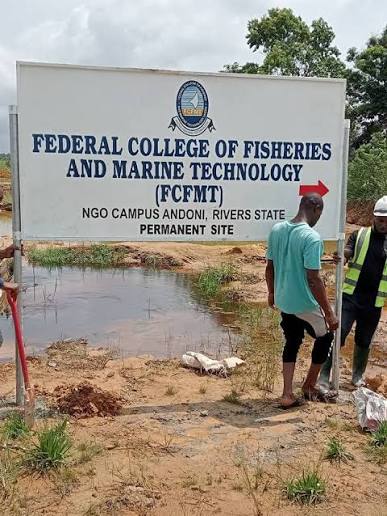
The proposed institution, the Federal College of Fisheries Technology and Marine Engineering, is set to be cited in Ngo, Andoni Local Government Area of Rivers State.
Presenting the Committee’s report to the House, Committee Chairman Hon. Akarachi Etinosa Amadi urged lawmakers to pass the bill (HB. 2189) as presented, following unanimous backing from key maritime, educational, and regional stakeholders during public hearings held on July 14, 2025.
The bill seeks to amend the Agricultural Research Council of Nigeria Act (Cap A12, Laws of the Federation of Nigeria, 2004) to incorporate the new college into the country’s legal and educational framework.
According to the Committee’s findings, siting the institution in a coastal riverine community directly addresses acute local manpower deficits in fisheries management, aquaculture, and marine engineering. It is also designed to expand technical vocational education and catalyze long-term economic development across the Niger Delta region.
“The primary objective of the bill is to provide a statutory framework for a specialized tertiary institution focused on bolstering Nigeria’s blue economy,” the report stated.
Debate on the general principles of the bill was originally concluded on May 7, 2025, after which it was referred to the Ocean and Fisheries Committee for further legislative scrutiny.
Following thorough evaluation and a public hearing that drew widespread endorsement from coastal communities and maritime experts, the committee retained all clauses of the bill without amendment.
Clause 3 of the proposed law serves as its primary engine, embedding the new college directly into the Third Schedule of the Principal Act. This legal manoeuvre grants the institution: Statutory Recognition: Listing alongside established federal tertiary institutions, Funding Access: Full access to statutory federal funding streams and operational backing.
Operational Mandate: The immediate legal backing needed to execute specialized training in marine engineering and sustainable fisheries.
Laying the final details before the House, Hon. Amadi expressed confidence that the establishment of the college will prove pivotal in driving regional capacity building and youth empowerment.
The report now awaits final consideration and third reading by the House before being sent to the Senate for concurrence.

