
By Patrick Wemambu
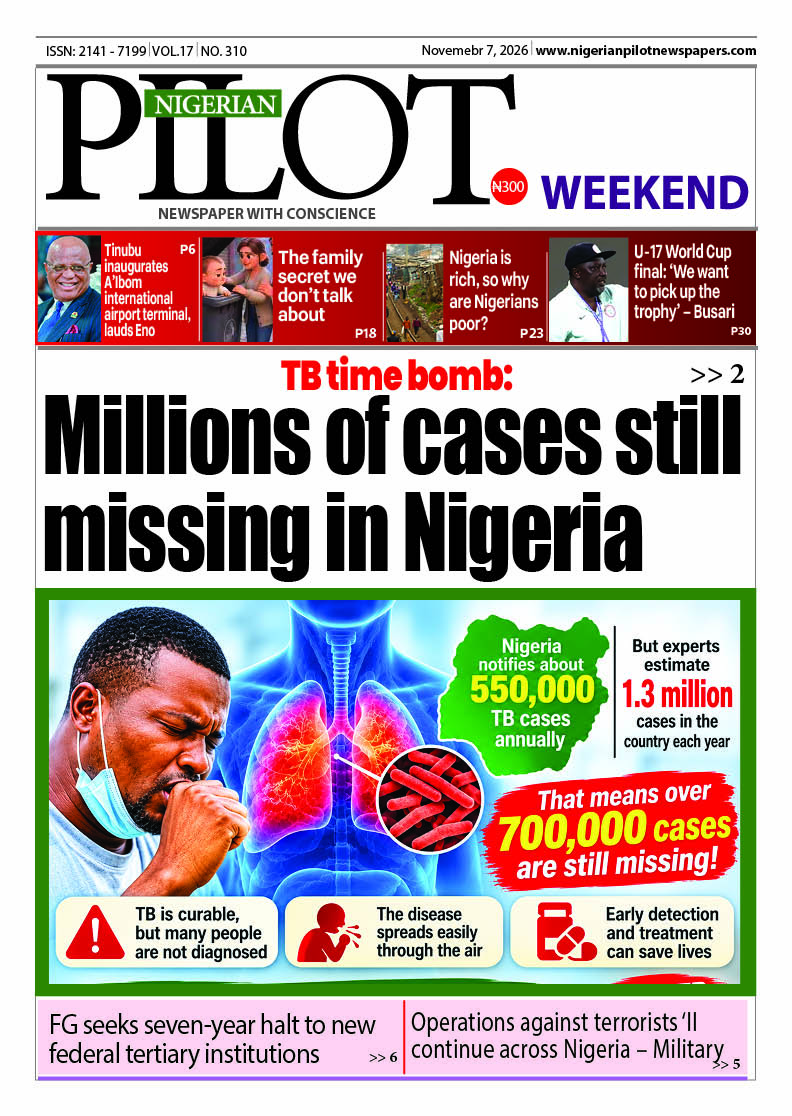
Nigeria records over 510,000 tuberculosis infections yearly, yet experts warn the country has Africa’s widest gap between estimated cases and patients detected for treatment, raising fears that thousands of infected persons may be spreading the disease unknowingly.
A recent report has revealed that Nigeria currently has the widest gap in Africa between the estimated number of tuberculosis cases and those actually detected and placed on treatment, a development health experts say threatens efforts to contain one of the world’s deadliest infectious diseases.
The warning came from Professor Bertie Squire, Deputy Pro-Vice-Chancellor for Partnerships at the Liverpool School of Tropical Medicine, United Kingdom, during a memorial lecture organized by the Health Reform Foundation of Nigeria in honour of Professors Lovett Lawson and Luis Cuevas as part of activities marking the 10th anniversary of the Zankli Research Institute at Bingham University. According to him, the challenge is no longer simply diagnosing tuberculosis but finding those who remain invisible to the health system and ensuring they receive treatment before infecting others.
Tuberculosis remains one of Nigeria’s most persistent public health threats. Despite advances in medicine and growing awareness campaigns, the country still ranks first in Africa and sixth globally among nations with the highest TB burden. An estimated 510,000 new cases are recorded annually, with approximately 219 cases per 100,000 population.
What makes the situation particularly worrying is that a significant number of infected individuals are never diagnosed, meaning they continue living in communities, workplaces, markets, schools, and homes while unknowingly spreading the disease.
According to Squire, one of the most overlooked realities in the fight against TB is the role of men in disease transmission. He noted that men account for nearly two-thirds of TB transmission across Africa, making them a critical target for screening and early detection programmes.
He also identified poor households, rural and peri-urban communities, people living with HIV, and children as population groups requiring urgent and sustained attention.
His message was straightforward: if Nigeria is to reduce tuberculosis infections, it must move beyond waiting for patients to visit hospitals and instead take screening services closer to the communities where vulnerable populations live.
The challenge is compounded by poverty, limited awareness, stigma, poor healthcare access, and rising financial constraints in the health sector.
Ironically, tuberculosis is one of the most curable infectious diseases in the world. Yet many Nigerians still die because they are diagnosed too late or never diagnosed at all.
Squire argued that improving outcomes would require not only the development of better technologies but also ensuring that people can access testing quickly and affordably.
Recent research, he said, has shown that collecting two sputum samples on the same day can achieve diagnostic accuracy comparable to the traditional approach of collecting three samples over several days.
Such innovations may appear simple, but they significantly reduce transportation costs, waiting time, income losses, and other burdens that often discourage patients from completing the testing process.
The international researcher also highlighted advances in molecular diagnostic technology capable of producing TB test results within 45 minutes to one hour, with sensitivity levels exceeding 90 per cent.
For health experts, this represents a major breakthrough because faster diagnosis means earlier treatment and fewer opportunities for transmission.
Squire further pointed to innovative community-based interventions being implemented through the LIGHT Consortium, a partnership involving institutions in Nigeria, Uganda, Kenya, Malawi, and the United Kingdom.
The initiative has explored the use of mobile chest X-ray services and male community champions to encourage men, who are often less likely to seek healthcare, to undergo screening.
Similarly, he praised the work of the Start4All Research Consortium, which is focused on uncovering TB cases that current health systems fail to detect.
Yet the country’s TB challenge extends beyond diagnosis and treatment. Funding remains a growing concern.
As international donor support shows signs of fatigue, Nigeria is facing a widening financing gap for tuberculosis services. Without sustainable domestic funding, experts warn that progress recorded over the last decade could be undermined.
There are, however, reasons for optimism.
Nigeria’s treatment success rate has improved significantly in several parts of the country. In the Federal Capital Territory, treatment success is estimated at about 94 per cent, while tuberculosis-related deaths have fallen by approximately 63 per cent over the past decade, largely due to improved screening, early detection, and prompt treatment.
These achievements demonstrate that when patients are found and treated, recovery is highly possible.
The tragedy, however, lies in those who remain missing.
For every tuberculosis patient undergoing treatment, there are others who may not even know they are infected. They continue to cough, lose weight, and struggle with recurring illness while remaining outside the reach of the healthcare system.
That is why experts insist that the biggest battle against tuberculosis in Nigeria is no longer in the laboratory alone. It is in communities, markets, schools, workplaces, and villages where undetected cases continue to thrive.
Until Nigeria closes the gap between estimated infections and detected cases, the country may continue to win individual battles against tuberculosis while losing the wider war against a disease that remains one of its deadliest silent killers.

