
*directs states, MDAs to implement Child Rights Act
By Michael Oche and Augustine Ehikioya
President Bola Ahmed Tinubu has declared the eradication of child labour a national development priority, directing Ministries, Departments and Agencies (MDAs) and state governments to fully implement the Child Rights Act and newly launched National Action Plan for the Elimination of Child Labour (2026-2030).
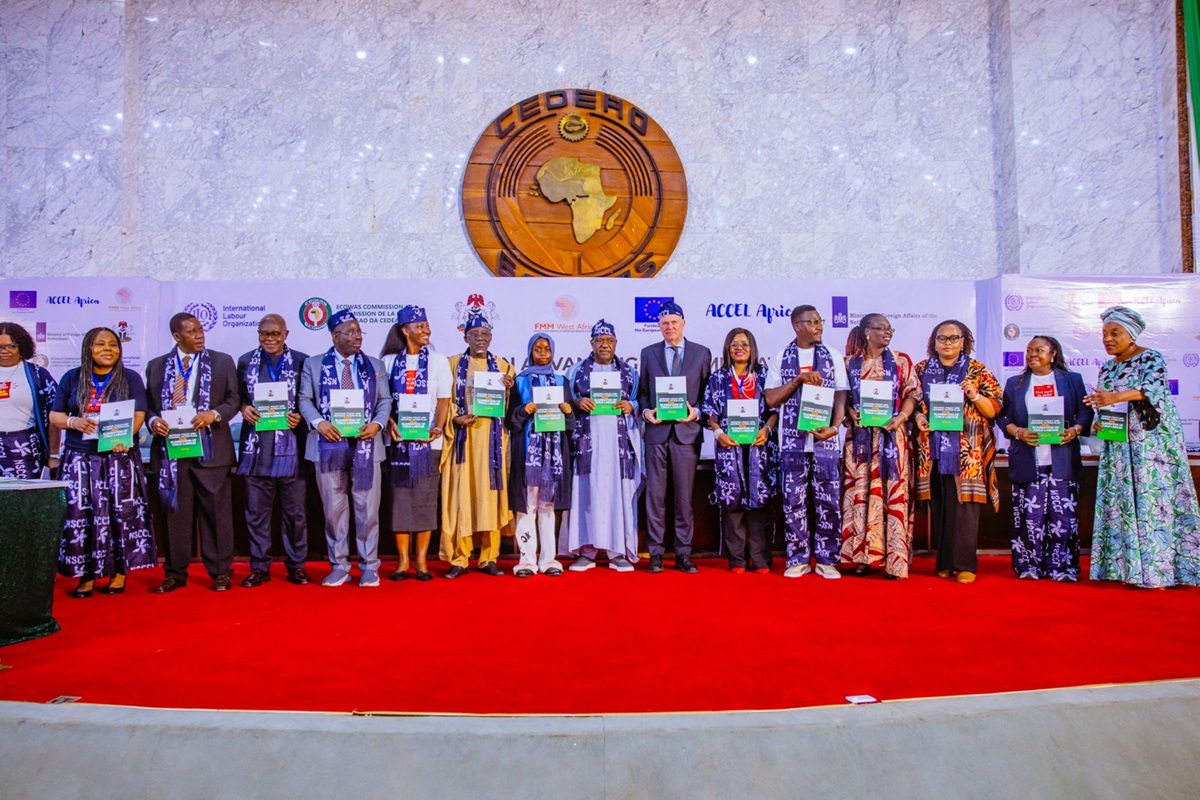
The President gave the directive on Wednesday in Abuja at the National Dialogue on Advancing the Implementation of Nigeria’s National Child Labour Policy and National Action Plan, where he also launched the 2024 National Child Labour Survey Report.
Represented by the Secretary to the Government of the Federation (SGF), Senator George Akume, Tinubu said child labour goes beyond labour issues to affect education, poverty reduction, economic growth, food security, human capital development and national security.
The President said “Every nation is judged by how well it protects its children. A child who is forced into labour instead of attending school loses more than an education. That child loses opportunities, confidence, health and the chance to fully contribute to national development,”
“For this reason, the Federal Government considers the elimination of child labour not merely as a labour issue, but as a national development priority,” he added.
The President said education remains the strongest safeguard against child labour, noting that his administration is pursuing reforms targeting out-of-school children, education data, teacher development and skills acquisition.
He said the Renewed Hope National Home-Grown School Feeding Programme will further support school attendance while addressing hunger among children from vulnerable households.
Tinubu added that government is strengthening household resilience through the NG-CARES Additional Financing Programme and the Human Capital Opportunities for Prosperity and Equity (HOPE) Programme, to ensure parents earn decent livelihoods so children are not compelled to work for family survival.
President Tinubu recalled that in 2025 his administration launched the National Plan of Action on Ending Violence Against Children (2024-2030) and has continued to push for stronger enforcement of child protection laws and safety in schools.
Describing Nigeria as an Alliance 8.7 Pathfinder Country, he said the newly launched National Child Labour Policy and National Action Plan (2026-2030) provides a practical roadmap for translating international commitments into measurable action.
The 2026 commemoration theme is “Red Card to Child Labour: Fair Play for Children, Decent Work for Adults.”
Also speaking, Minister of Labour and Employment, Dr Muhammad Dingyadi, said child labour remained a major obstacle to human dignity, social justice and sustainable development, depriving children of education and opportunities.
Dingyadi said findings from the National Child Labour Survey showed that millions of children remained engaged in labour, with many exposed to hazardous work in several sectors.
He listed agriculture, mining, domestic service, street trading and construction among areas where children were exposed to hazardous labour and exploitation across the country.
He said the Federal Government remained committed to enforcing the Labour Act, Child Rights Act and relevant international labour standards, particularly ILO Conventions 138 and 182.
Dingyadi said the reviewed National Policy on Child Labour and National Action Plan 2026–2030 provided a comprehensive framework for prevention, protection, enforcement, rehabilitation and accountability.
“Ending child labour cannot be achieved by government alone. It requires a whole-of-government and whole-of-society approach,” Dingyadi said.
Earlier, Dr Vanessa Phala, ILO Country Director for Nigeria, Ghana, Liberia and Sierra Leone, said the dialogue provided an opportunity to translate Nigeria’s commitments into tangible action against child labour.
Phala described child labour as both a child protection and labour-market challenge, with poverty, vulnerability, inadequate education, weak social protection and limited livelihood opportunities among its major drivers.
She called for stronger accountability, institutions and reliable data to monitor implementation, emphasising the need for decent work and economic empowerment to help families keep children out of labour.
“We continue to do our best to make sure that indeed we are moving from commitment to action, that we are moving from talking to actually implementing,” she said.
Phala urged stakeholders to ensure that the National Child Labour Policy and National Action Plan became “living instruments of change” as Nigeria works towards eliminating child labour by 2030

