
Agency report
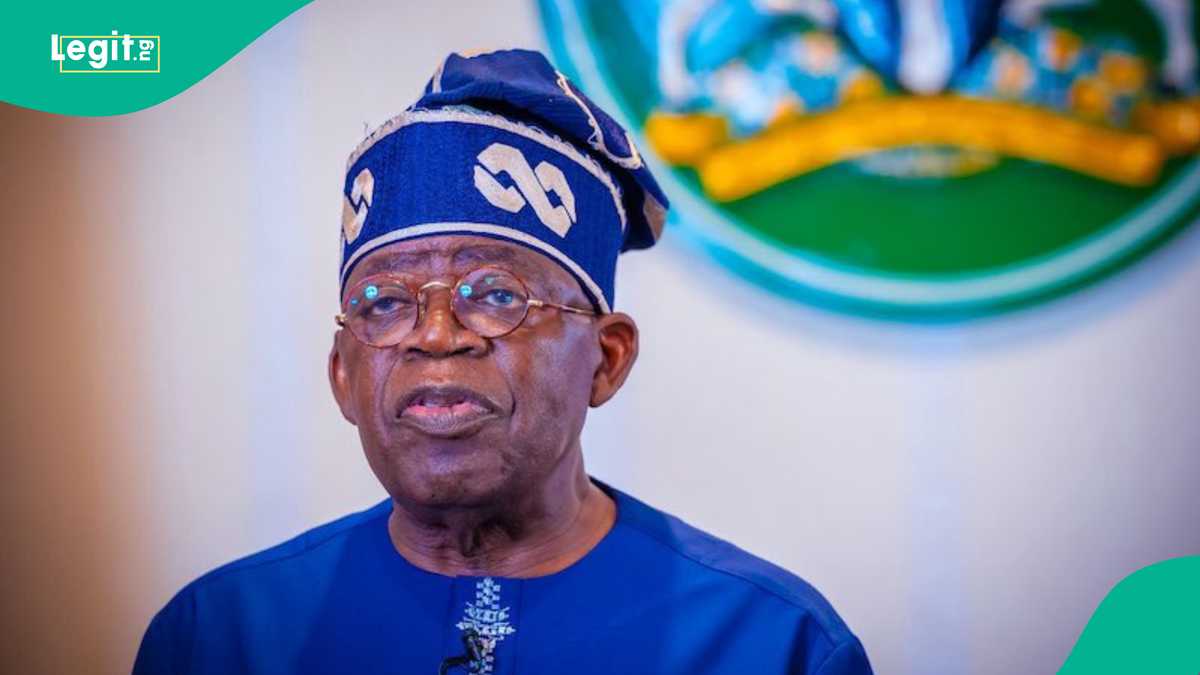
President Bola Tinubu on Monday declined to receive a special delegation from South African President Cyril Ramaphosa over the ongoing xenophobic attacks on Nigerians in South Africa, directing the visiting team to instead meet with the Minister of State for Foreign Affairs, Ambassador Sola Enikanolaiye.
Multiple Presidency sources familiar with the development confirmed that the delegation, led by South Africa’s Minister of International Relations and Cooperation, Ronald Lamola, had sought an audience with the President after arriving in Abuja on Friday.
Instead, Tinubu directed the delegation to engage with Enikanolaiye, who was appointed Minister of State for Foreign Affairs in June 2026 after Ambassador Bianca Odumegwu-Ojukwu was elevated to the substantive ministerial position following the exit of Yusuf Tuggar.
The development comes amid heightened diplomatic tensions between both countries over renewed xenophobic attacks targeting Nigerians and other African nationals in South Africa, which have forced the evacuation of nearly 600 Nigerians back home.
Receiving the South African delegation in Abuja, Enikanolaiye said Tinubu had mandated him to engage the envoys on resolving the crisis, stressing that the longstanding relationship between Nigeria and South Africa should not be undermined by attacks on African migrants.
“It is with profound pleasure that I welcome our brothers from South Africa. President Bola Ahmed Tinubu had actually asked us to meet with you and exchange views and perspectives on how to address and resolve the ongoing Afrophobic attacks in South Africa, of which Nigerians, and other citizens of Africa, have been victims,” he said.
The minister lamented the recurring attacks on Nigerians, recalling that such incidents had persisted for decades.
“We have seen a pattern emerge as early as 1995, 1998, 2006, 2015, 2016, 2019, 2021, 2024 and 2026. It is on record that from 2022 alone, 98 Nigerians have died in mob actions, in hate-related actions that we have called Afrophobia, because we found that the preponderant victims of this ugly situation are Africans and Nigerians in particular,” he said.
Enikanolaiye recalled Nigeria’s support for South Africa’s liberation from apartheid, saying the violence was inconsistent with the longstanding ties between the two countries.
He stressed that while Nigeria does not condone criminality, anyone accused of committing an offence should be subjected to due process rather than mob violence.
“If someone is, quote-unquote, a criminal for drug trafficking, there are rules, there are regulations for when they are arrested, prosecuted, and jailed. The Nigerian government will not support drug peddlers, but please, what we’re saying is that treat them in accordance with your constitution, in accordance with international human rights instruments, in accordance with the minimum requirement of humanity.
“But what we have found is that this xenophobic act has gone beyond the attack on criminals. We have records of Nigerians who have a legitimate purpose to remain in South Africa, yet they have been attacked.
“We could see some mob actions, where we saw the police watching, as if they are helpless to address this situation, which to us raises issues of state responsibility. It raises issues of complicity. If the state authorities are not able or unwilling to tackle these challenges,” he said.
He described the humanitarian impact of the attacks as devastating, recalling the evacuation of nearly 1,500 Nigerians from South Africa.
“The last batch of evacuees we moved from there, we had almost 1,500 of our nationals. It was not a pleasant experience. I shed tears in the plane when I saw children, women, the elderly returning home almost with nothing. Some of them, their properties have been looted. Some of them have been destroyed,” he said.
Responding, Lamola said Ramaphosa had sent him as a special envoy to deliver a message to Tinubu and reaffirm South Africa’s opposition to xenophobia and other forms of intolerance.
“We have been outspoken against any intolerance, including xenophobia, racism, homophobia, violence, discrimination directed at individuals within our borders,” Lamola said.
He, however, maintained that South Africa would continue enforcing its immigration laws and tackling criminal activities.
“President Ramaphosa has also been very firm on South Africa’s sovereign right to enforce immigration laws, including dealing decisively with irregular migration, undocumented immigrants, including acts of criminality that is sometimes committed within our borders,” he said.

