
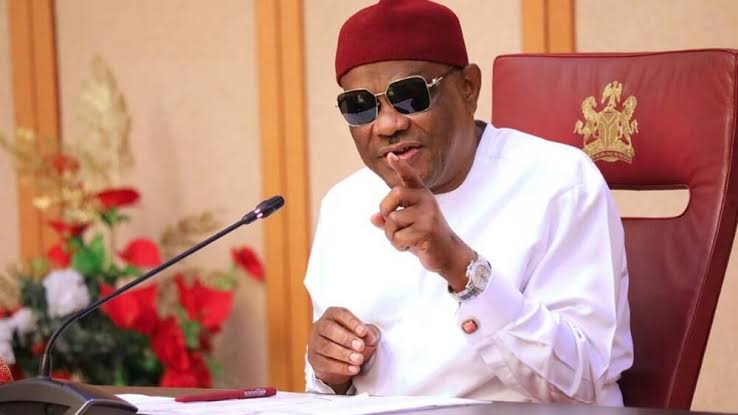
2027 Showdown: Onoh Reveals Why APC Governors Are Battling Wike Over ‘Rainbow Coalition’
Former South-East spokesman to President Bola Tinubu, Denge Josef Onoh, has attributed the widening rift between the Minister of the Federal Capital Territory (FCT), Nyesom Wike, and governors elected on the platform of the All Progressives Congress (APC) to concerns over Wike’s proposed “Rainbow Coalition” and its implications for the ruling party ahead of the 2027 general elections.
Onoh, in a statement made available to journalists, said the disagreement goes beyond personalities and centres on whether political arrangements designed to support President Tinubu’s re-election could weaken APC candidates in governorship and legislative contests.
The Progressive Governors Forum (PGF), chaired by Imo State Governor Hope Uzodimma, has resolved not to support any political arrangement it believes could weaken the APC or adversely affect its candidates at any level in 2027.
Wike, however, insists that his Rainbow Coalition is intended to mobilise support for Tinubu across party lines and does not mean that the Peoples Democratic Party (PDP) or other parties should abandon their candidates in other elections.
Onoh argued that the current confrontation should be viewed against the backdrop of Wike’s political career, from his years as chairman of Obio-Akpor Local Government Area and Chief of Staff in Rivers State to his service as Minister of State for Education and later governor of Rivers State.
He cited Wike’s past political battles, including his disagreement with former Rivers State governor Rotimi Amaechi, his role in the PDP crisis preceding the 2023 presidential election and his subsequent political differences with Rivers State Governor Siminalayi Fubara.
Onoh also recalled Wike’s participation in the 2022 PDP presidential primary, which was won by former Vice-President Atiku Abubakar, arguing that the contest demonstrated the challenges of translating state-level political influence into national party dominance.
Turning to the 2023 presidential election, Onoh recalled Wike’s prominent role among the PDP’s G5 governors, who declined to support Atiku following disagreements over the party’s leadership structure.
He argued that the divisions within the PDP ultimately benefited the APC presidential campaign in parts of the country.
Onoh also rejected Wike’s criticism of some South-East governors over Tinubu’s performance in the region during the 2023 election, arguing that the political circumstances were different because of the strong regional support enjoyed by Labour Party presidential candidate Peter Obi.
Onoh said the central issue in the latest confrontation is whether Wike can campaign for Tinubu while supporting candidates from other political parties in governorship and legislative elections.
According to him, such an arrangement could create divided loyalties among supporters and potentially undermine APC structures at state and local government levels.
The PGF has similarly said its governors will support Tinubu alongside APC candidates at all levels, rejecting political arrangements capable of weakening the ruling party.
Wike has rejected suggestions that he sought an alliance with the governors, saying he never approached the PGF to join his coalition. He maintains that his commitment is specifically to Tinubu’s re-election and does not require other political parties to surrender their candidates.
Onoh urged President Tinubu and the APC leadership to carefully examine the political implications of the coalition and establish clear boundaries between cross-party support for the President and activities that could affect APC candidates.
He argued that APC governors were justified in protecting their political structures and candidates ahead of the 2027 elections.
“The presidency is fast approaching a definitive crossroads,” Onoh said, warning that failure to manage the disagreement could deepen tensions within the broader political coalition supporting Tinubu.
Wike, meanwhile, has accused some APC governors of being “politically lazy,” maintaining that his support for Tinubu is separate from his continued membership of the PDP.
Onoh maintained that the dispute should be addressed before political preparations for the 2027 general elections intensify, arguing that unresolved differences could complicate coordination between Wike’s supporters and established APC structures.

