
By Michael Oche
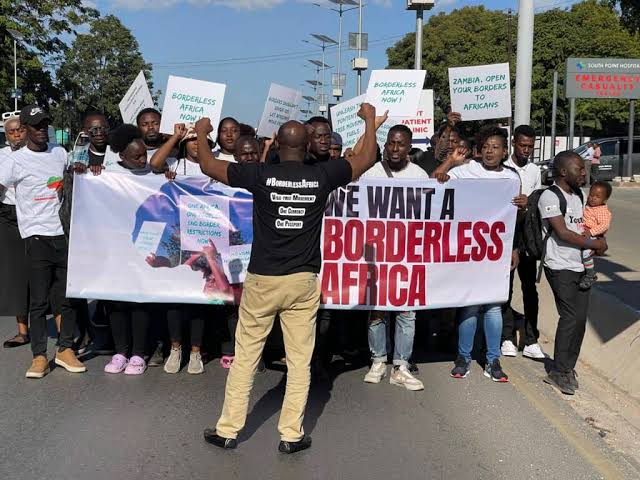
A majority of Africans support the free movement of people across the continent, but most still find it difficult to cross borders to work or trade, a new Afrobarometer report has revealed.
The 2026 African Insights flagship report, released this week, shows that 56% of Africans believe people in their region should be able to move freely across international borders.
However, 63% of respondents described it as “difficult” or “very difficult” to move across borders for work or trade, highlighting a wide gap between public support and actual implementation.
The report, which drew on 50,961 face-to-face interviews in 38 countries between 2024 and 2025, examined citizens’ views on trade, migration, and regional integration.
According to the findings, 45% of Africans have considered emigrating, with 25% saying they have thought about it “a lot.” The desire to leave is highest among youth aged 18-35 and the most educated citizens.
Half of those considering emigration said they would go in search of work, while another 29% cited economic hardship as their main reason.
The report also found a paradox in public attitudes. While 77% of respondents said they would not mind having immigrants or foreign workers as neighbours, 64% preferred to see fewer job seekers admitted into their country, and 70% wanted fewer refugees.
“One unexpected finding stands out: In Africa, unlike elsewhere, it is the most educated, the most skilled, and the wealthiest who express the greatest resistance to immigrants,” the report noted.
The findings come amid renewed calls by the African Union and labour groups including ITUC-Africa for full implementation of the Protocol on Free Movement of Persons.
Trade union leaders argue that the difficulty in crossing borders is costing the continent jobs, skills transfer, and economic growth.
The report also shows a shift in where Africans want to go. Among those who have considered emigrating, only 22% said they would prefer a destination within Africa — 17% within their own subregion and 5% elsewhere on the continent.
This marks a decline from 2016/2018, when 36% preferred to move to another African country. By 2024/2025, that figure had fallen to 26%, suggesting growing interest in destinations outside the continent despite public support for regional integration.
Europe remains the most preferred destination, with 32% of potential emigrants saying they would choose to go there. North America followed closely at 28%. Combined, 60% of those considering emigration are looking outside Africa.
The desire to leave is most pronounced in West Africa, where 34% of respondents said they had given serious thought to emigrating.
This is more than double the rate recorded in East Africa and North Africa, where 16% each expressed the same sentiment. Youth and the most educated citizens were also the most likely to consider leaving.
Afrobarometer Chief Executive Officer Joseph Asunka, said the report presents an opportunity for policymakers to think more seriously about the institutional and regulatory architecture needed to turn a continent-wide agreement into tangible gains.
The trade findings sit alongside a broader picture of economic frustration and mobility pressures. Asunka said nearly half of Africans are considering leaving the continent, with younger people especially focused on jobs, economic freedom and escaping poverty.
While migration is often explained in economic terms, Asunka said the deeper issue is governance failure. In his view, weak economic outcomes are symptoms of broader political and institutional shortcomings.
“It just boils down to governance failure,” he said. “When governments and governance fail to deliver what people are looking for, it can actually drive people to want to get out of the country to find opportunity elsewhere.”
He said the problem extends beyond job creation or growth. Citizens also want political systems that allow them to hold leaders accountable, and frustration rises when people feel elections do not give them the power to remove underperforming governments.
That combination of economic strain and weak accountability, he said, helps explain why so many young Africans weigh opportunities abroad, even though many would prefer to stay if viable prospects existed at home. Asunka argued that stronger regional integration and better governance could reduce those outward pressures by generating more opportunity within Africa.

