
By Dr. Temitope M. Adeyemi-Kayode
What does it take to build a world-class university? For centuries, leading universities have earned their reputations through sustained academic excellence, groundbreaking research and contributions to society. Today, institutional prestige, international rankings and research performance remain important measures of success. Yet a university’s true distinction also lies in its ability to advance knowledge, develop exceptional talent and provide solutions to the challenges facing the society it serves.
For African universities, the pursuit of global recognition must go hand in hand with the continent’s development aspirations. Economic transformation, technological advancement, food security, public health and sustainable infrastructure all require institutions capable of producing relevant research and skilled professionals. The challenge is to build universities whose contributions are recognised internationally while remaining deeply relevant to the communities and economies around them.
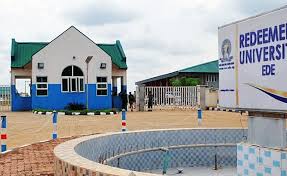
The experience of Redeemer’s University in Ede, Osun State, Nigeria, offers a useful perspective on how these ambitions can translate into institutional progress. Established in 2005, the university has progressively developed research strengths whose influence extends beyond Africa’s borders. Its journey towards global recognition provides an opportunity to examine the importance of sustained research investment, institutional continuity and the development of distinctive areas of expertise in building a globally competitive university.
Research Excellence with Societal Impact
One of the distinguishing characteristics of internationally respected universities is their ability to develop recognised areas of research expertise. While academic breadth remains important, sustained investment in specialised fields can produce scientific advances with far-reaching benefits for society.
At Redeemer’s University, infectious disease genomics and water and environmental science have become two such areas of expertise. Through its Institute of Genomics and Global Health (IGH), formerly known as the African Centre of Excellence for Genomics of Infectious Diseases (ACEGID), the university has played an important role in responding to major disease outbreaks across Africa. During Nigeria’s 2014 Ebola outbreak, the centre helped confirm the country’s first case and contributed to genomic investigations that supported efforts to understand and contain the virus. In 2018, its researchers worked with the Nigeria Centre for Disease Control (NCDC) to investigate a surge in Lassa fever cases, providing genomic evidence that helped clarify patterns of transmission. When COVID-19 reached Nigeria in 2020, the centre achieved another milestone by producing Africa’s first genome sequence of SARS-CoV-2.
The institute’s collaborations with public health institutions, including the Africa Centres for Disease Control and Prevention (Africa CDC), have also supported disease surveillance and laboratory capacity across the continent. Its work extends to developing rapid diagnostic tools and training scientists from several African countries, demonstrating how university-based research can contribute directly to public health systems.
Redeemer’s University’s research contributions also extend into water and environmental science through its African Centre of Excellence for Water and Environmental Research (ACEWATER). Building on the university’s established expertise in environmental chemistry, the centre has advanced research into water purification, pollution control and sustainable water management. Researchers have developed low-cost water treatment materials using locally available resources, including clay and papaya seeds, with laboratory studies demonstrating their potential to remove harmful contaminants and bacteria associated with diseases such as cholera and typhoid fever. Through research collaborations spanning Africa, Europe, Asia and South America, ACEWATER has strengthened its capacity to investigate solutions to water security challenges. Its work illustrates the potential of African-led research to develop affordable technologies while contributing to international scientific knowledge.
When Research Excellence Becomes Global Recognition
An institution may produce important scientific work without receiving corresponding recognition in global assessments. Increasingly, universities must also demonstrate how their research, teaching, policies and community engagement contribute to society. Redeemer’s University’s participation in the Times Higher Education (THE) rankings offers a useful illustration.
In its debut appearance in the 2025 THE Impact Rankings, Redeemer’s University emerged second overall among participating Nigerian universities. Its performance was particularly notable in areas aligned with its established research strengths. The university ranked first in Nigeria and sixth in Africa for SDG 3 (Good Health and Well-being), while securing first position in both Nigeria and Africa for SDG 6 (Clean Water and Sanitation). It also ranked first nationally in SDG 8 (Decent Work and Economic Growth) and SDG 16 (Peace, Justice and Strong Institutions). These results brought international recognition to the university’s contributions through research, institutional practices and community initiatives.
The university sustained this momentum in the 2026 THE Sustainability Impact Ratings, broadening its participation from six to all 17 Sustainable Development Goals. It again emerged second overall in Nigeria and secured first position nationally in seven SDG categories, reflecting the breadth of its contributions across multiple areas of sustainable development.
Professor Shadrach Olufemi Akindele, who assumed office as the university’s fourth substantive Vice-Chancellor in December 2023, has overseen this period of expanding international visibility. Under his administration, Redeemer’s University has strengthened its engagement with global benchmarking systems while continuing to develop its academic and research capabilities.
International recognition of this nature requires more than scientific accomplishments alone. Universities must maintain reliable institutional records, document the outcomes of their activities and demonstrate how their policies and programmes contribute to society. While rankings provide opportunities for international benchmarking, their value also lies in helping institutions assess their strengths and identify areas for improvement.
Building on Strengths and Embracing New Opportunities
The pursuit of world-class excellence requires universities to build on their established strengths while identifying new opportunities for growth. At Redeemer’s University, this is reflected in the recent expansion of academic programmes in medicine and related professional disciplines. In June 2026, the National Universities Commission approved the commencement of Medicine and Surgery, Dental Surgery and Doctor of Pharmacy programmes, among others, beginning in the 2026/2027 academic session. For an institution with an established record in infectious disease genomics and public health research, these developments create opportunities to strengthen the connections between scientific discovery, professional training and healthcare delivery.
More recently, on October 22, 2026, the Redeemer’s Health Village Robotic Surgery Academy was inaugurated through an initiative involving Redeemer’s Health Village, Redeemer’s University, RoboMed Global and the National Postgraduate Medical College of Nigeria. The academy, which received Federal Government backing through TETFund-supported training, aims to train 400 specialists over two years. As an academic partner, Redeemer’s University will contribute to specialised training for nursing teams and biomedical engineers, supporting the development of expertise required for advanced surgical technologies.
These developments illustrate the importance of expanding institutional capabilities in response to emerging opportunities. Universities seeking global relevance must be able to anticipate developments in science and technology, strengthen interdisciplinary education and establish partnerships that connect academic knowledge with practical applications. Such ambitions must be supported by continued investment in teaching quality, research infrastructure and professional development.
Building Excellence Through Strategic Partnerships
The pursuit of world-class excellence also depends on the ability of universities to build meaningful partnerships. Collaborations with academic institutions, industry and government, both locally and internationally, create opportunities to advance research, share expertise, attract funding and strengthen professional training.
Redeemer’s University’s longstanding research relationship with the Broad Institute of MIT and Harvard in the United States offers a compelling example. The collaboration has contributed to advances in infectious disease genomics and the development of Sentinel, a pandemic-prevention initiative launched in 2020. In November 2025, the MacArthur Foundation awarded a $100 million, five-year grant to the Broad Institute for the Sentinel project, a joint initiative with Redeemer’s University’s IGH, to strengthen and expand disease surveillance capabilities. The initiative has also trained more than 3,000 public health workers from 53 African countries, demonstrating how sustained scientific partnerships can produce benefits far beyond the institutions directly involved.
The value of these relationships lies in the outcomes they produce, often long after the initial partnerships have been established. Joint research programmes, academic exchanges, shared facilities and industry-supported initiatives can create lasting opportunities for students and researchers while strengthening institutional capacity. Carefully nurtured over time, these collaborations can become foundations for continued innovation and global relevance.
The Pursuit of World-Class Recognition
The aspiration to attain world-class status is shared by many African universities, yet achieving this distinction can often seem elusive. Established universities in Europe and North America have benefited from generations of investment, extensive research infrastructure and access to resources that may not be readily available to institutions across Africa. These differences present real challenges, but they need not determine the limits of what African universities can achieve.
The pursuit of global excellence should not require African institutions to replicate every aspect of established Western models. There is considerable opportunity in identifying the challenges within their own societies and committing to solving them with the highest standards of research, innovation and academic rigour. By developing expertise in areas of particular relevance to their environments, universities can make contributions that distinguish them within the global academic community.
Redeemer’s University’s experience offers an illustration of this approach. Its longstanding investments in infectious disease genomics and environmental science have produced research with relevance far beyond Nigeria, while providing a foundation for international partnerships, academic expansion and growing global recognition. These achievements reflect years of institutional development and the collective contributions of those who have helped shape the university’s progress.
The most important lesson is that world-class recognition should be the outcome of excellence, not merely its pursuit. When universities commit themselves to addressing important problems through rigorous research, meaningful innovation and sustained investment in people, they create value that extends far beyond their immediate communities. For African universities aspiring to join the ranks of the world’s leading institutions, the path forward lies in making contributions of such significance and quality that their place among the best is undeniable.

