
By Lanre Oloyede
The Minister of Solid Minerals Development, Dr Dele Alake, has launched a strong defence of President Bola Ahmed Tinubu’s economic reforms, accusing powerful interests that allegedly benefited from the fuel subsidy regime of fighting back against policies designed to reset Nigeria’s economy.
Alake also took a swipe at sections of the media, accusing journalists of, sometimes unwittingly, amplifying what he described as the selfish agenda of individuals and cartels seeking the return of the old economic order.
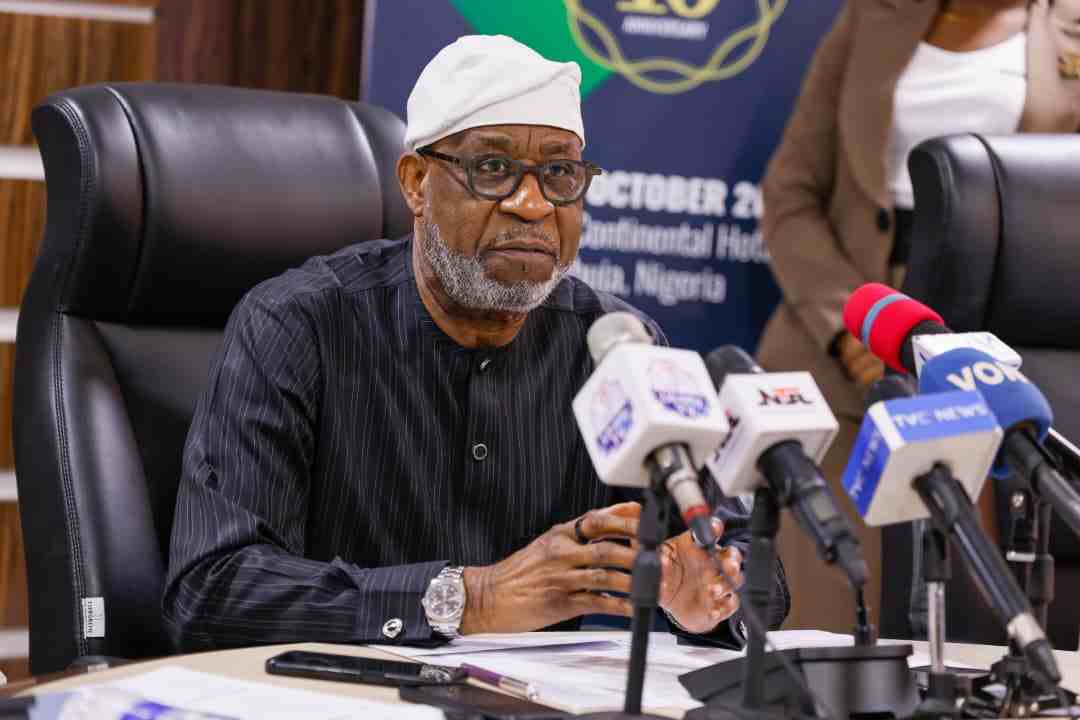
Speaking at an interactive session with journalists in Abuja on Wednesday, the minister said the removal of fuel subsidy and other economic reforms introduced by the Tinubu administration were painful but unavoidable decisions that previous governments lacked the political courage to take.
He argued that contrary to the widespread belief that fuel subsidy primarily benefited ordinary Nigerians, the policy disproportionately enriched wealthy individuals, oil marketers and organised cartels.
“There’s this erroneous belief that all Nigerians were benefiting from the subsidy. It’s a lie,” Alake said.
“When you break the whole thing down and apply logical analysis, you discover that the upper crust of society benefited more.
“One family could have five or 10 vehicles and government was subsidising fuel for those vehicles, whereas the average Nigerian had one vehicle or none at all. So, who was really benefiting from the subsidy?”
The minister said the removal of subsidy disrupted powerful economic interests that had profited from arbitrage and cross-border smuggling.
According to him, fuel purchased at subsidised rates was often smuggled across Nigeria’s borders and sold at higher prices, enriching a privileged few at the expense of the country’s economy.
“Did you think that when fuel subsidy was removed, those benefiting from it would fold their arms and be looking? No. They will fight back. They will push back,” he said.
“They are fighting back and pushing back, and the media, unwittingly, has been helping to amplify their selfish pushback against the long-term progress of society.”
Alake urged journalists to subject claims made by politicians and public figures to greater scrutiny and background checks rather than merely amplifying narratives.
He said the responsibility of the media goes beyond reporting statements, stressing that journalists must interrogate information, identify loopholes and provide context capable of helping the public make informed judgments.
The minister said the economic distortions confronting Nigeria before the Tinubu administration were well known to successive governments, but those in power repeatedly postponed difficult decisions because of political considerations and fear of electoral consequences.
According to him, the removal of fuel subsidy had dominated public discourse for years before Tinubu assumed office, but previous administrations backed down whenever public protests and electoral considerations became intense.
“The policies necessary to correct the distortions and contradictions in the Nigerian economy were known and identifiable by previous governments. The only thing lacking was the courage to take those decisions,” Alake said.
He defended President Tinubu for taking what he described as a politically risky decision despite the possible consequences for his popularity and electoral fortunes.
“Somebody came and decided to swallow the bitter pill and take the bullets on behalf of Nigerians because the nation had to be reset,” he said.
“If a politician, who should ordinarily be sensitive about elections and returning to office, decides to take such decisions regardless of the consequences to his political career, I think fairness demands that we give credit where it is due.”

