
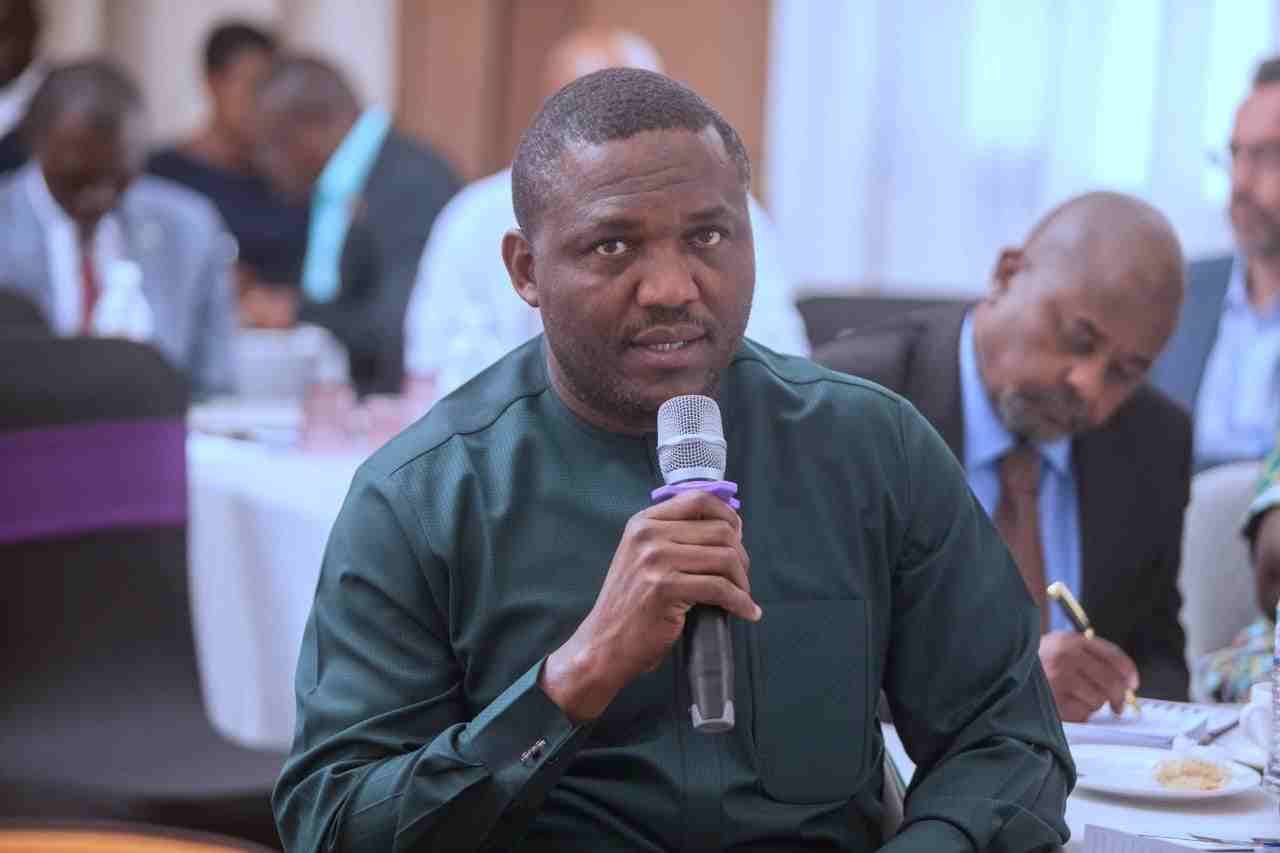
In this interview with MICHAEL OCHE at the conclusion of a three-day Occupational Safety and Health workshop in Nairobi, Kenya, ITUC-Africa General Secretary, Akhator Joel Odigie, speaks on the urgent need to prioritise occupational safety and health across Africa, the economic and human costs of unsafe workplaces, the organisation’s efforts to combat workplace violence and harassment through a new policy framework, and why governments, employers and workers must work together to build a stronger culture of prevention. Excerpts:
It has been three days of discussions around occupational safety and health. What would you say is the biggest takeaway from these conversations?
The most important takeaway is that, as trade unions, we have been able to re-strategise our engagement on occupational safety and health (OSH). We have reinforced our understanding of its importance and developed a concrete work plan that will guide our engagement going forward. We are leaving this meeting with a clear commitment to scale up our work on occupational safety and health. We are also sending a strong message to governments across Africa that this issue is central to the continent’s transformation agenda. If you do not have a healthy workforce and a safe working environment, any progress we claim to make will simply be motion without movement. The urgency cannot be overstated. Every year, nearly 2.93 million workers around the world die from work-related accidents and occupational diseases, while hundreds of millions more suffer non-fatal workplace injuries and illnesses. Africa bears the heaviest burden of work-related deaths globally, with an estimated 7.39 per cent of all deaths in the region linked to occupational risks. Beyond the physical toll, the continent also pays a huge price through psychosocial risks such as workplace stress, long working hours, job insecurity, violence and harassment, which continue to affect workers’ mental wellbeing, productivity and quality of life. It is therefore urgent that governments, employers and workers recalibrate how they view and address occupational safety and health.
During the meeting, there was a lot of emphasis on the economic impact of occupational safety and health. Can you elaborate?
It makes economic sense for Africa to prioritise occupational safety and health if the continent truly wants to achieve prosperity and sustainable development.
For example, psychosocial risks alone account for about 1.7 per cent of Africa’s GDP losses. Occupational accidents and unsafe workplaces cost an estimated four per cent of the continents GDP. These are significant losses. Governments, business leaders and economic managers must understand that cutting corners on workplace safety in order to save costs is simply being penny-wise and pound-foolish. Investing in workers’ safety is not an expense; it is an investment that strengthens productivity and economic growth.
ITUC-Africa is developing its policy on sexual harassment and violence in the workplace. What does this mean for the organisation and its affiliates?
This is our way of giving practical effect to ILO Convention 190. Every international convention requires supporting policies because policies provide the framework for implementation, while programmes translate those policies into action.
By developing this policy, we are making a strong commitment to creating safe workplaces and ensuring that relationships within the trade union movement are guided by clear standards of conduct.
We also want to lead by example. Once the policy is adopted, we will promote it widely and encourage all our affiliates to adapt and replicate it within their own organisations. We cannot impose it because we are a democratic organisation, but we will strongly encourage its adoption.The policy will help prevent workplace violence and harassment through education, awareness and clear reporting mechanisms. It will also establish procedures for handling complaints, investigating cases and supporting victims. Too often, sexual harassment, discrimination and other forms of workplace abuse remain hidden because of fear and silence. These are serious psychosocial issues, and failing to address them only allows the problem to persist.
One of the key messages from this meeting is that occupational safety and health goes beyond simply providing personal protective equipment (PPE). What message do you have for employers?
Occupational safety and health is much broader than simply providing PPE. Of course, workers should leave home, go to work and return safely every day. But employers must understand that providing protective equipment alone is not enough.
If PPE is provided but workers do not use it, accidents will still occur. Employers have a responsibility not only to provide protective equipment but also to ensure it is properly used. Workers equally have a responsibility to comply with safety procedures. Beyond PPE, occupational safety and health requires an inclusive system involving employers, workers and government. There must be effective reporting mechanisms, proper labour inspections, enforcement of safety standards and accountability.
When accidents occur, they must be investigated thoroughly so lessons can be learned and similar incidents prevented in the future. Ultimately, what we want to build is a strong occupational safety and health culture across workplaces and communities.
At the beginning of the year, ITUC-Africa outlined several priorities for improving workers’ welfare and strengthening advocacy across the continent. How would you assess your progress so far?
Our philosophy has always been that we are not a lamenting organisation. We do not exist simply to complain about problems. Our responsibility is to contribute solutions.
That is why we deliberately prioritised occupational safety and health and developed practical actions around it. Our goal is not only to implement these actions ourselves but also to inspire our affiliates to do the same. When we return to our respective countries, we will engage governments and employers to strengthen national collaboration on occupational safety and health. We are ready to work as partners to improve workplace safety.
International standards and conventions only become meaningful when people actively push for their implementation. Otherwise, they remain documents sitting on shelves. We see ourselves as agents of change who must continue driving implementation and ensuring these commitments produce real results for workers.
As a Nigerian, you’ve consistently advocated for democratic governance and greater African integration. Nigeria is approaching another election cycle. What are your thoughts on the country’s current democratic trajectory?
First, let me relate it to what we have been discussing here. When we talk about occupational safety and health, insecurity is also an occupational safety and health issue. Violent conflict affects workers, destroys livelihoods and undermines development. Nigeria therefore needs to urgently review and strengthen its security architecture. Security reforms should be inclusive.
Take the ongoing debate on state police, for example. While the idea has merit, the process must involve broad consultations with communities and citizens. Such reforms should not be driven solely from the centre without public participation.
On democracy, elections are fundamental to nation-building, but they must inspire public confidence. Unfortunately, Nigeria continues to face challenges such as vote-buying, voter disenfranchisement and declining trust in electoral institutions.
When institutions make promises they fail to keep, such as ensuring transparent electronic transmission of election results, public confidence suffers. That trust deficit continues to widen.
Equally worrying is the increasing involvement of the judiciary in political disputes in ways that sometimes create uncertainty and inconsistency. Democracy depends on the rule of law. If citizens lose confidence in the justice system, the entire democratic process becomes vulnerable.
What concerns you most about Nigeria’s democratic future?
Democracy must deliver tangible benefits to citizens. If it fails to improve people’s lives while corruption continues unchecked, citizens naturally become disillusioned. The prosecution of public officials accused of corruption is welcome because accountability is essential. Anyone found guilty should face justice, regardless of political affiliation.
However, corruption remains a major threat to democracy. When public resources meant for development are diverted, citizens lose faith in governance and democratic institutions.
At the same time, Nigerians should not surrender to hopelessness. Citizens must continue participating, organising, educating one another and demanding accountability. Vote-buying thrives because of poverty, but there is a difference between hunger and greed. Society must do more to support vulnerable people so they are not forced to exchange their votes for temporary relief.
Democracy requires sacrifice, participation and collective responsibility. We must continue educating citizens about the long-term value of protecting their votes and defending democratic institutions.
Nigeria has enormous potential. If public resources are managed transparently and corruption is effectively tackled, the country’s fortunes can change significantly. We should encourage governments whenever they do the right thing while remaining firm in demanding accountability where they fail.
Only then can democracy truly serve the people rather than a privileged few.

